This page was originally written in Japanese and has been translated into English. Some photographs retain Japanese annotations; the text and captions explain the construction in English.
Setting the Canvas
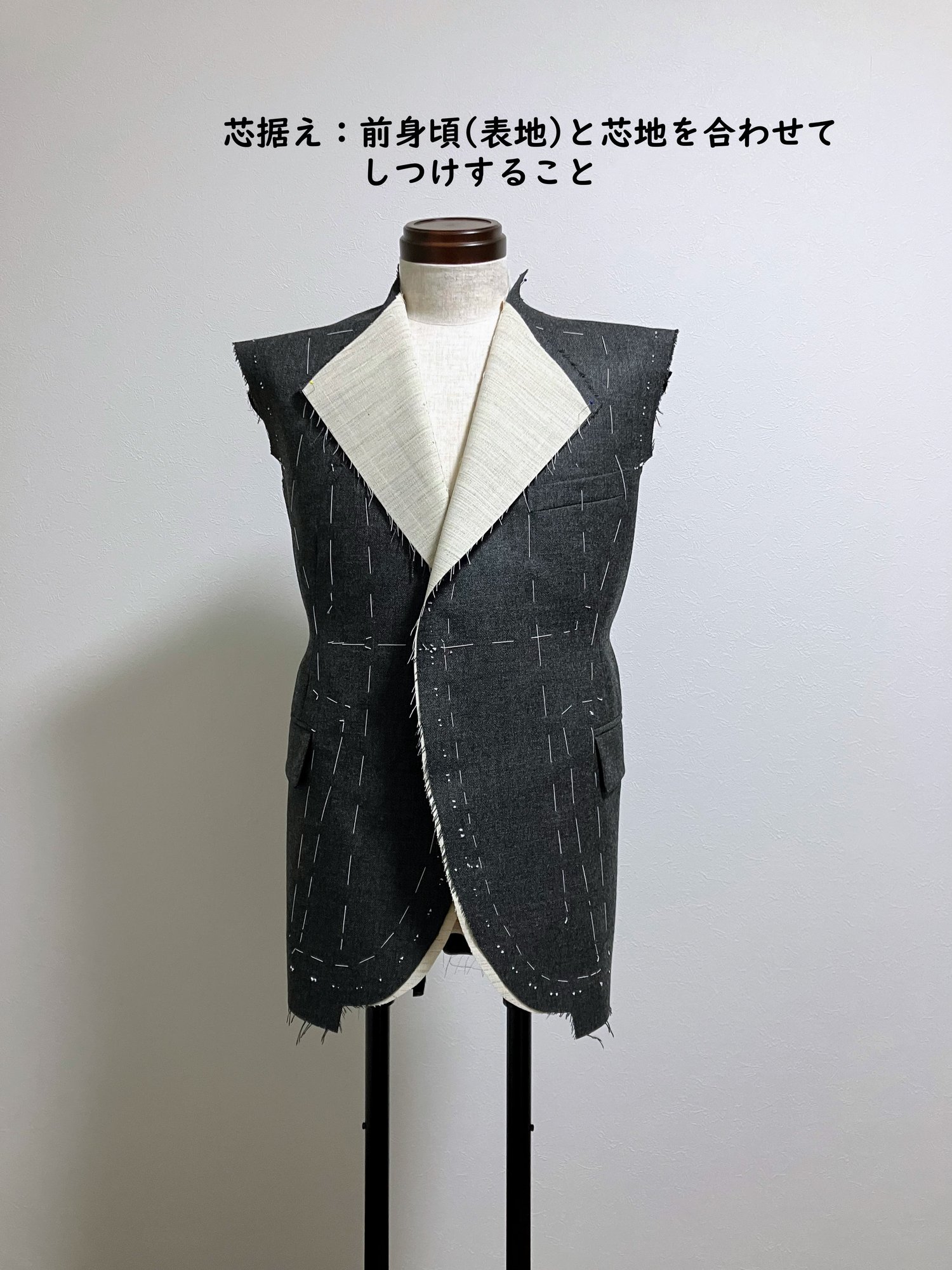
Basting the canvas to the wrong side of the jacket front and pad stitching the lapel. Tape goes on the roll line and the front edge.
The canvas is basted to the wrong side of the jacket front, and the lapel is pad stitched.
Process flow
Setting the canvas
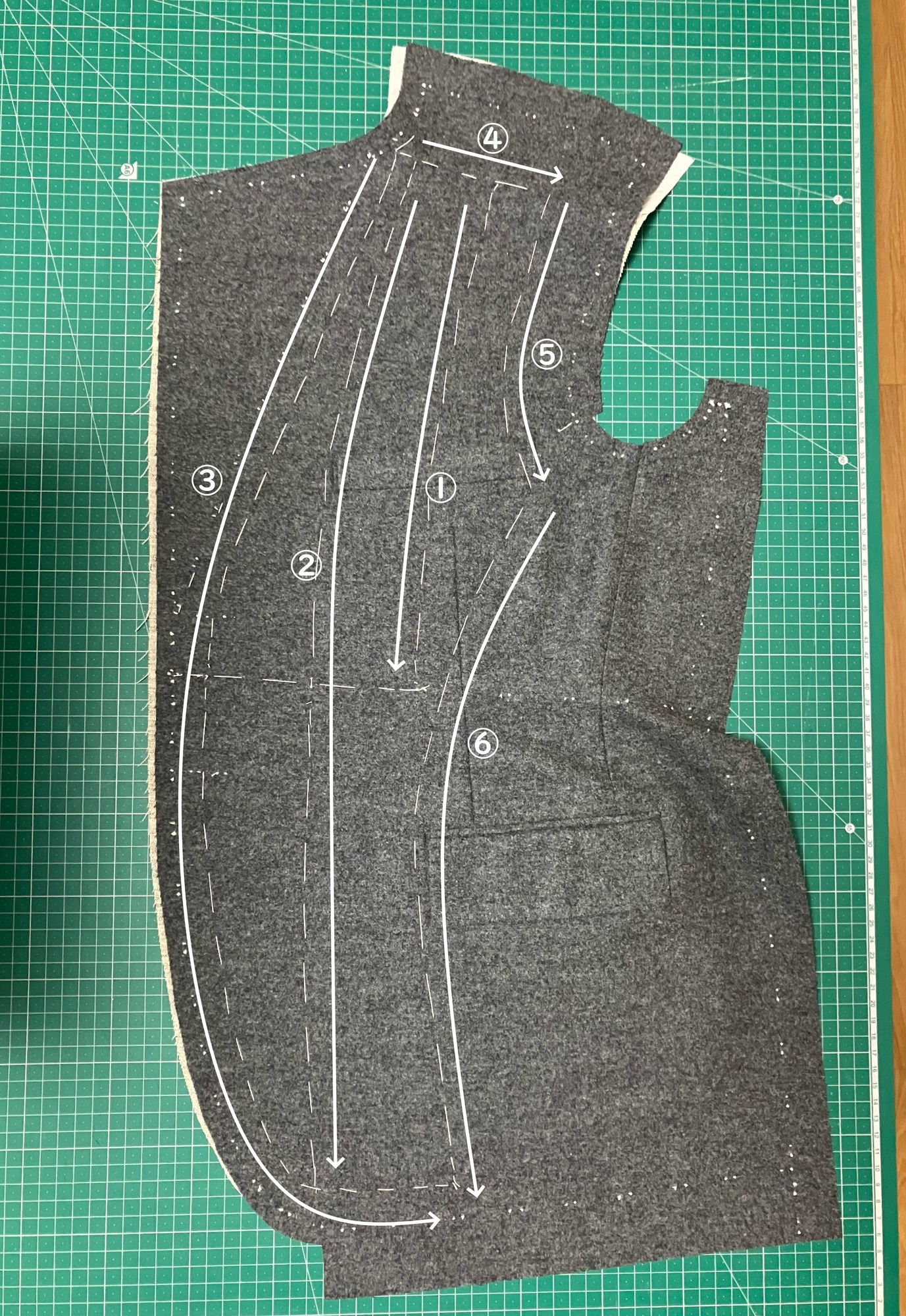
Lay the outer fabric on the canvas, matching the grainline of each layer and the roll-line markings on both layers, then baste. Two things matter.
- Match grainline to grainline and roll line to roll line between the outer fabric and the canvas
- The canvas pushes the face cloth out from inside, so that the cloth has spring
Basting methods vary from tailor to tailor, but the first row is best run down the middle. When that sits well, the rest go a little inside the front edge, the shoulder, the sleeve and the side.
In every row, the face cloth must not be left full over the canvas. Smoothing the cloth downwards as the row goes in keeps it from gathering.
The structure inside
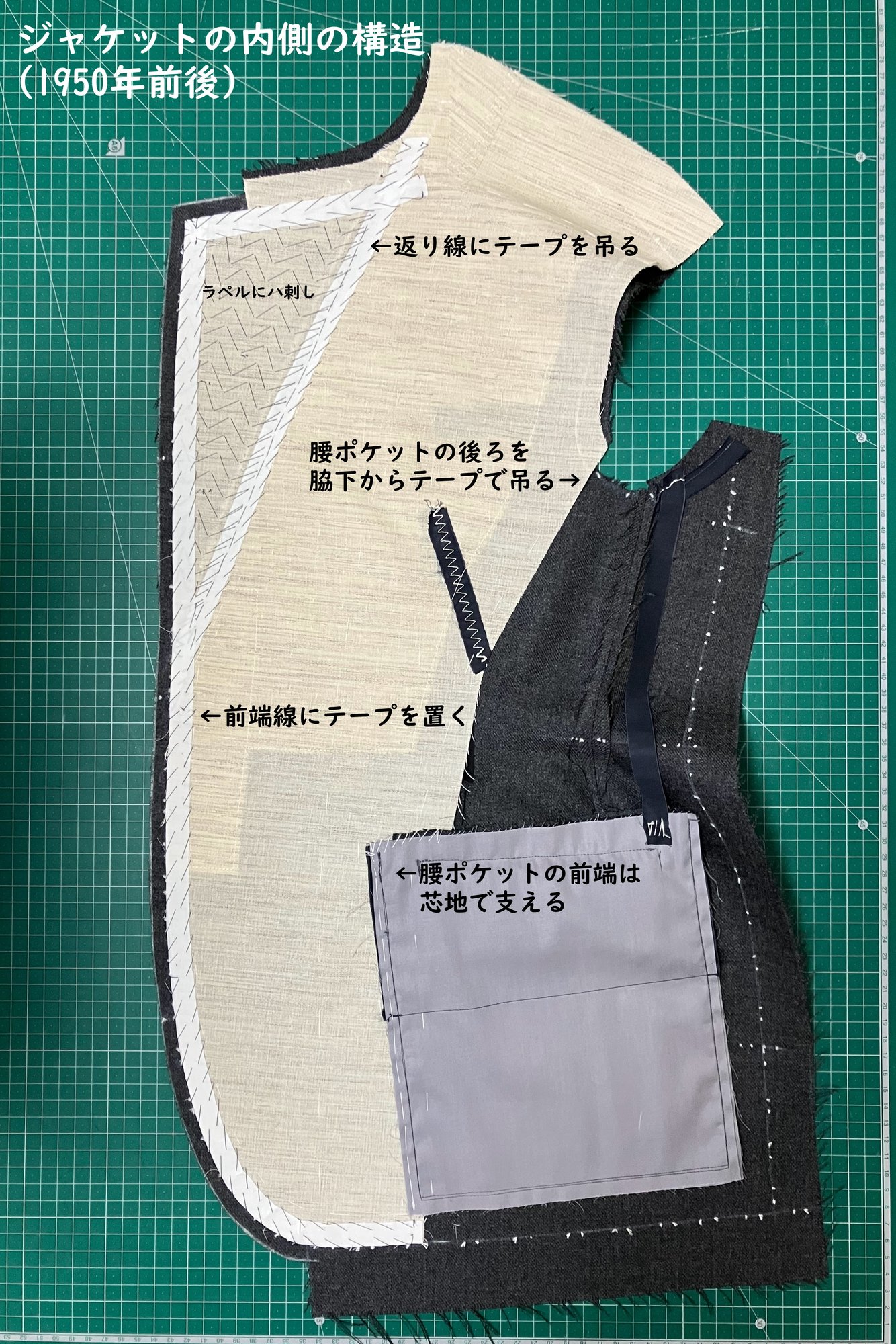
A row of prick stitch goes 1cm inside the roll line, and the lapel is worked with pad stitch. Tape is hung on the roll line. At the front edge the canvas is trimmed to the finished line and tape is laid along it.
The waist pocket is carried by its bag, whose front end is held to the canvas, while the back is hung from under the arm with tape.
References
- Japan (1950) 『ティラァズ・ブック : 紳士服の裁断と縫方』 緑屋洋装研究所 Catalogue recordTransmission service