This page was originally written in Japanese and has been translated into English. Some photographs retain Japanese annotations; the text and captions explain the construction in English.
Tools
The tools used to make men's clothes: hand tools, irons and pressing stands, the sewing machine and the work table.
These are the tools used to make men’s clothes. The whole set costs little, and once bought it lasts, so it is a craft that can be kept up for a long time. It makes a good pastime to take up after retirement. Why not walk out in a suit of your own making?
Hand tools
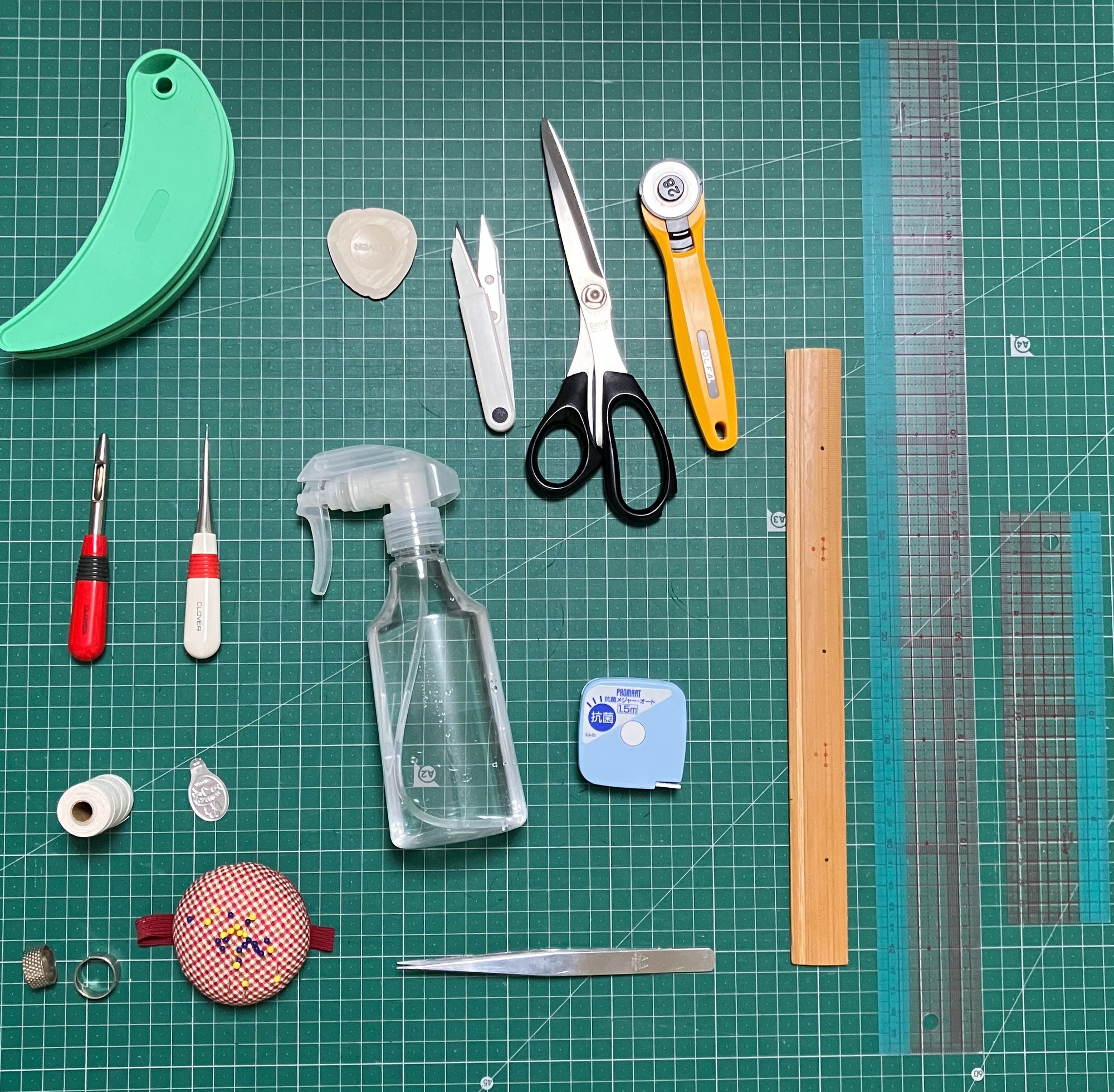
Hand sewing needle
On wool cloth, short needles called betweens are used. The size decides what it is for.
| Size | Used for |
|---|---|
| 4 | Sewing on buttons |
| 6 to 7 | Basting, working buttonholes |
| 8 to 9 | Felling |
Thimble
A metal guard for pushing the head of the needle.
Needle threader
Handy for threading a hand needle.
Basting thread
Cotton. A wound reel is easier to use than a skein.
Shears
For cutting the cloth.
Thread snips
For finishing off threads.
Rotary cutter
Handy for cutting cloth. Unlike shears the blade can be changed, so there is no sharpening to do. It cuts straight lines and easy curves quickly.
Pattern weights
Used when drafting and laying out. Three or four are enough.
Awl
For pulling out basting threads, and for turning out the corners of flaps and collars.
Tweezers
For pulling out thread marks. Choose a pair that will not damage the cloth.
Chalk
For drawing on the cloth. One white piece is enough. It brushes off, but not always completely, so use it on the under side. The edge rounds off in use and will no longer draw a fine line, so sharpen it from time to time.
Rule
A short one of about 20cm and a long one of about 50cm are both useful. Keep the rule used for drafting separate from the one used against the rotary cutter, since the blade damages the edge. If drawing curves is hard, a curved rule may help when drafting.
Tape measure
A soft tape measures the length of a curve.
Eyelet punch
Used for buttonholes with an eyelet.
Ironing equipment
Iron
Some give steam and some, the dry irons, do not. A certain weight makes it easier both to open a seam and to press shape in. As a guide:
| Use | Weight |
|---|---|
| Shrinking, finishing | 8 lb and over |
| Sewing heavy cloth | 7 lb |
| Sewing light cloth | 5 lb |
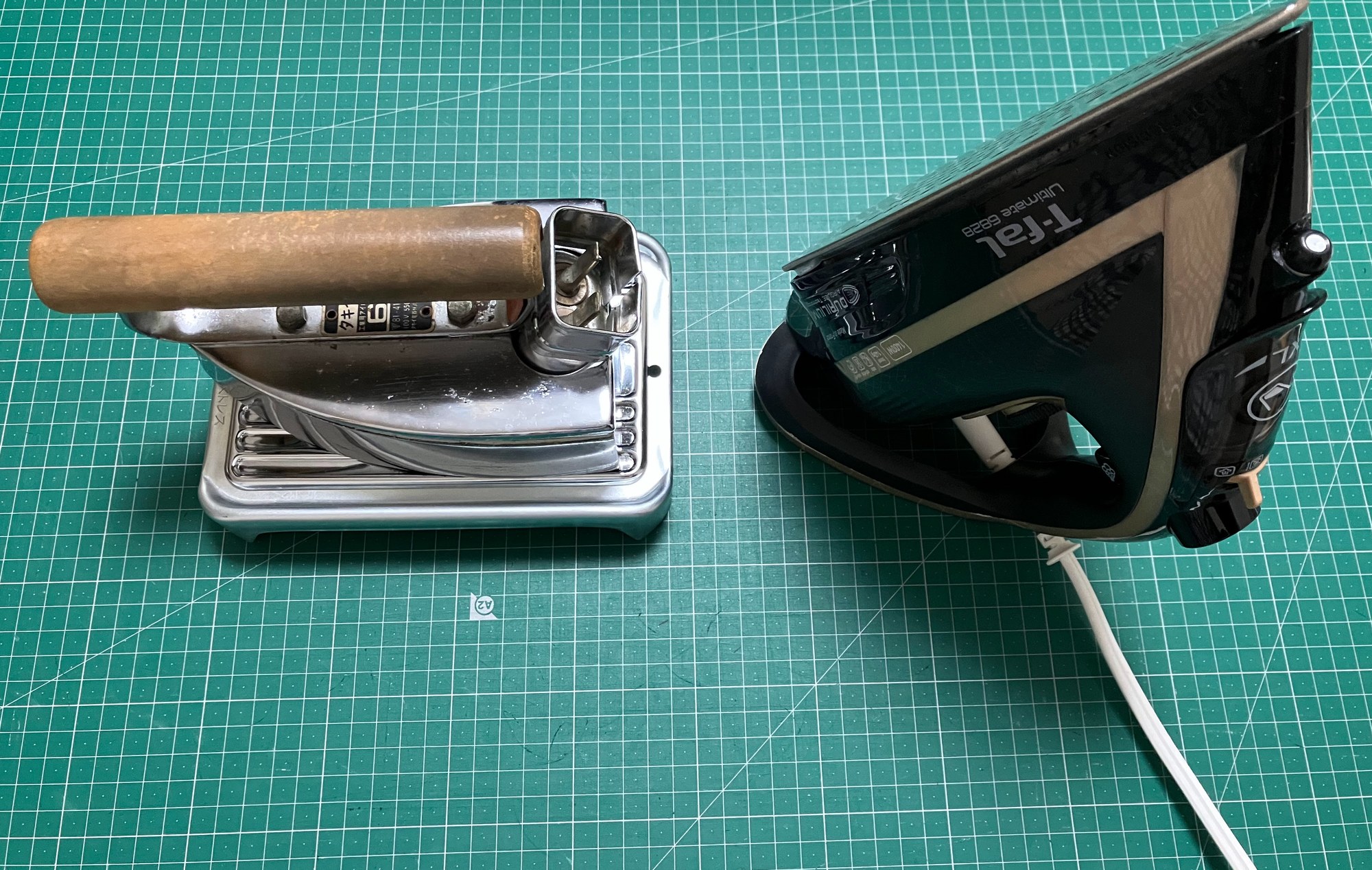
Irons as heavy as this are hard to come by today, and what is generally used now is electric. An older electric iron without a thermostat keeps getting hotter as long as it is plugged in, so the temperature has to be managed by hand, plugging it in and out.
Spray bottle
Used with a dry iron, and whenever water is wanted in one spot.
Pressing cloth
Used when the iron stays in one place for a while, and when pressing from the face.
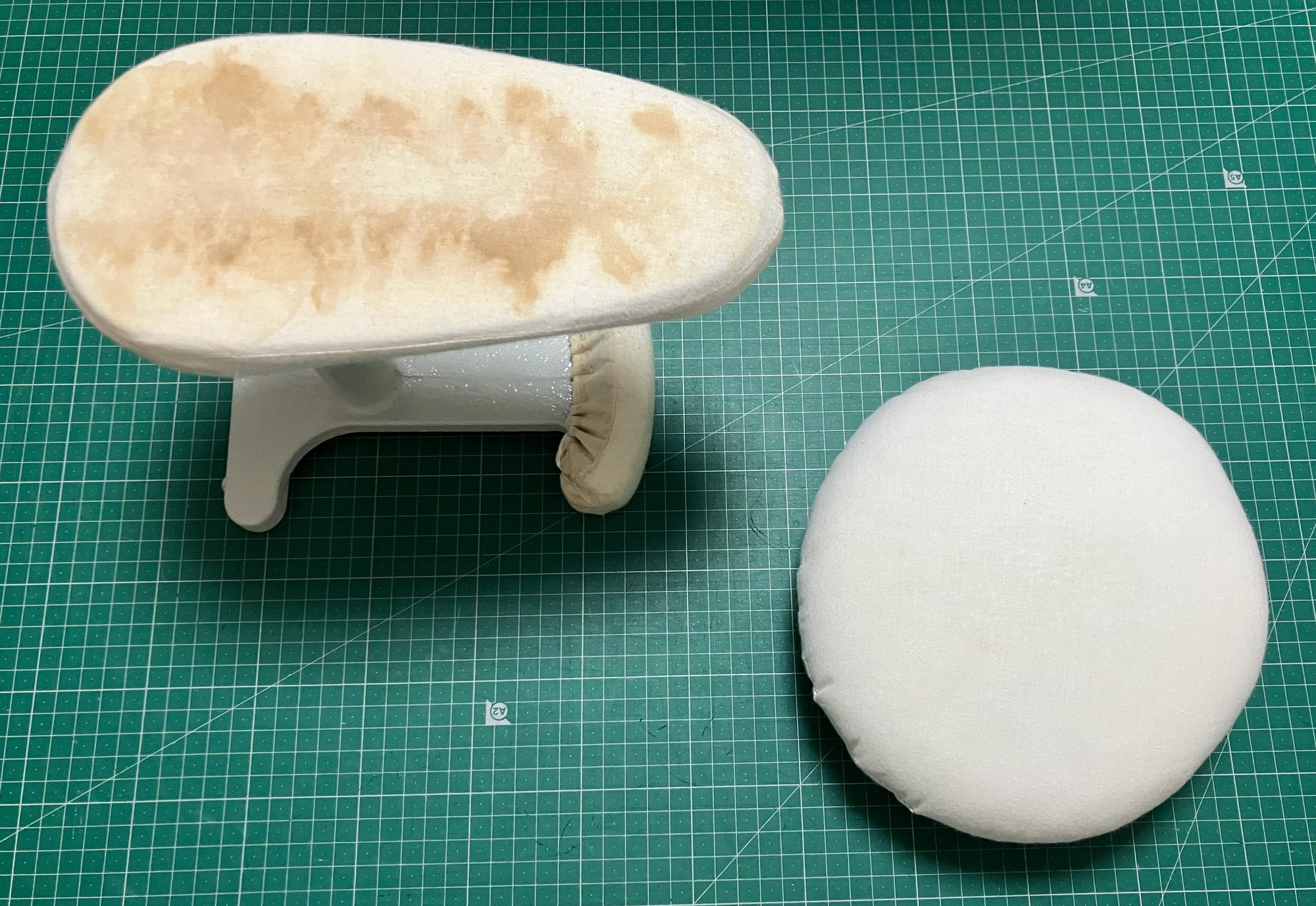
Tailor’s ham
A pressing stand shaped like a bun. It is needed for pressing rounded places: the chest and waist of a coat, the waist of trousers. A medium one will do to begin with.
Sleeve ham
A long, narrow ham for sleeves. Used on sleeves and on the side seams of trousers.
Shoulder press stand
Handy for pressing tight, awkward places: the sleeve head of a coat, the front fork of trousers, the yoke of a shirt.
Press stand
A long press stand that juts out, for the sleeve head, the body and the waist of trousers.
Sewing machine
One machine that sews a straight line is needed. It need not be a high-end model, but avoid one that lacks power, or that is not rigid enough to hold the needle steady. For modern work, an overlocker and a buttonholer are useful.
Which to choose
| For | Machine |
|---|---|
| Starting out | An electronically controlled domestic machine, rigid and powerful, with the fine adjustments on buttons — something like the JUKI HZL-G100B |
| Working seriously | A tailor’s machine such as the JUKI TL-30DX. More rigid and more powerful than a domestic one, and steady on heavy cloth |
| Keeping to the tools of the period | A treadle machine, though not as a first machine |
A powerful domestic machine will rarely feel short of what is needed, as long as it is not pushed for speed. Slow down and it will sew melton well enough.
Tailor’s machines take either domestic or industrial needles. Check which before choosing.
What to look at
- Where it will live. If there is no place to leave it out, choose one with a handle that is easy to move.
- A foot pedal, since the speed is best controlled with the foot.
- An automatic threader, if the eye is not what it was.
- A domestic machine with many functions may work buttonholes automatically. Worth using if working them by hand is hard.
- The higher models add embroidery functions, which men’s tailoring hardly ever uses.
Other
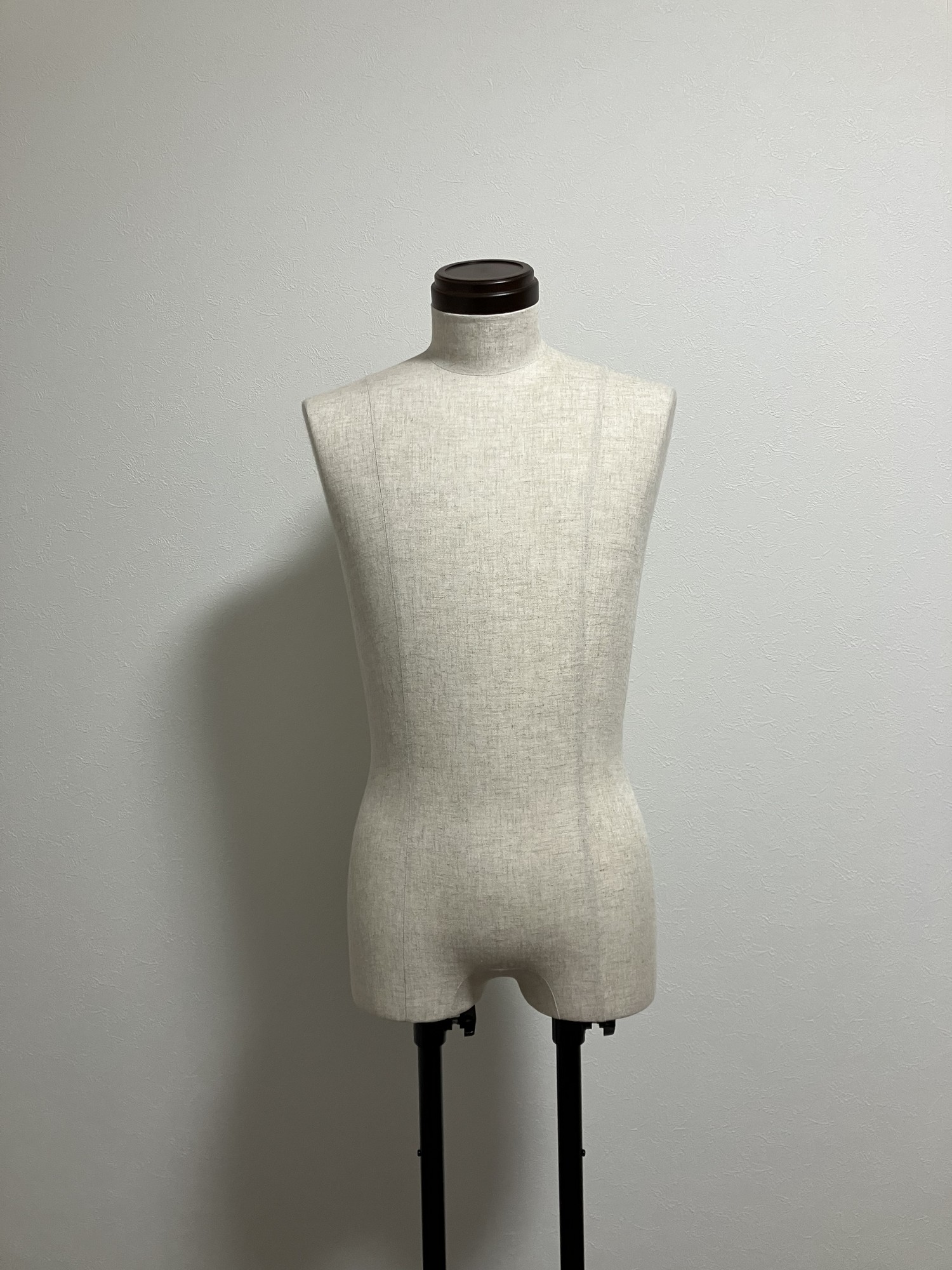
Dress form
A body shaped to an average figure. The men’s tailoring on this site does not use draping, but a form is handy for checking the work as it goes.
Choose a form covered with thin fabric that allows cloth to be pinned in place. It is used to hold the body pieces during sewing and check how they look.
Clothes brush
One of horsehair or bristle. Handy for brushing off the dust that collects while sewing.
Work table
To handle a large piece such as the forepart of an overcoat, at least about 140cm long and 60cm wide.
References
- Japan (1948) 『図解紳士服全書』 生活研究社 pp.208-212 Catalogue recordTransmission service