This page was originally written in Japanese and has been translated into English. Some photographs retain Japanese annotations; the text and captions explain the construction in English.
Tailor's Tacks
How wool cloth is marked. The marks are carried to both layers at once, and nothing is left behind when the threads are pulled out.
Tailor’s tacks put the same marks on several layers of cloth at once.
Chalk can be drawn on directly, but it never brushes off completely and it does not carry to the other side. To put the same mark on two layers, tailor’s tacks are the sure way. The basting thread itself is the mark, so nothing is left behind once it is pulled out after sewing.
The order of work
- Lay the two layers right sides together
- Follow the chalk lines with a tacking stitch in doubled basting thread
- From the face, cut the thread through the middle of each stitch (cut ① in the figure)
- Lift one layer and cut the threads between the two (cut ② in the figure)
- Trim the thread ends left on the face
- Press over them with the iron
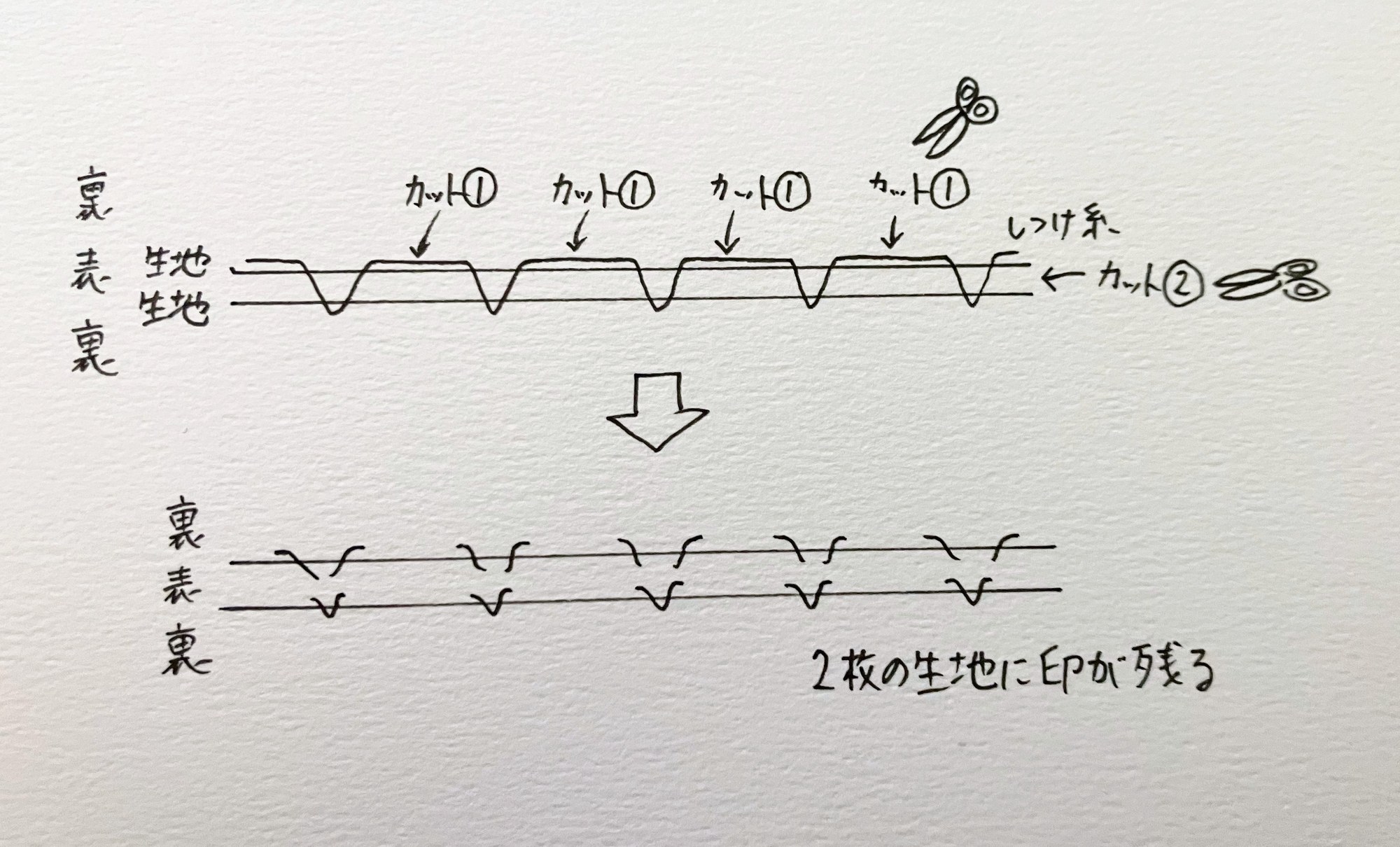
At the tacking stage, take the curves and the balance marks as finely as possible. If the cloth shifts, the marks on the two layers will not agree, so hold it down as the work goes on.
What to watch when cutting
When cutting the threads between the layers, lay the scissors flat against the cloth. Raised points will cut the cloth itself.
Leave the thread long enough that the basting thread will not come out. Cut too short and the marks fall away. Pressing afterwards is what keeps them in.
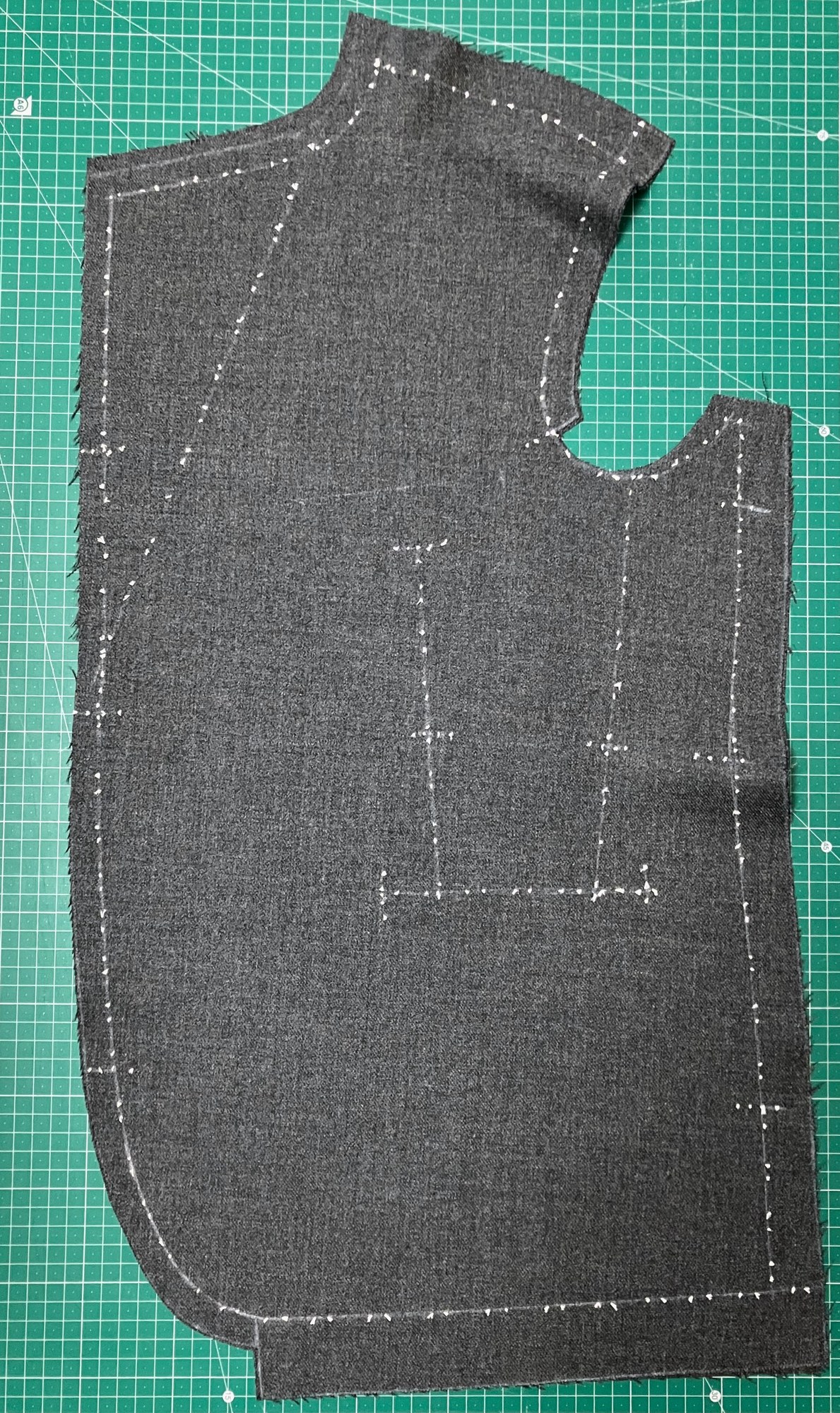
The marks are pulled out with tweezers once they are no longer needed.
References
- Japan (1948) 『図解紳士服全書』 生活研究社 p.214 Catalogue recordTransmission service