This page was originally written in Japanese and has been translated into English. Some photographs retain Japanese annotations; the text and captions explain the construction in English.
Stitches
Hand stitches: blind stitch, overcasting, hand overcasting, catch stitch, pad stitch, back stitch, prick stitch and bar tack, and when each is used.
A raw edge is the cut, unfinished edge of fabric. Hand stitches are chosen by what they are for: to hold something down, to stop a raw edge fraying, to make two layers work as one, to make a seam strong, or to decorate.
Take about 50cm of thread, and choose the needle to suit its thickness. Always use a thimble. Silk thread is used on wool cloth, cotton or linen thread on cotton and linen cloth, and basting thread for tacking and for padding the canvas.
| Stitch | What it is for | Where it is used |
|---|---|---|
| Blind stitch | Holds a folded edge down | Knee lining and waistband curtain of trousers, waistcoat lining, bottom, shoulder and cuff of a coat |
| Overcasting | Stops a raw edge fraying; holds a seam allowance down | Raw edge under the top collar, lower end of the facing, seam allowance at the cuff |
| Loose hand overcasting | Stops a raw edge fraying | Side seam, inside leg and back centre of trousers |
| Catch stitch | Holds a raw edge that frays easily, or a folded edge | Bottoms of an overcoat and of trousers |
| Pad stitch | Makes layers work as one while keeping them soft | Lapel of a coat, canvas |
| Back stitch | Makes a seam strong | Front fork of trousers, back rise |
| Prick stitch | Holds without showing thread on the face; also used as decoration | Edges of a coat, places that tend to bulge |
| Bar tack | Stops a seam end from giving way | Pocket openings, front fork of trousers, side opening of a waistcoat |
Blind stitch
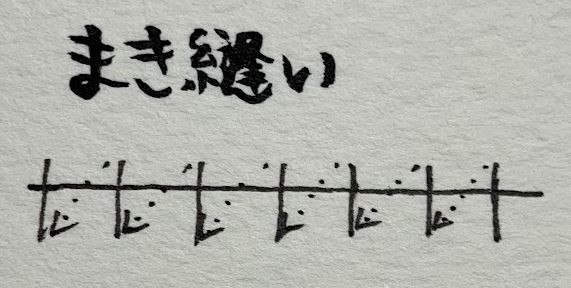
The most used hand stitch, and the one with the widest range. For that reason it divides into cases where a neat finish is the condition and cases where strength comes first.
Hold the needle straight and take a shallow bite of both layers for a neat finish. A deep bite shows the stitches and looks poor, but it is stronger.
The stitch is named differently according to what is being held down.
| Name | What it is for | What to watch |
|---|---|---|
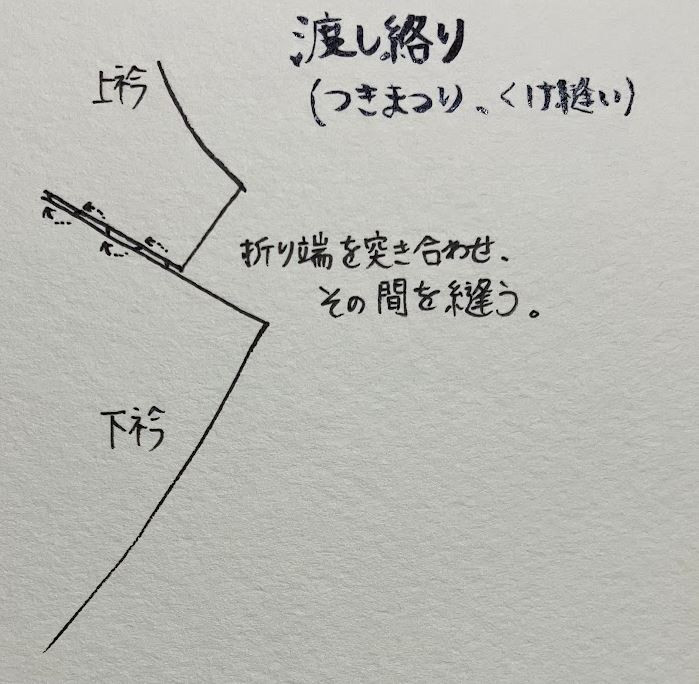
| Stoting | Holds two folded edges butted together, as when the under collar is felled to the top collar | Keep the thread off the face |
| Blind hemming | Where play is needed between face and lining: the bottom of an unlined coat, the bottom of a lining | Slant the needle a little and work loosely, as if blind stitching between the two |
| Fine slip stitch | Where the lining has to be eased in, as at the sleeve lining | Pass the needle at an angle and keep the thread slightly tight. The stitches come out looking like a row of beads |
Overcasting
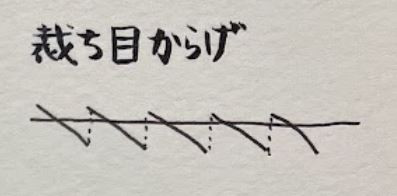
The needle goes in almost square to the raw edge, and the edge is wrapped with short stitches. Take a deep bite. Do not pull the thread tight: hold it just enough that it does not slacken, and keep the stitches even.
It is used on the raw edge under the top collar, and to hold the lower end of the facing to the body, or the seam allowance at the cuff.
Loose hand overcasting
Worked in basting thread, wrapping the edge loosely with slanted stitches. Unlike the close overcasting above, which can also attach an edge to another layer, this loose stitch is used only to finish the edge. It is coarser, and is used to stop fraying where the stitches will be hidden.
On wool trousers the ends of the side seam, the inside leg and the back centre are always stopped this way.
Catch stitch
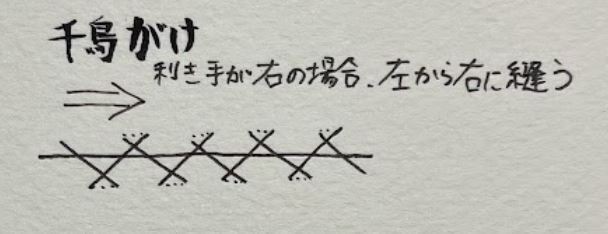
Worked from left to right, picking up above and below in turn. Keeping the upper and lower stitches even is what matters. Besides the turn-up at the bottom, it is used to hold a raw edge that frays easily.
Pad stitch
A stitch that makes layers act as one while keeping them soft. It is used on the lapel of a coat, and in building up several layers of canvas. Keep the thread loose and take only a little of the face, so that the stitches do not show. Pulling it tight draws the layers up and the softness is lost.
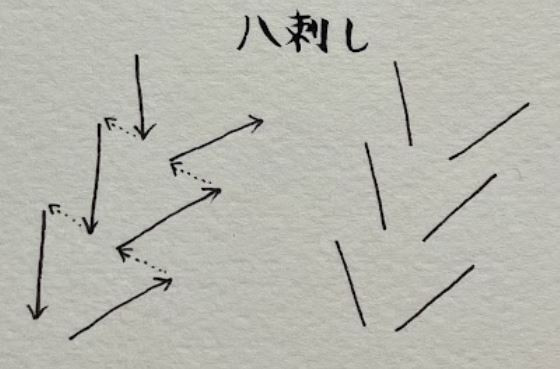
Back stitch
The needle is carried back one stitch at a time. It is used where a seam has to be particularly strong, where it has to give, and where the machine cannot reach. The thread is better left slack.
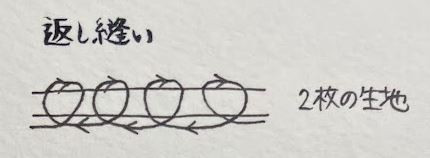
Prick stitch
Worked like a back stitch, in and out one stitch at a time. Little thread is brought to the face, so that the stitches look like dots. The thread is better slack: pulled tight, the cloth puckers at each dot and the stitch shows more, not less.
It has two uses: holding down an edge or a place that tends to bulge, and showing on the face as decoration on a coat. Used as decoration it takes the place of a row of machine stitching.
In either case, hold the thread only enough for the dots to show, and let it pull neither the face nor the under side.
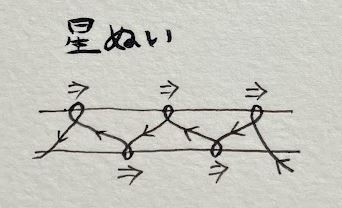
Bar tack
Keeps the end of a seam from giving way where there is strain. It is worked at pocket openings, the front fork of trousers and the side opening of a waistcoat.
Two or three threads are carried across as a core, and the needle is then taken in and out along them, wrapping and filling the core. Buttonhole twist is used.
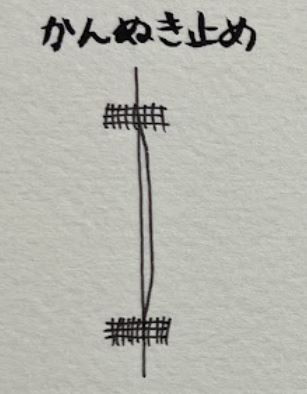
There is also the crow’s foot tack, used as decoration.
Related pages
- Assembling the BodySeaming the back neck on both sides, then seaming the shoulders and the sides of the forepart and the back in one.
- FinishingFinishing the back neck, working the buttonholes and sewing on the buttons.
- Finishing the BottomsTurning the bottoms as the specification asks, and setting the heel tape.
- Making the Top CollarFrom drafting the top collar to assembling the collar canvas and the under collar cloth, setting the collar, and finishing the face cloth.
- Quarter-Lined Summer JacketsSummer jacket construction with less lining for ventilation and enclosed fabric edges for washing. How it differs from a fully lined jacket.
- Setting the CanvasBasting the canvas to the wrong side of the jacket front and pad stitching the lapel. Tape goes on the roll line and the front edge.
- Setting the Canvas and Making the Welt PocketsSetting the canvas in the forepart, making the welt pockets, seaming the facing, setting the back neck piece, and joining the face cloth to the lining.
- Sewing the Fly FrontThe front edge that keeps the buttons and buttonholes out of sight, from cutting the parts to the fly front stitching.
- Sewing the Side Pockets and the Side SeamMaking the side pockets and seaming the side seam. The bottom of the pocket bag is French seamed.
References
- Japan (1940) 『男子服裁縫の要訣』 文化服装学院すみれ会出版部 pp.45-48 Catalogue recordTransmission service
- Japan (1948) 『図解紳士服全書』 生活研究社 pp.213-217 Catalogue recordTransmission service