This page was originally written in Japanese and has been translated into English. Some photographs retain Japanese annotations; the text and captions explain the construction in English.
Ironing and pressing
Stretching and shrinking cloth with the iron to build the shape of the body into a flat piece. How it is done on the forepart and the back of a coat, a waistcoat and trousers.
Pressing is the work of stretching and shrinking cloth with the iron so that a flat piece takes on shape.
The body is not flat. Cloth cut to a flat pattern and sewn as it is will not follow it. Cloth is driven into the places that have to stand out and driven away from the places that have to fall in. In this way the shape of the body is built without darts.
Below, “coat” means the jacket and the overcoat.
How it works
Wool deforms under pressure when heat and moisture are given, and it keeps the shape as it cools.
In the cloth itself, the weave of warp and weft is distorted. By breaking the square crossing of the threads, a shape is made that a flat piece could not take.
Plenty of water is given to the cloth with a sprayer or a brush before pressing.
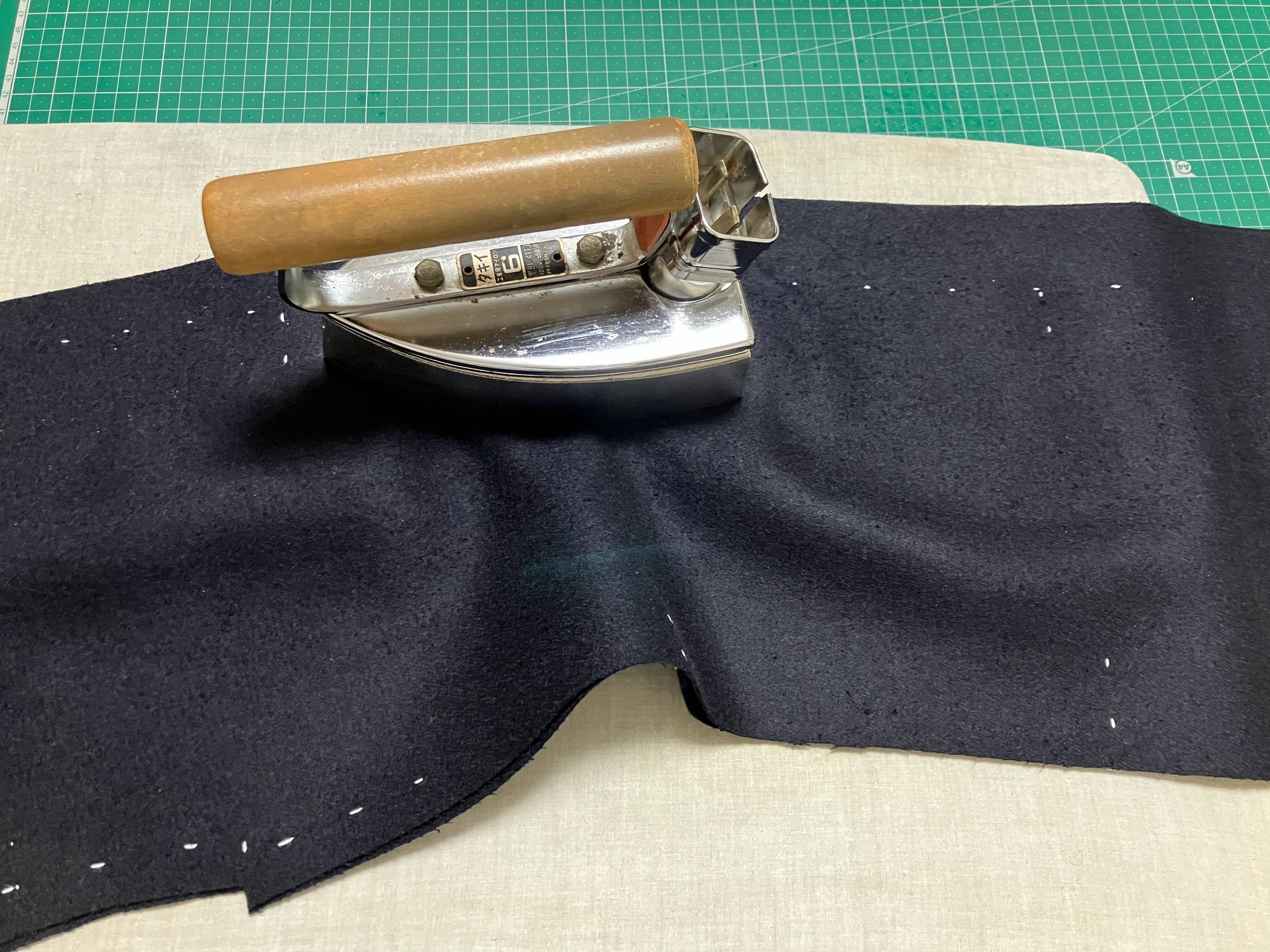
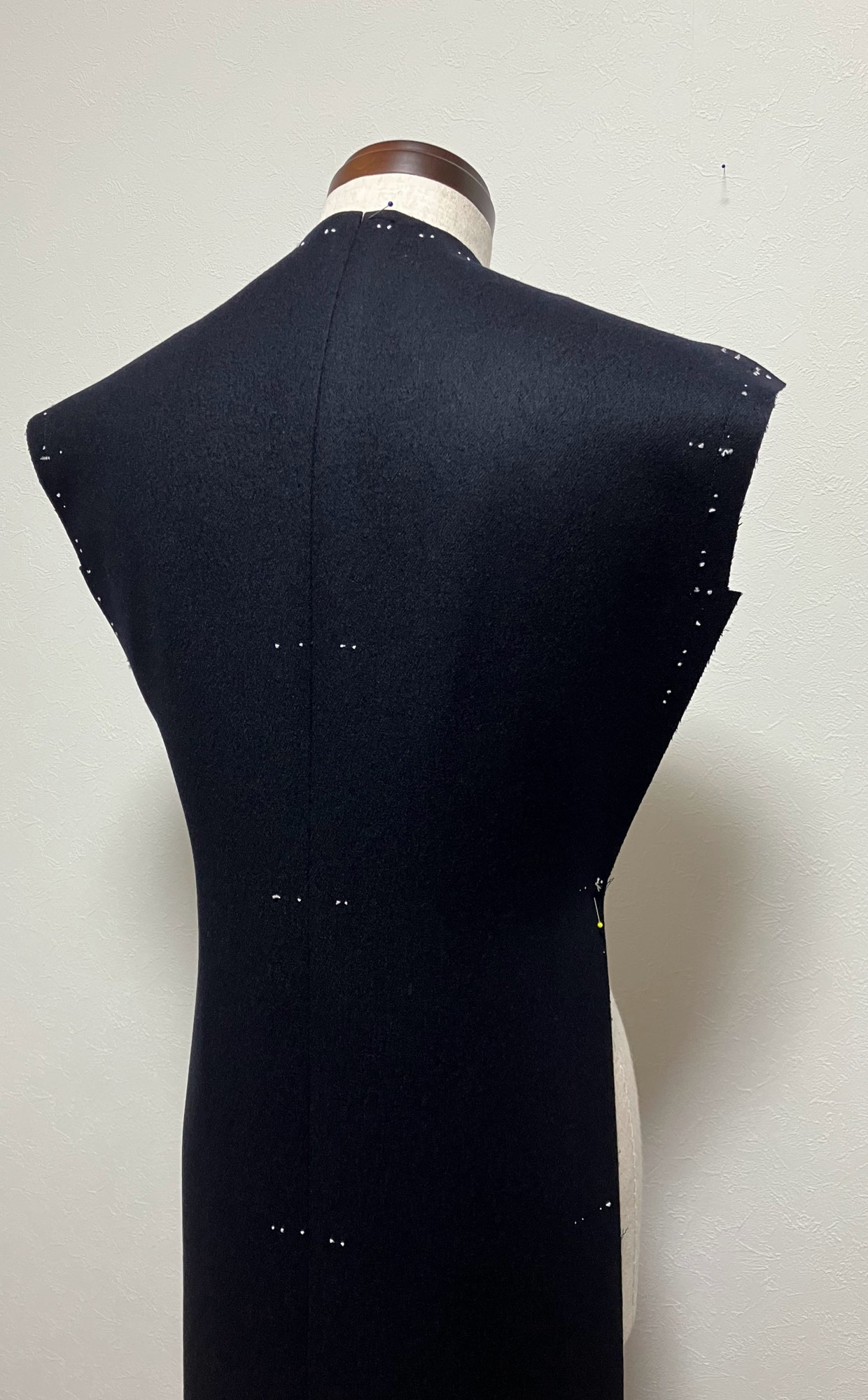
The back of a coat
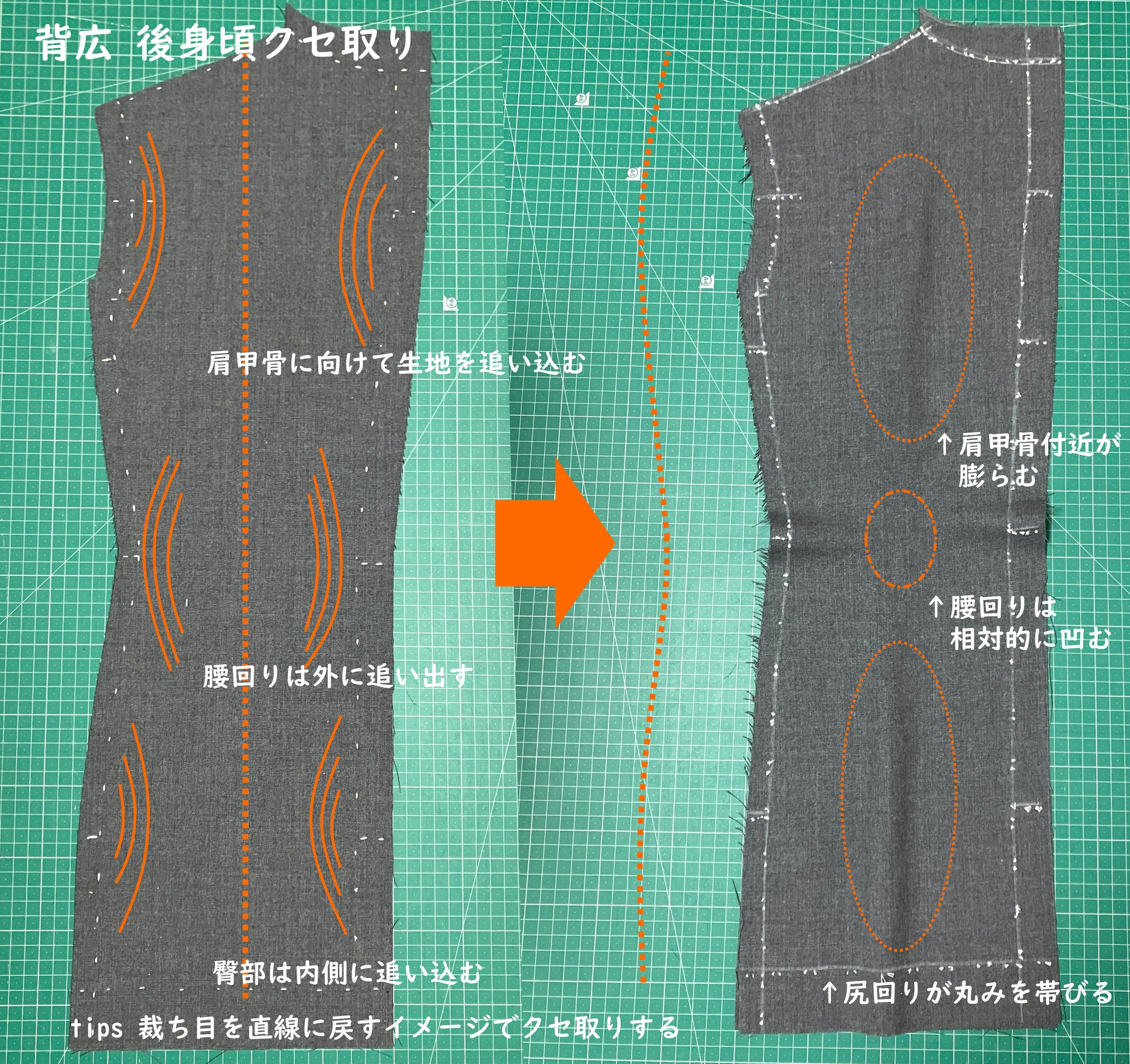
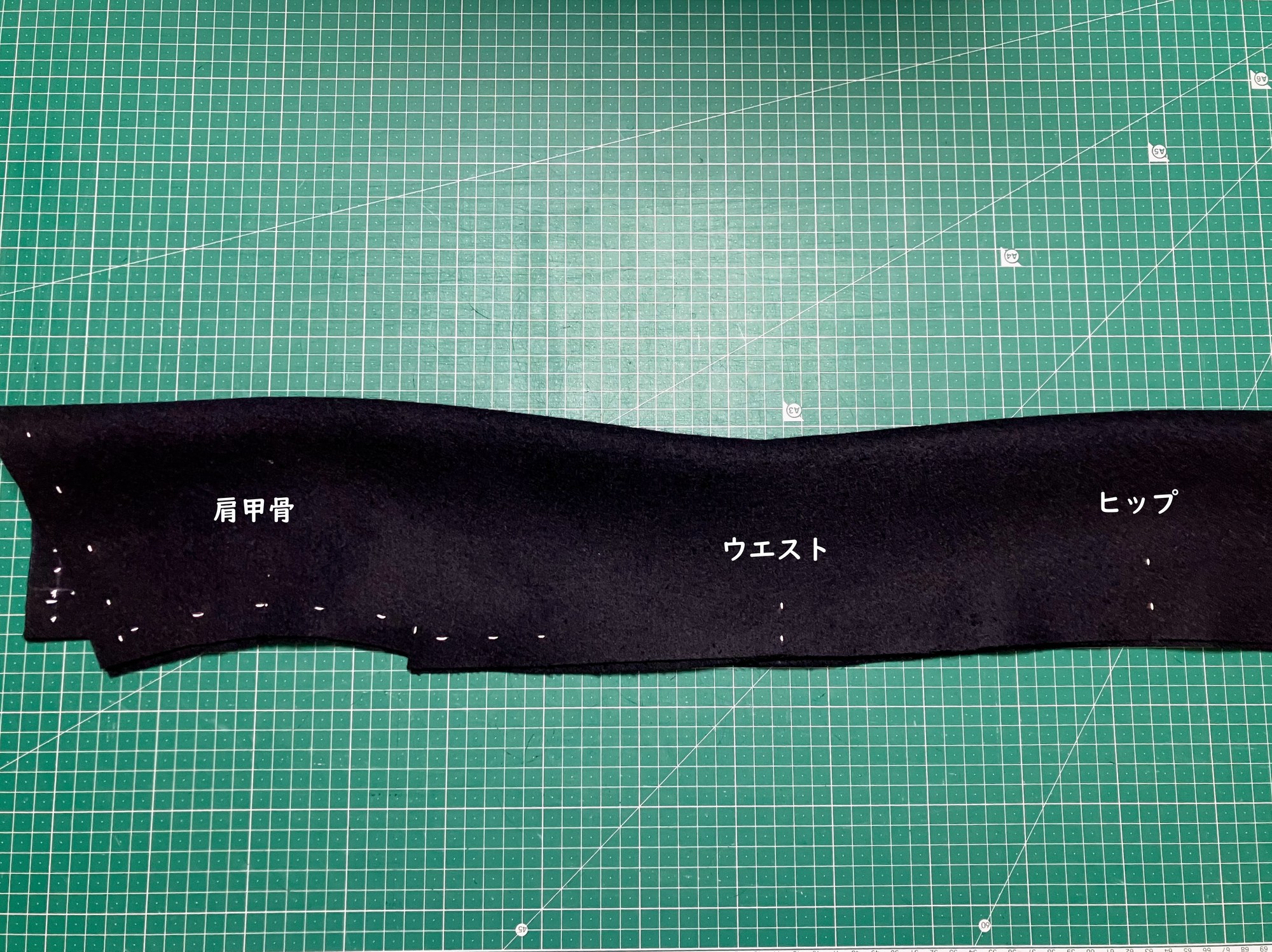
Three places matter: the shoulder blade, the waist and the seat.
| Place | What is done | What comes of it |
|---|---|---|
| Shoulder blade | Cloth is driven towards the blade | The area round the blade stands out |
| Waist | It is driven outwards | The waist falls in by comparison |
| Seat | It is driven inwards | The seat takes on roundness |
It helps to think of it as bringing the cut edge back to a straight line. Once the pressing is done, the back centre becomes a curve that follows the body.
Folded in half, the fold line draws in at the waist. A shape as though a dart were there is made by pressing alone.
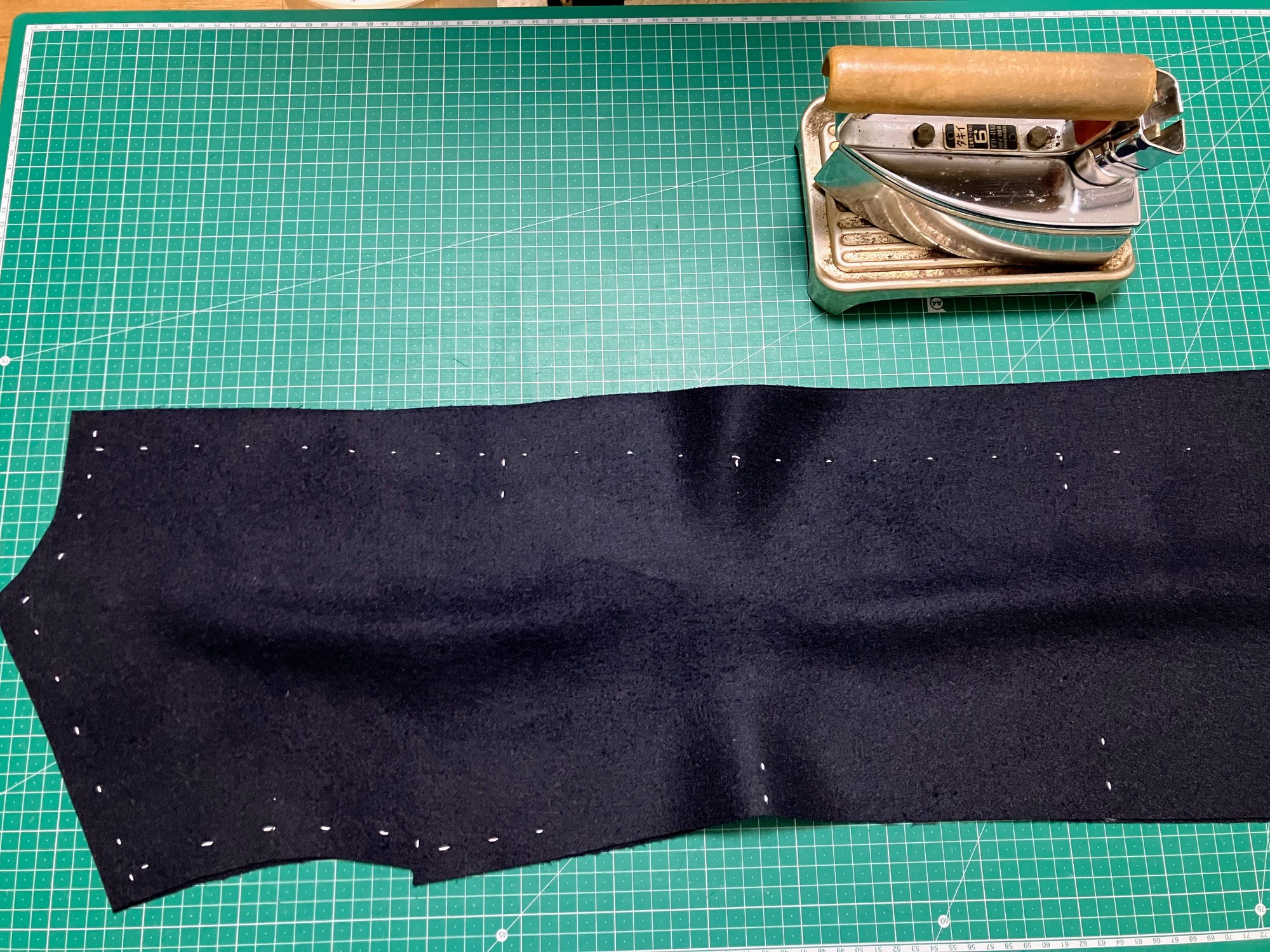
On the form it follows the roundness of the body.
The forepart of a coat
This is the method used on the plain sack coat of about 1950.
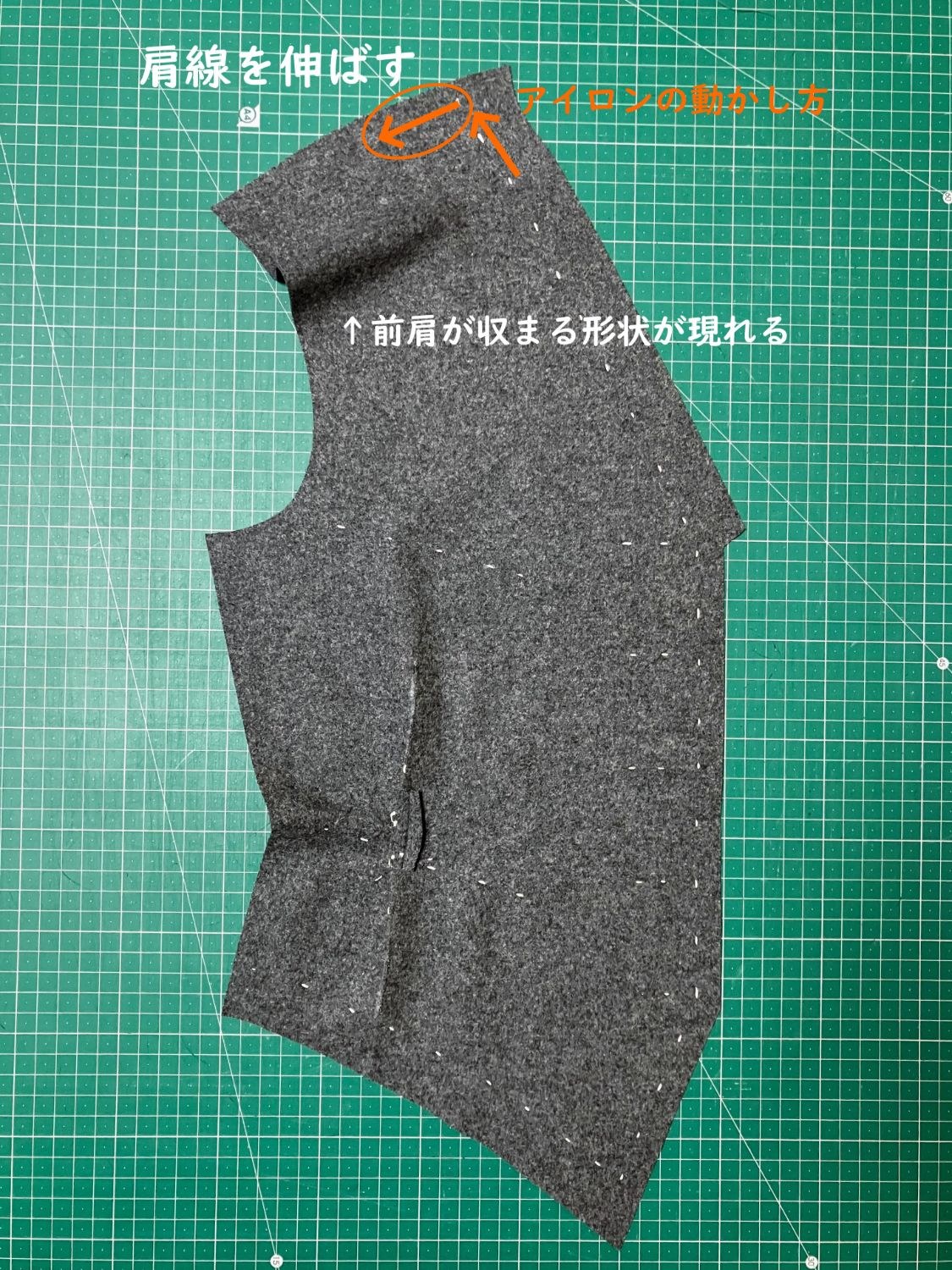
The shoulder — the shoulder line is stretched so that the shoulder end of the scye lifts. It lifts and then follows the front shoulder. The sources differ over the scye; some say to stretch it.
The side seam — stretched a little. It is driven outwards near the waist and shrunk inwards round the seat. Sewn up, the waist comes out drawn in.
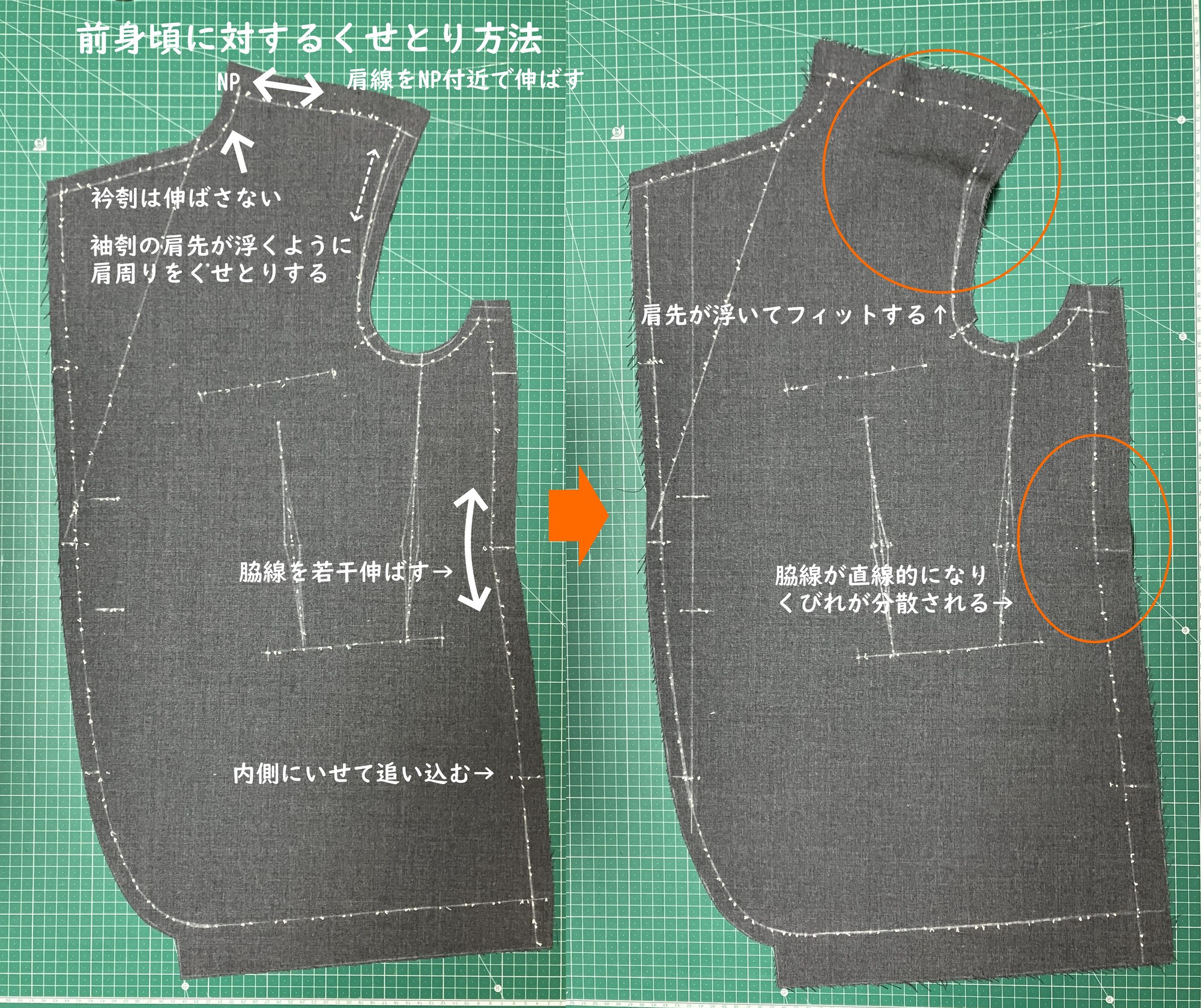
The shaping shown in the figure follows three books of about 1950(Katsumi Takemura 1950)(Keiichi Kimura, Masami Matsubara 1948)(Akihiro Someba, Mineo Ota 1951).
The sleeve of a coat
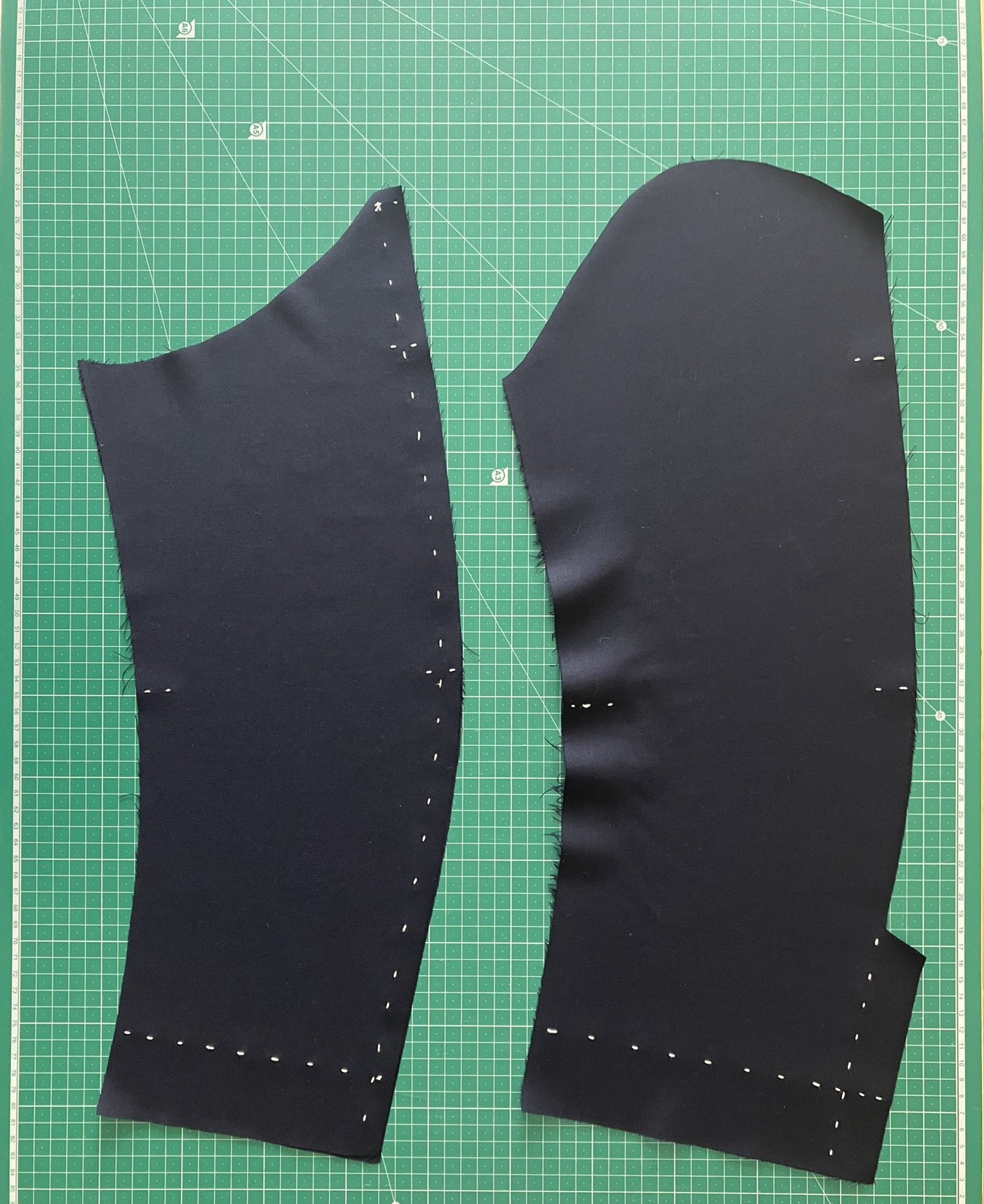
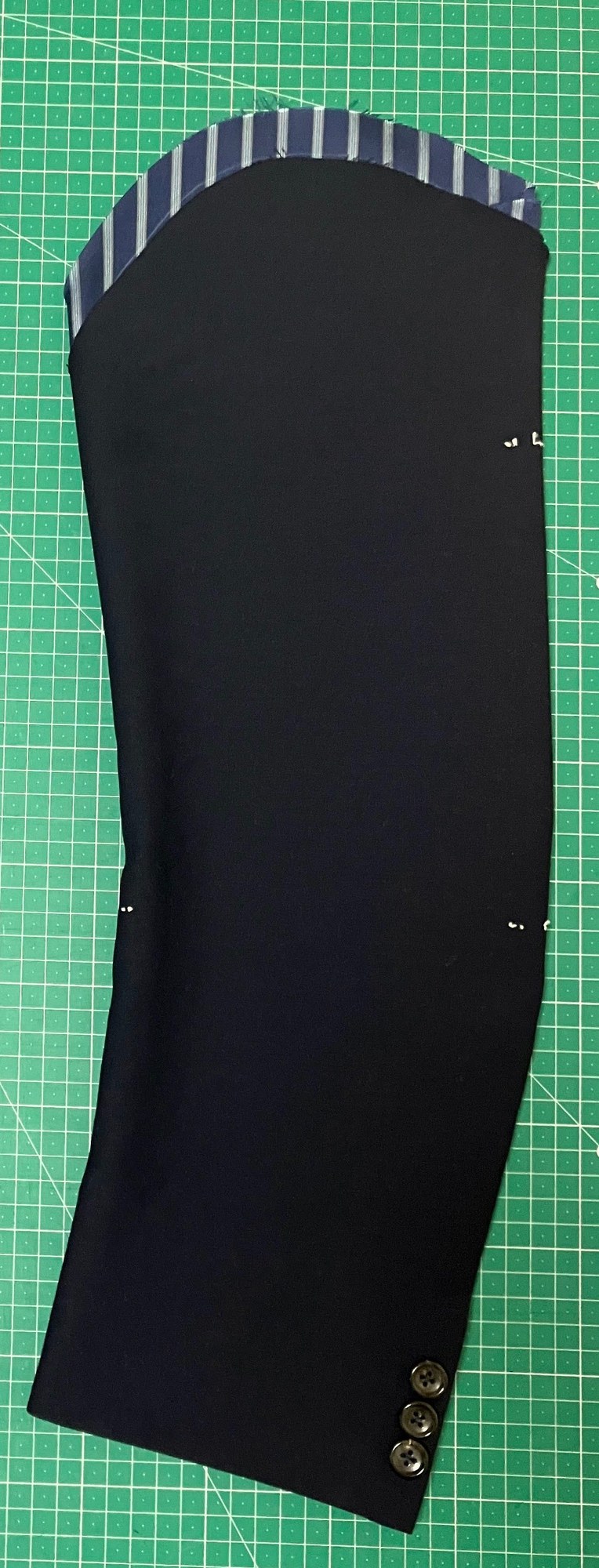
The inside seam of the top sleeve is shaped as well. It turns inwards, and the cloth for that turn has to be found first.
Done well, the fold on the inside of the sleeve draws a clean curve.
The forepart of a waistcoat
As on the forepart of a coat, the shoulder line is stretched near the neck point. That makes room for the front shoulder to sit.
The back of trousers
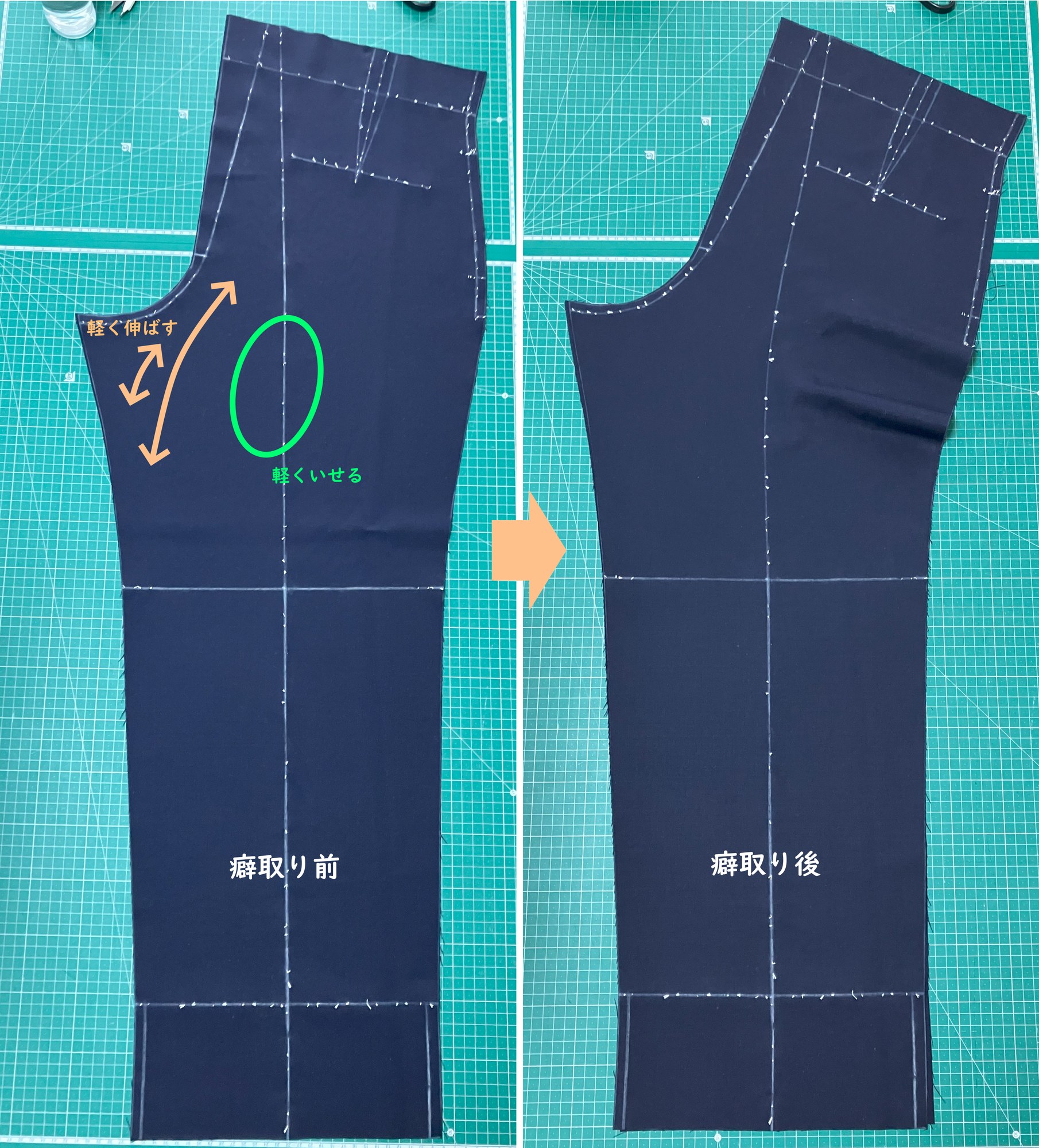
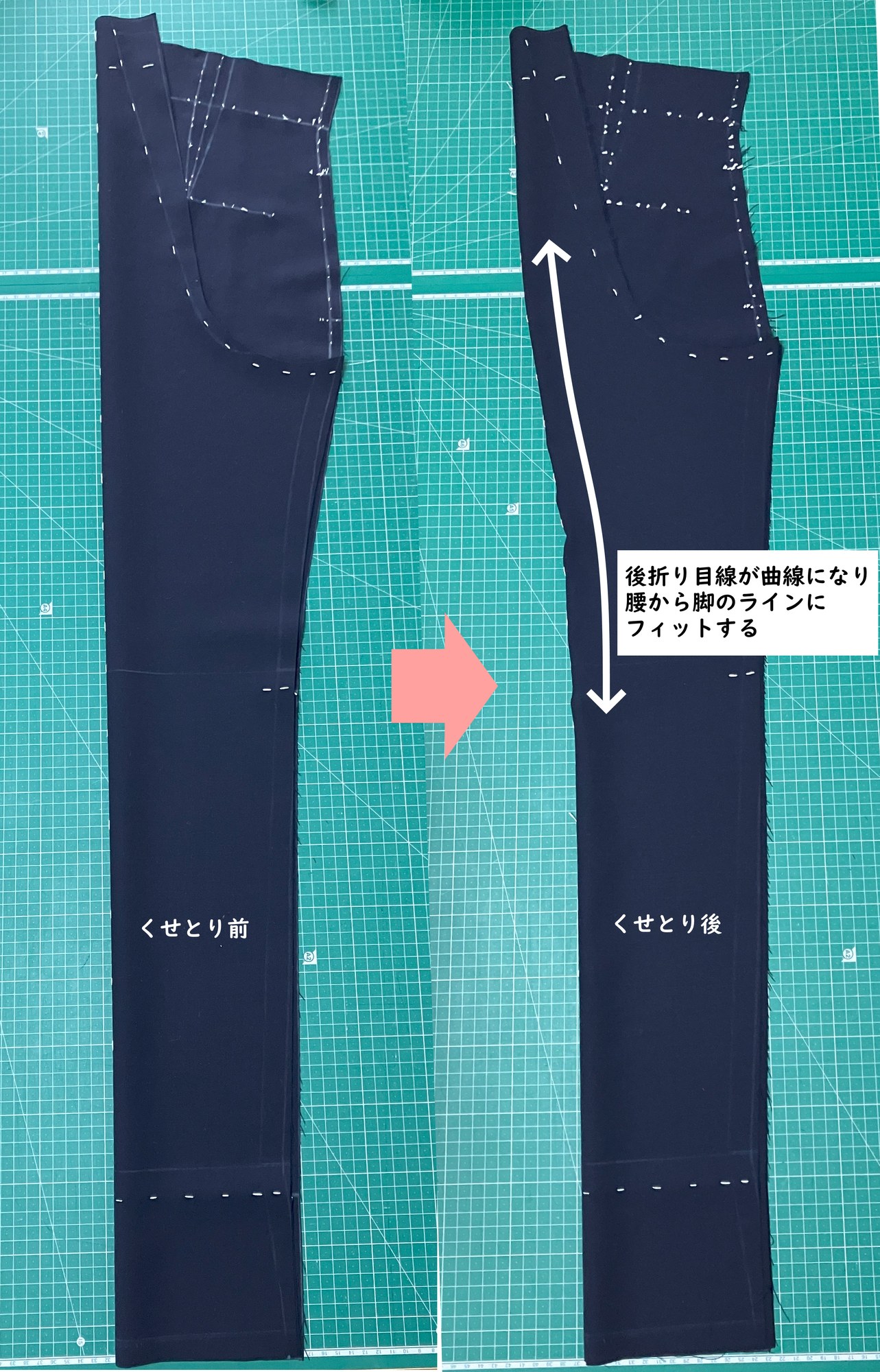
On the loose trousers of about 1950, very little pressing is needed. Trousers with plain bottoms that are not cut straight over the seat need pressing below the knee and round the bottom as well.
| Place | What is done |
|---|---|
| Round the back rise | Stretched lightly |
| Round the crease line | Eased in lightly |
The pressing turns the back crease line into a curve that follows the line from the seat down the leg.
Related pages
- FinishingWorking the buttonholes, pressing, and sewing on the buttons.
- Making the BackMaking the back in both the face cloth and the lining.
- Making the CanvasBuilding the canvas that goes behind the forepart of a waistcoat, shaping the front shoulder and making the breast dart.
- Making the ForepartMaking the forepart in both the face cloth and the lining. Shaping and the breast dart in the face cloth; the dart and the inside pocket in the lining.
- Making the ForepartMaking the forepart in both the face cloth and the lining. The outside pockets are made here too.
- Making the SleeveMaking the sleeve in both the face cloth and the lining, joining the two, and setting the sleeve in the body.
- Making the Top CollarFrom drafting the top collar to assembling the collar canvas and the under collar cloth, setting the collar, and finishing the face cloth.
References
- Japan (1948) 『図解紳士服全書』 生活研究社 Catalogue recordTransmission service
- Japan (1950) 『ティラァズ・ブック : 紳士服の裁断と縫方』 緑屋洋装研究所 Catalogue recordTransmission service
- Japan (1951) 『男子服の縫い方』 服装技能協会 Catalogue recordTransmission service