This page was originally written in Japanese and has been translated into English. Some photographs retain Japanese annotations; the text and captions explain the construction in English.
Sewing a Jetted Pocket with Narrow Welts
Making a jetted pocket with particularly narrow welts, from preparing the welt strips to finishing the pocket bag.
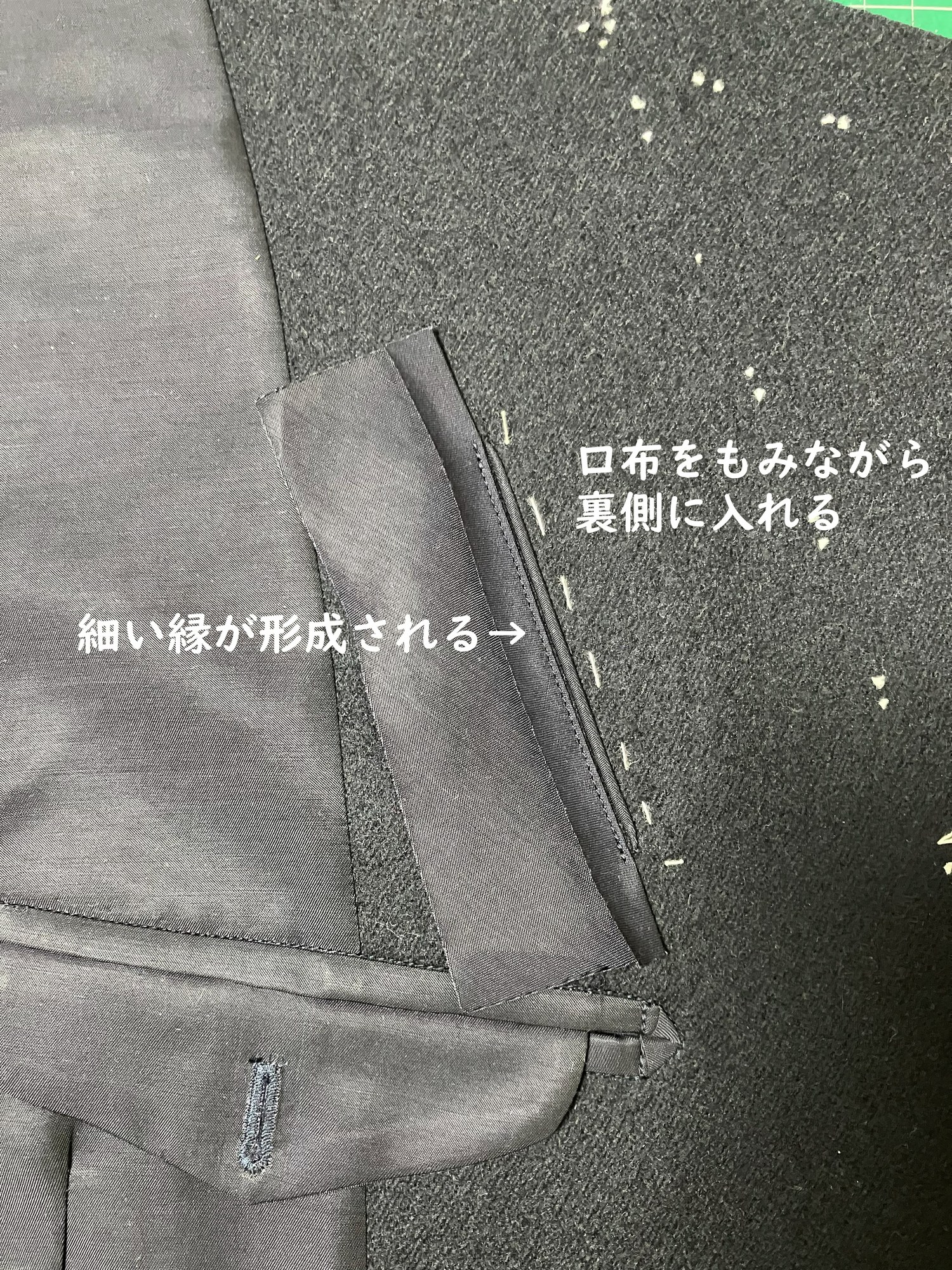
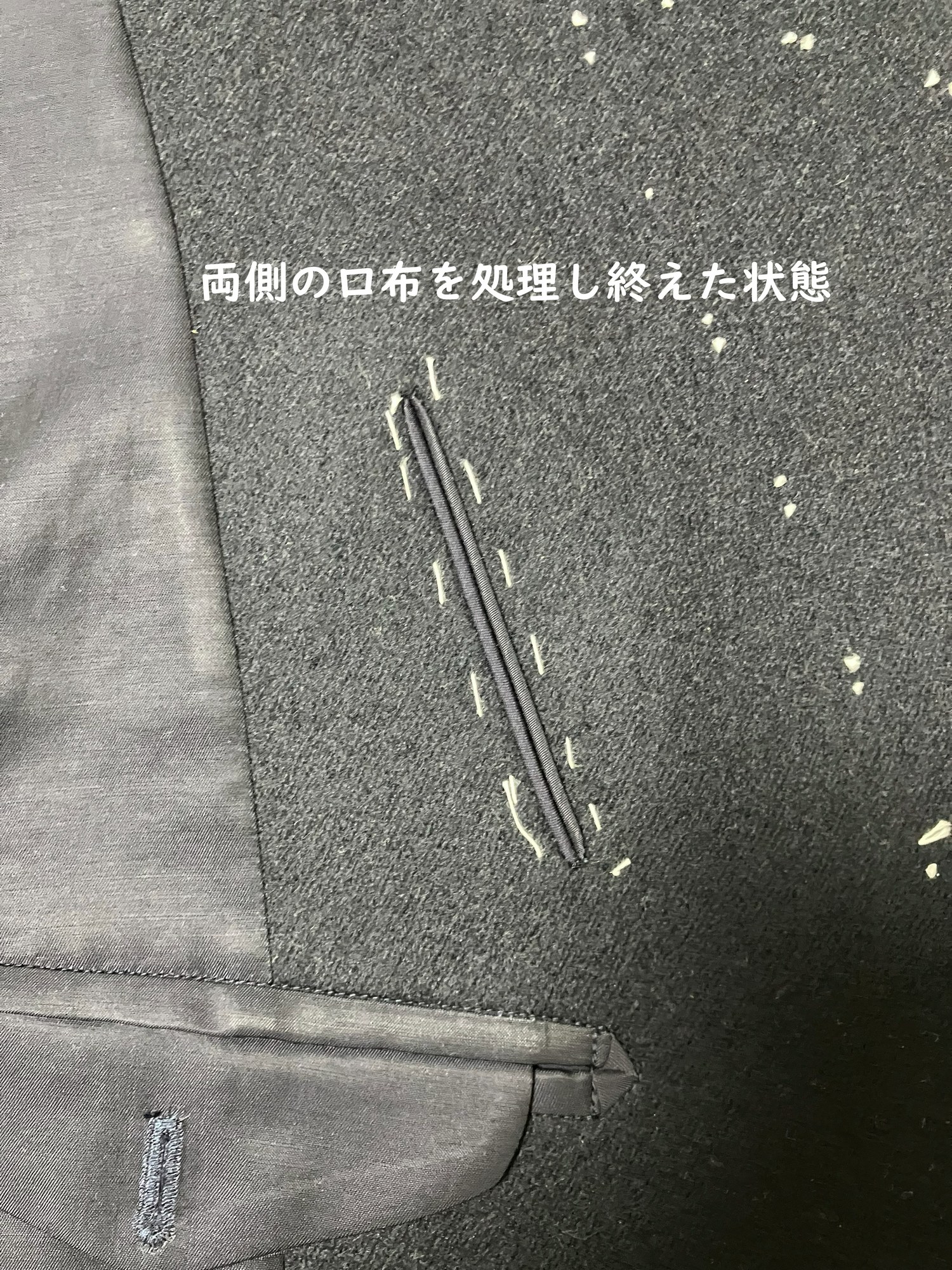
This jetted pocket is distinguished by its particularly narrow welts. The welt strips are worked between the fingers as they are turned to the inside to form these fine edges. This construction is used for a small ticket pocket inside the left front of a jacket and for other inside pockets.
For an inside breast pocket, the facing can be extended around the pocket opening. The opening is then surrounded by the outer fabric rather than lining alone. This is the construction called daiba in Japanese.
The welt strips and the pocket facing are in a thin cloth like a lining; the bag is in lightweight cotton fabric (pocketing).
The parts
The bag, two welt strips and the pocket facing are cut. The welt strip is 4 to 5cm wide, and about 4cm longer than the pocket opening.
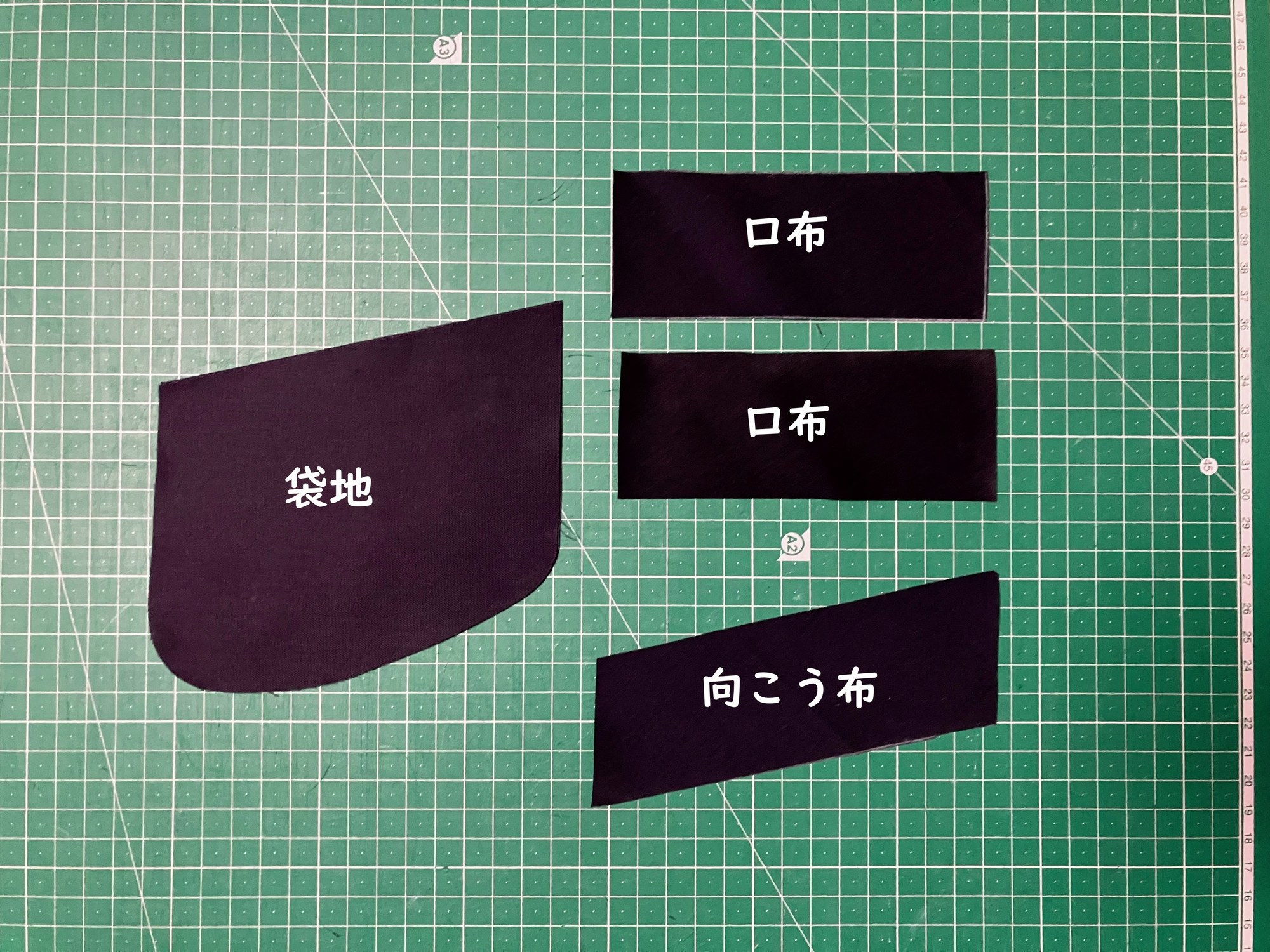
The pocket facing and the welt strip
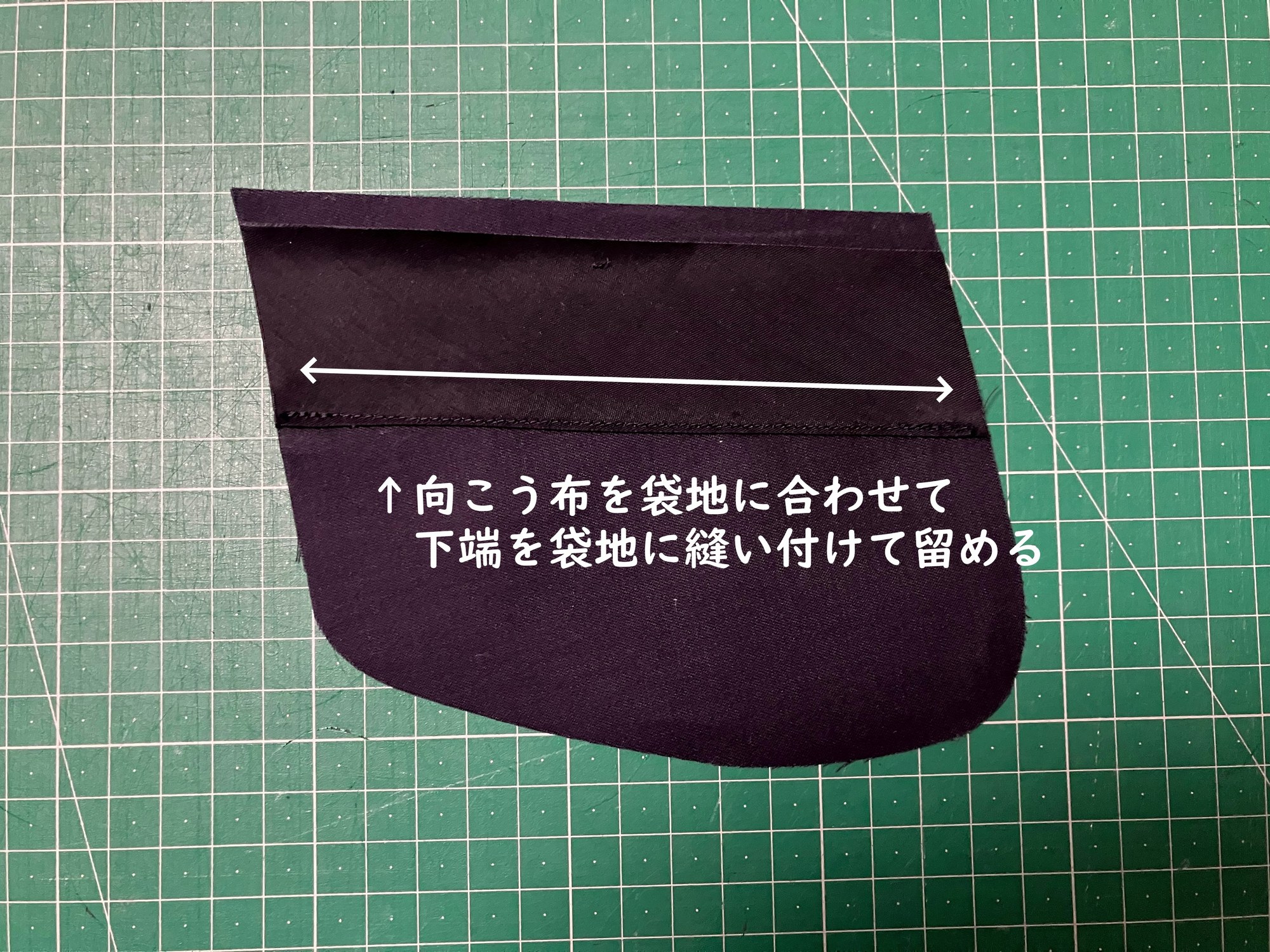
The pocket facing is set to the bag and sewn down at its lower edge.
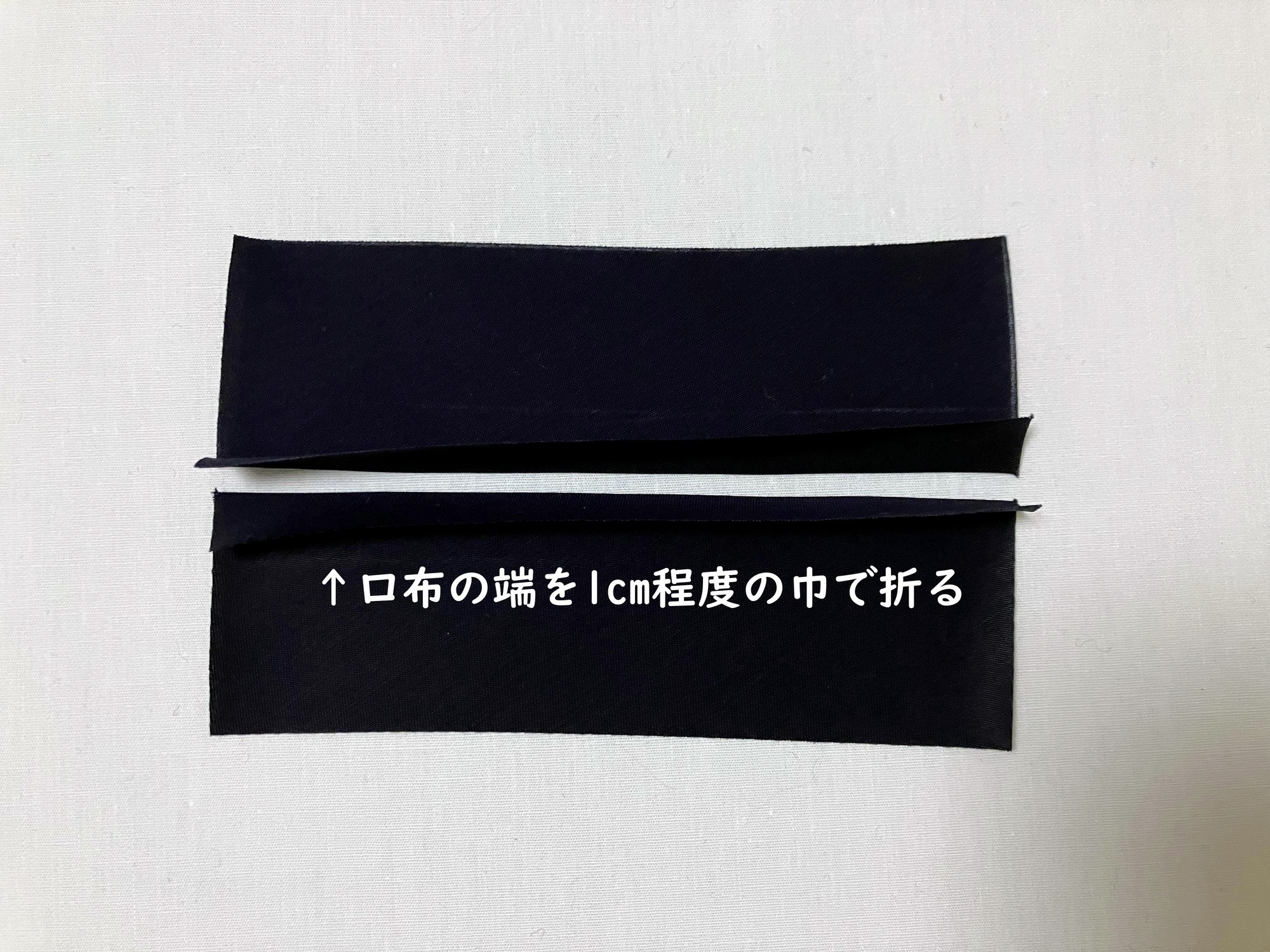
The edge of the welt strip is folded over about 1cm.
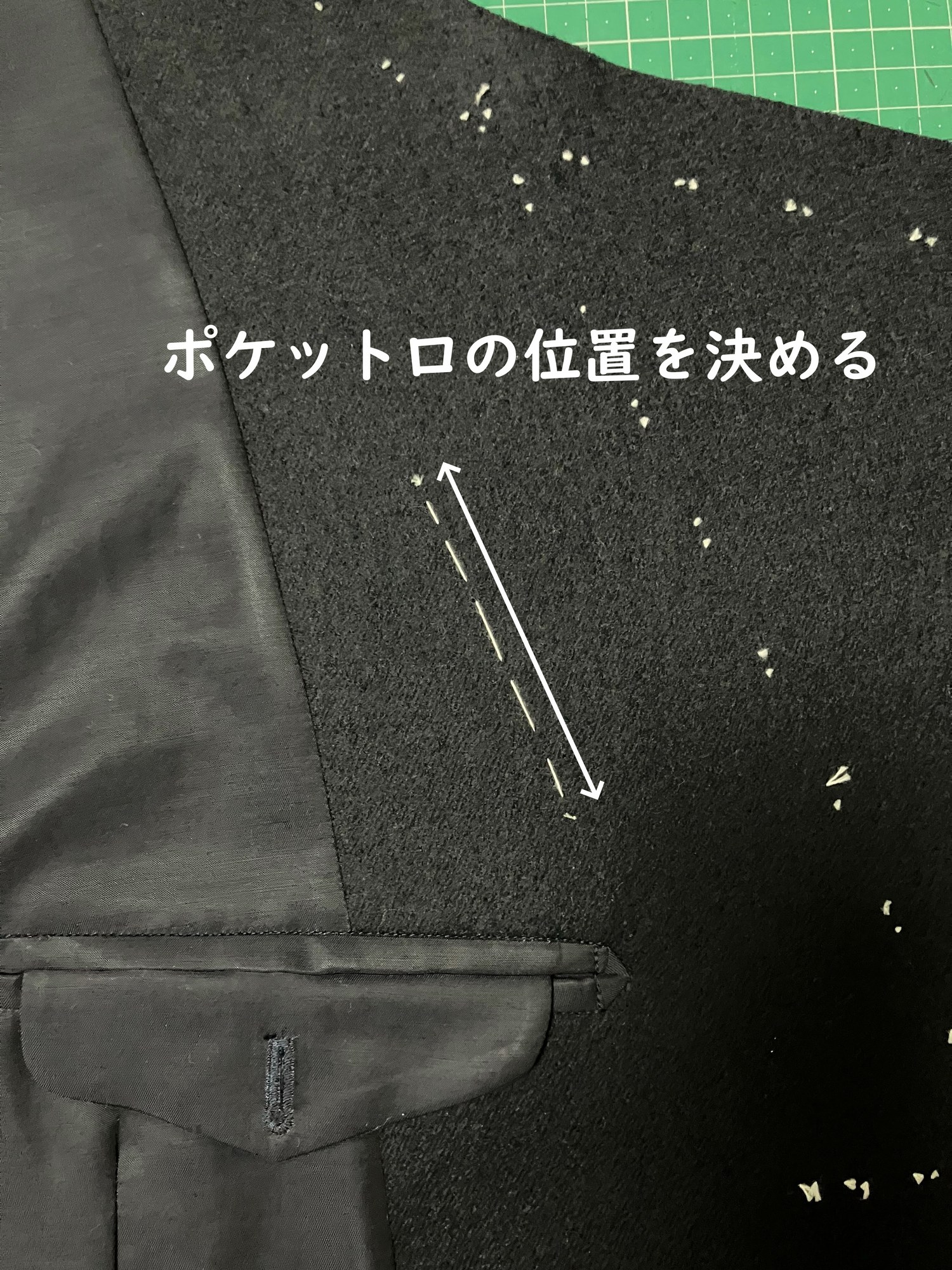
Marking the position
The small inside ticket pocket shown here has an opening about 9cm wide.
Stitching on the welt strips
First, a stay is put behind the pocket opening.
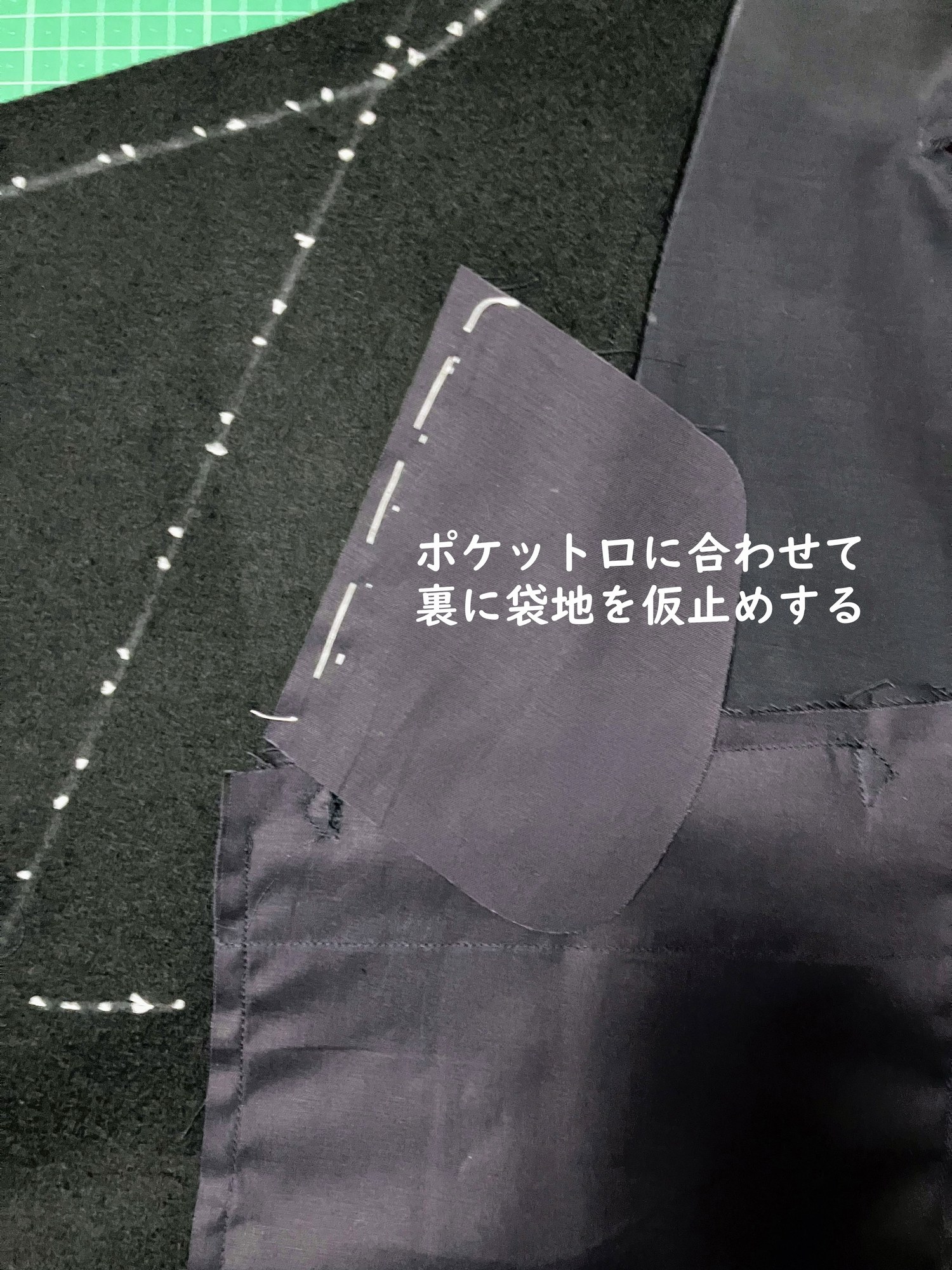
Behind, the bag is set to the opening and basted.
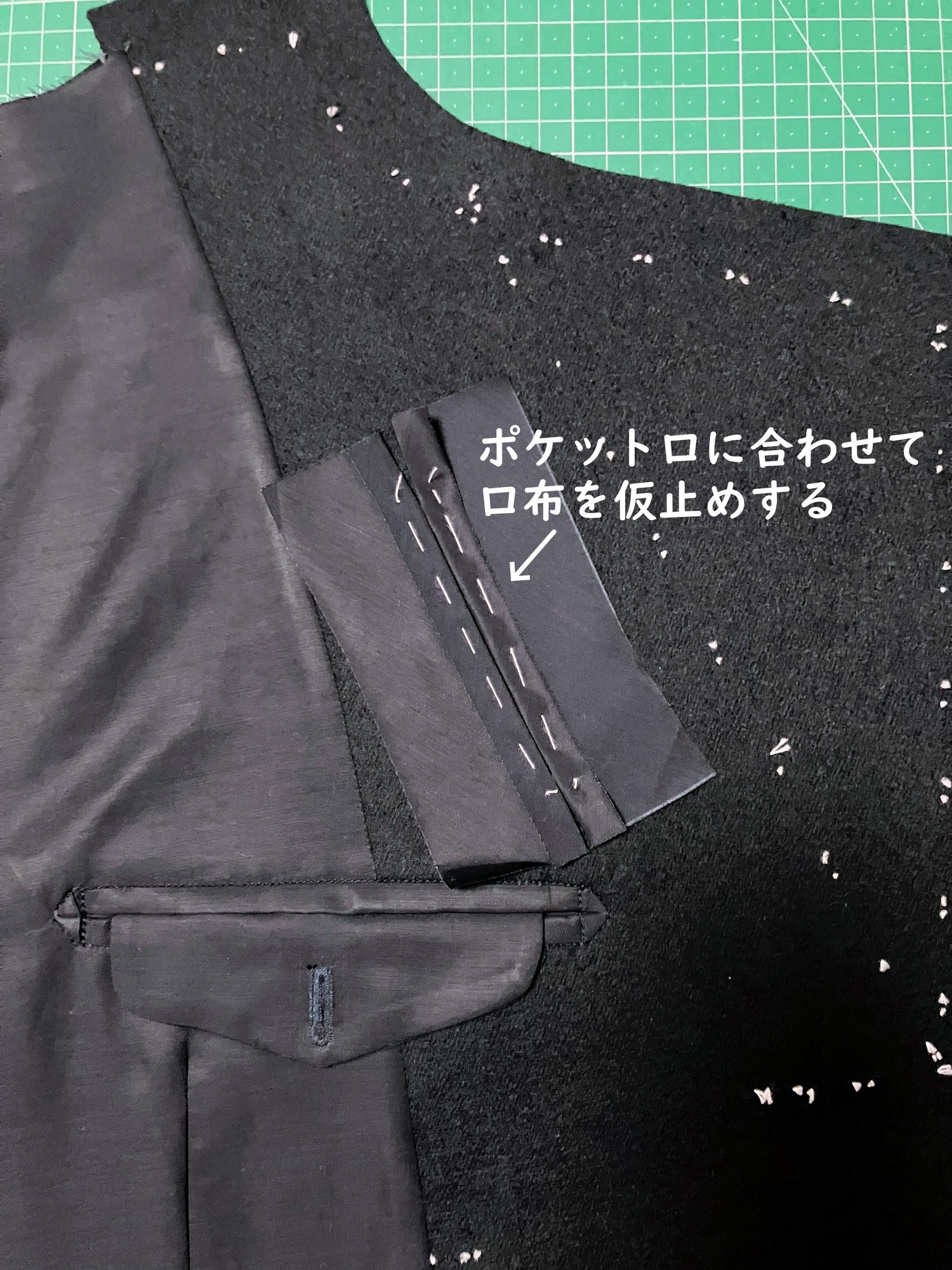
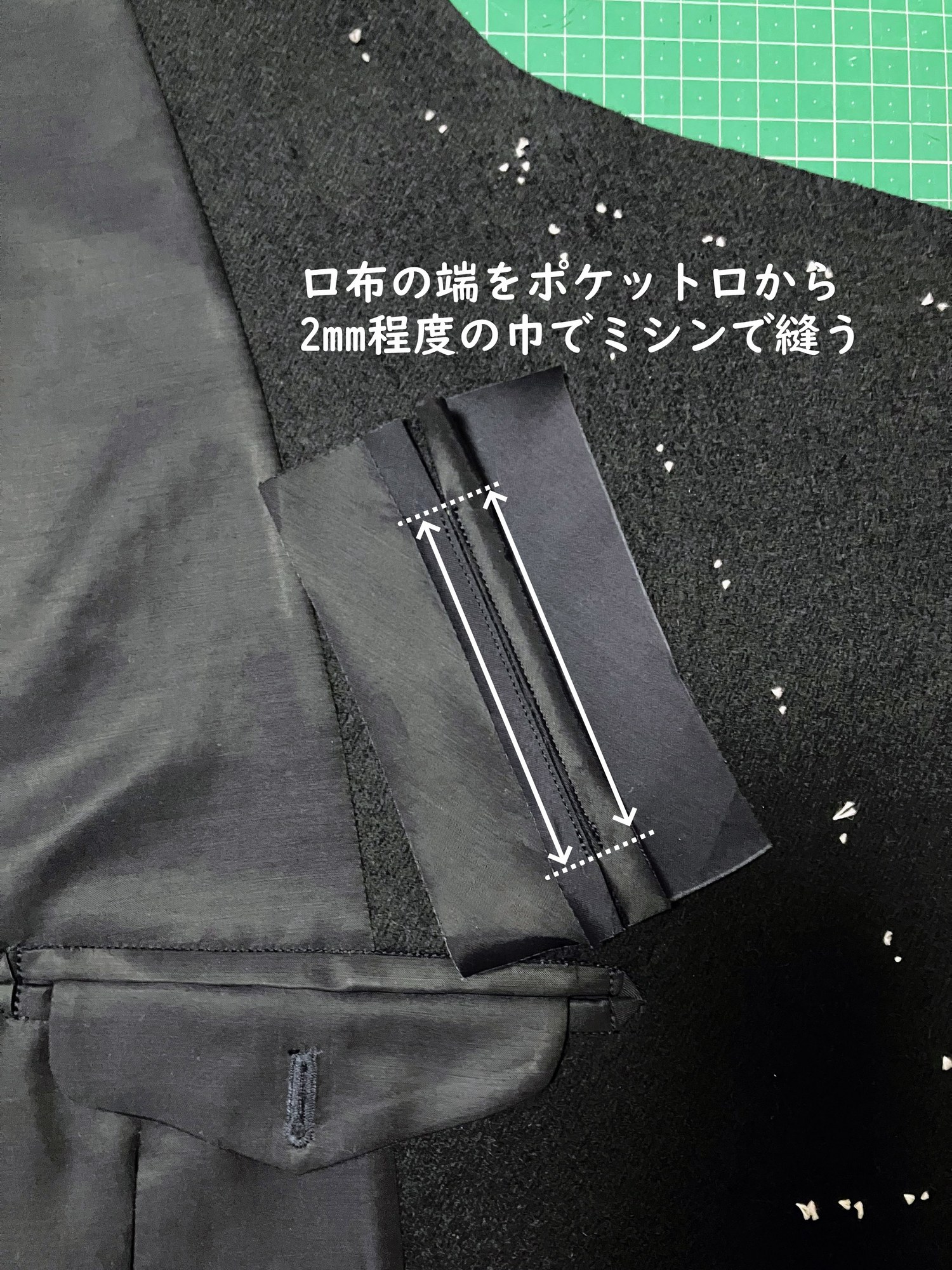
On the face, the welt strip is basted to the opening, and its edge is machined about 2mm from the opening. The upper and the lower piece are done the same way.
Cutting the pocket open
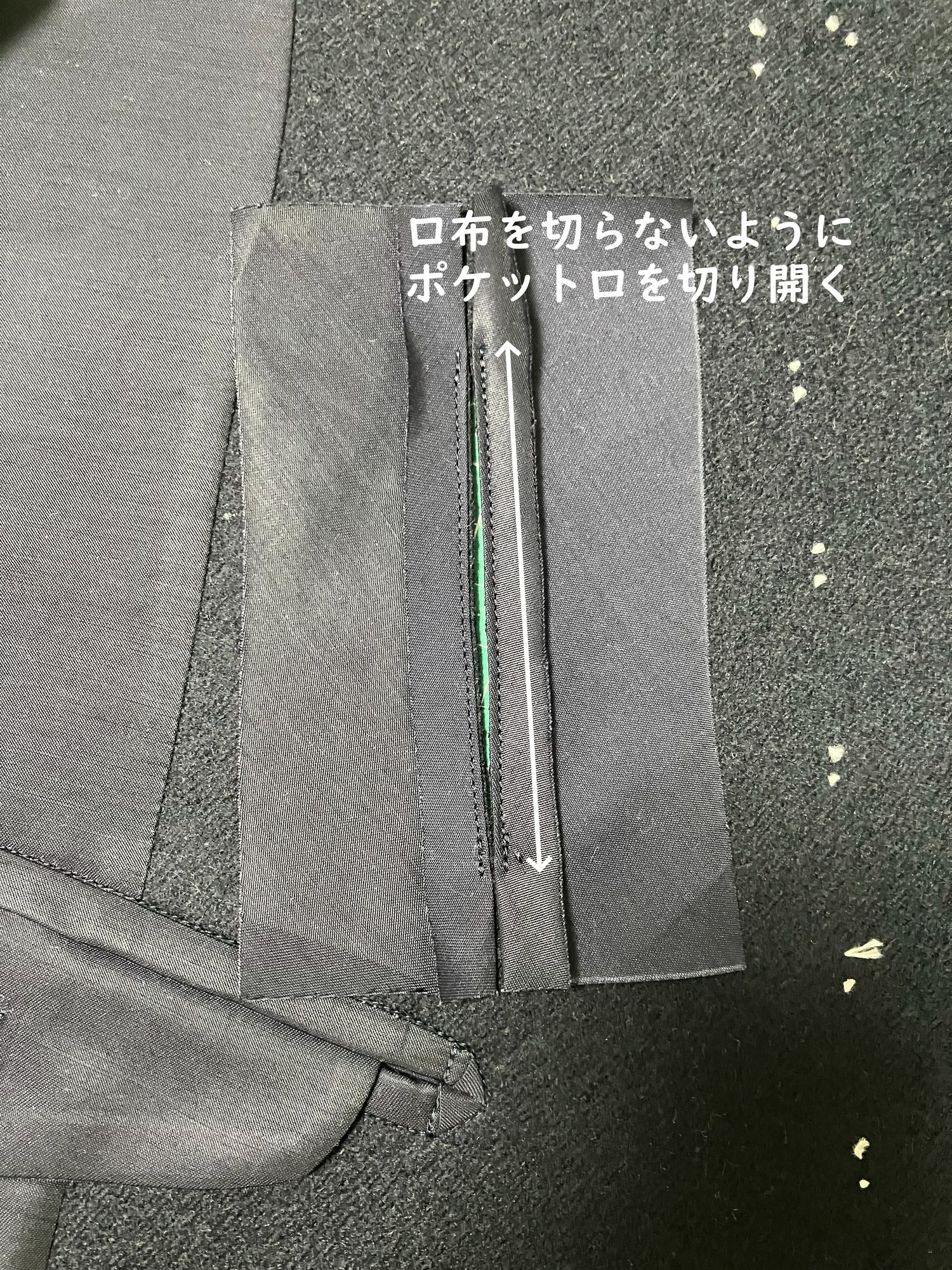
The pocket is cut open, taking care not to cut the welt strips.
Making the edge
The welt strip is rolled between the fingers as it goes through to the back, which gives a fine edge. The upper and the lower piece are done the same way.
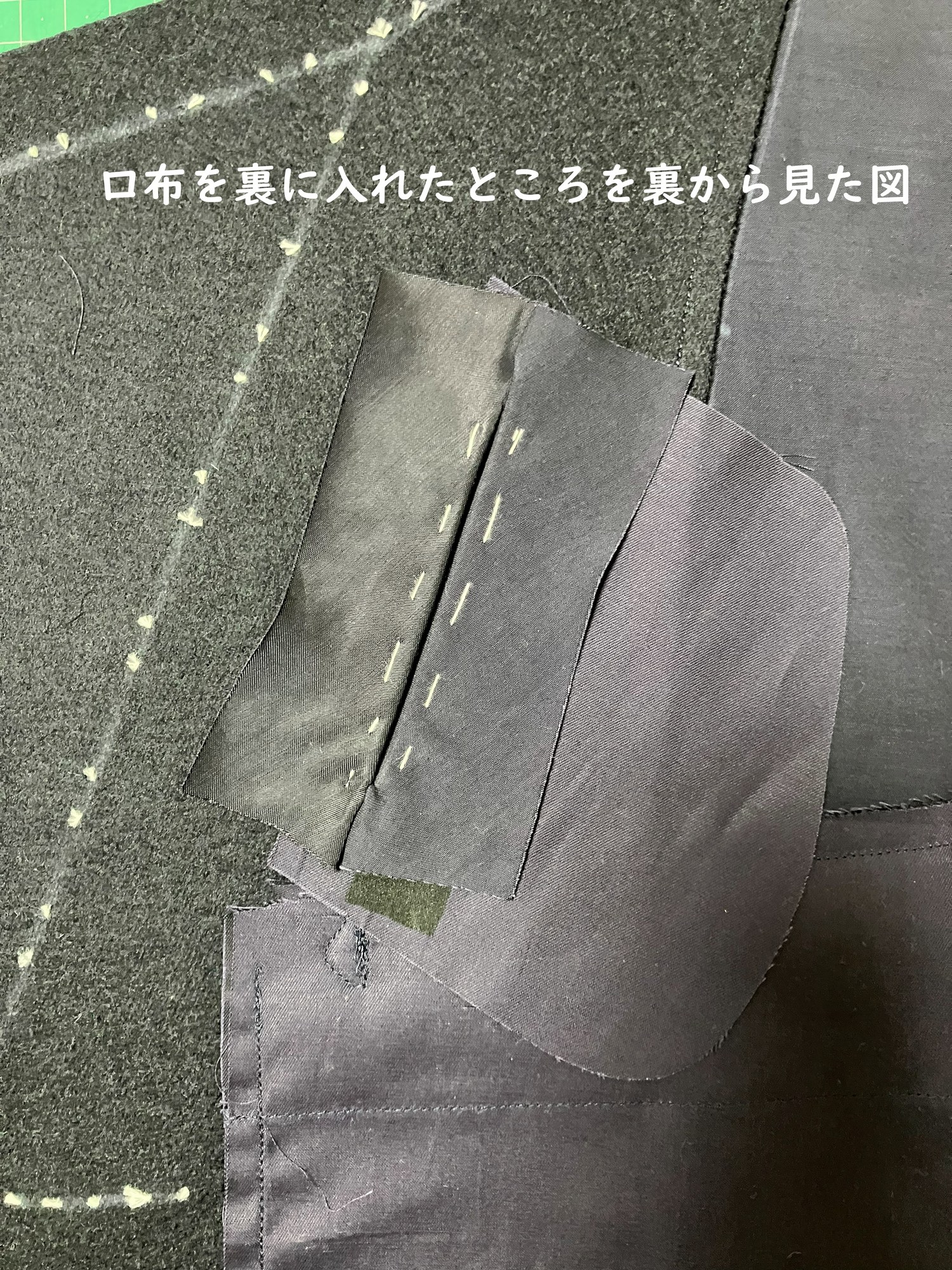
Holding the pocket bag
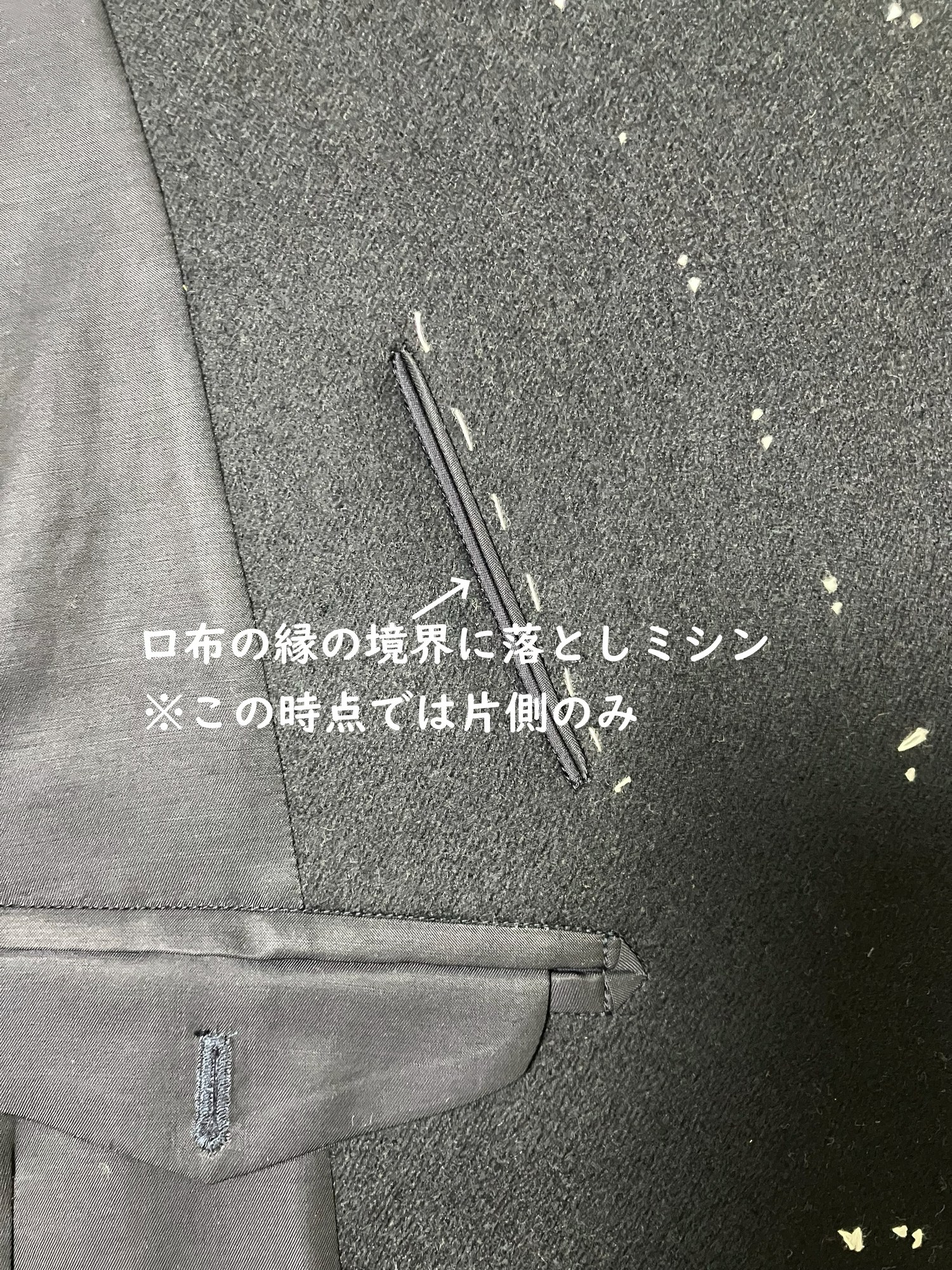
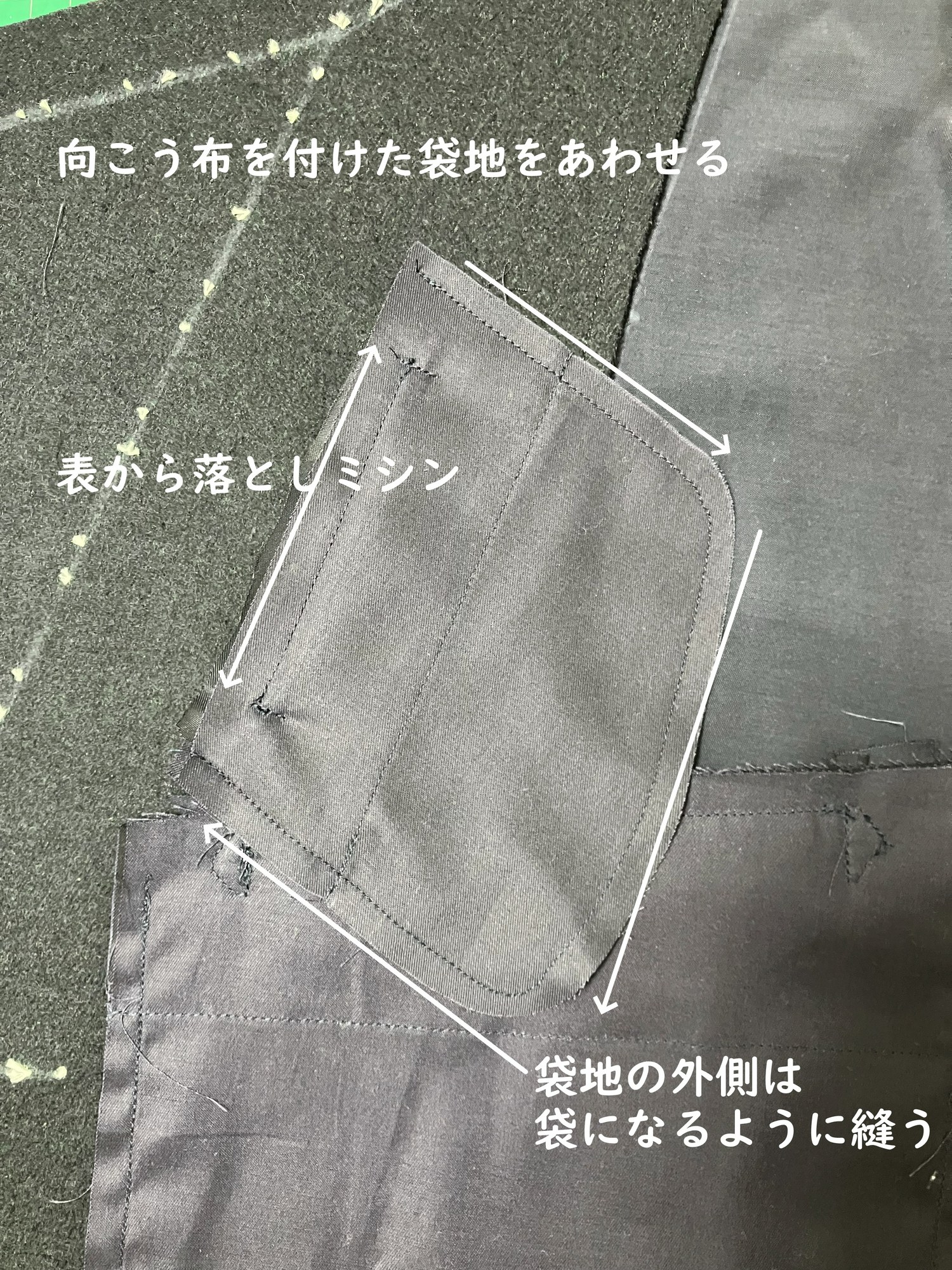
Stitching in the ditch from the face runs along the edge of the welt strip. Below, the lower edge of the welt strip is sewn down to the bag.
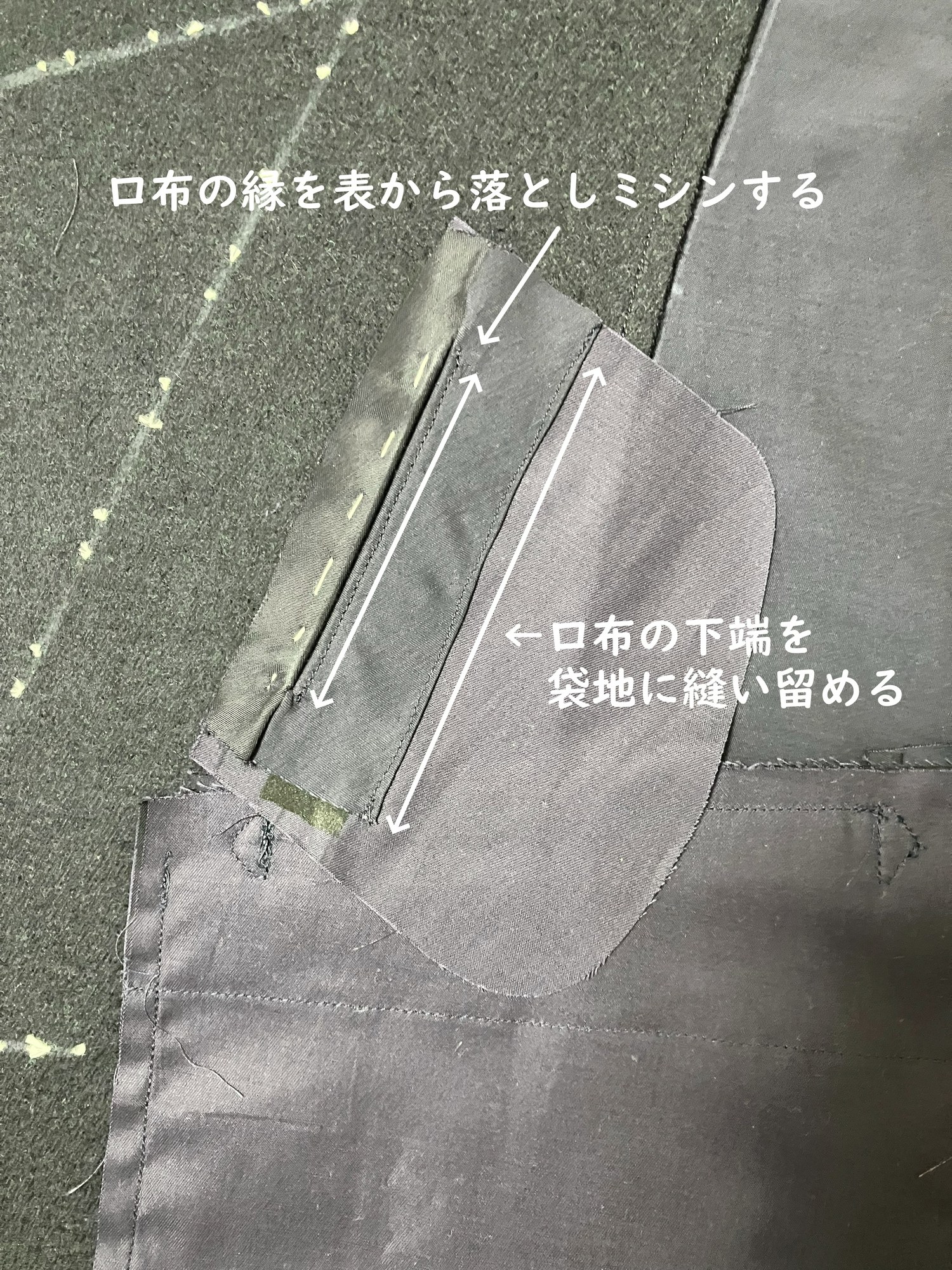
The bag carrying the pocket facing is set on, and stitching in the ditch is worked from the face. The outside of the bag is sewn so that it becomes a bag.
Finishing
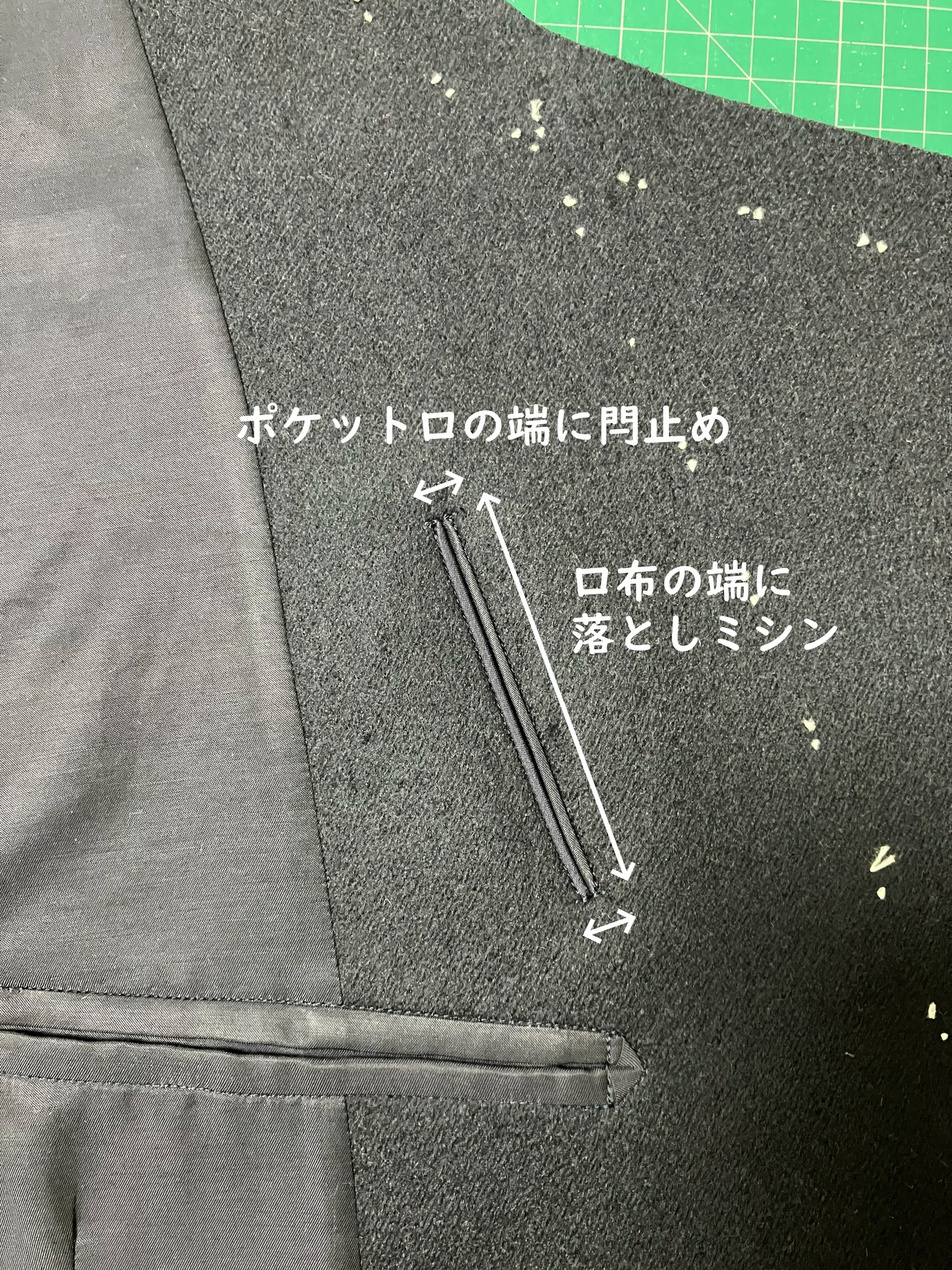
Stitching in the ditch runs along the ends of the welt strip, and a bar tack goes at each end of the opening.
References
- Japan (1940) 『男子服裁縫の要訣』 文化服装学院すみれ会出版部 Catalogue recordTransmission service
- Japan (1948) 『図解紳士服全書』 生活研究社 Catalogue recordTransmission service
- Japan (1950) 『ティラァズ・ブック : 紳士服の裁断と縫方』 緑屋洋装研究所 Catalogue recordTransmission service