This page was originally written in Japanese and has been translated into English. Some photographs retain Japanese annotations; the text and captions explain the construction in English.
Sewing a Patch Pocket
A pocket made by setting a separate piece on the face of the body, from cutting the piece to holding it on the body.
A patch pocket. It may be given a flap or a pleat; what is made here is the simplest form. It is used on a summer jacket, and for the pocket inside a waistcoat.
Set on the face of the body, one piece is enough. Where there is no cloth behind it — the inside pocket of a quarter-lined summer jacket, for instance — a backing cloth is added to make a bag before it is set on.
The piece shows on the face, so in a striped or checked cloth it is cut to match the pattern where it will sit.
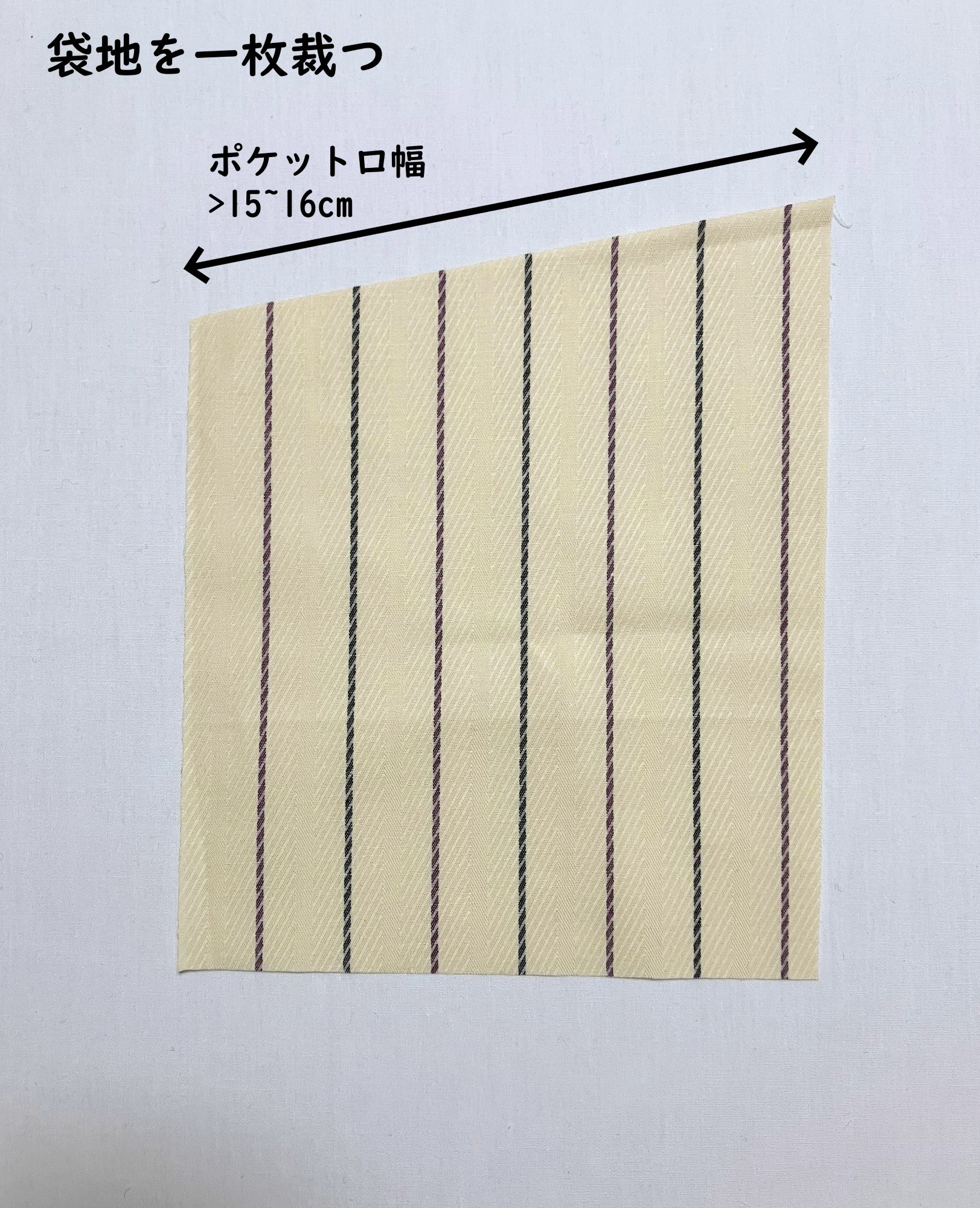
Cutting the pocket piece
One piece is cut. The opening is wide enough for the hand, 15 to 16cm at least.
Staying the opening
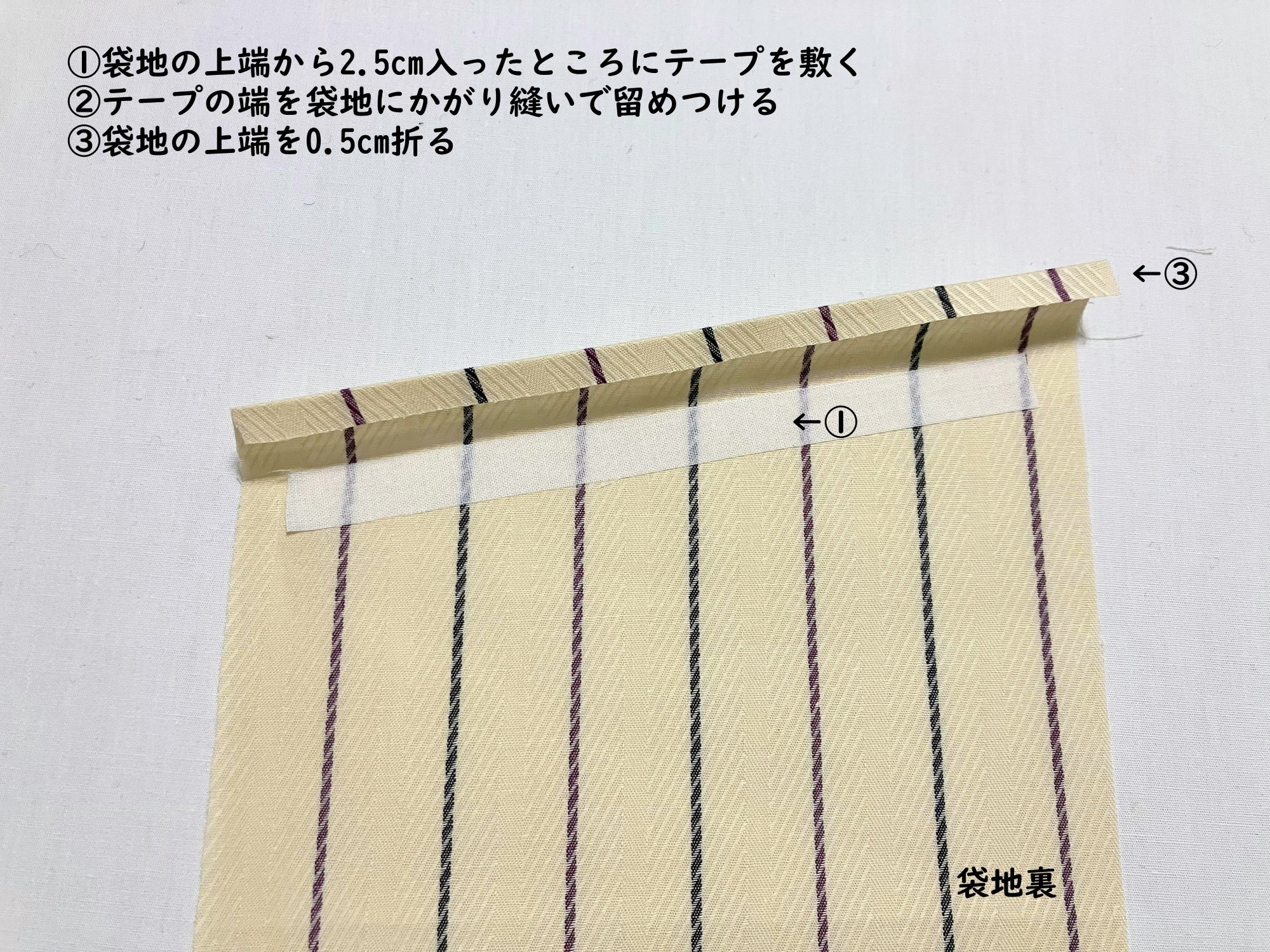
Stay tape goes in so that the opening cannot stretch.
The tape is laid 2.5cm down from the top edge of the piece, and its edges are held to the piece with overcasting. The top edge of the piece is folded over 0.5cm.
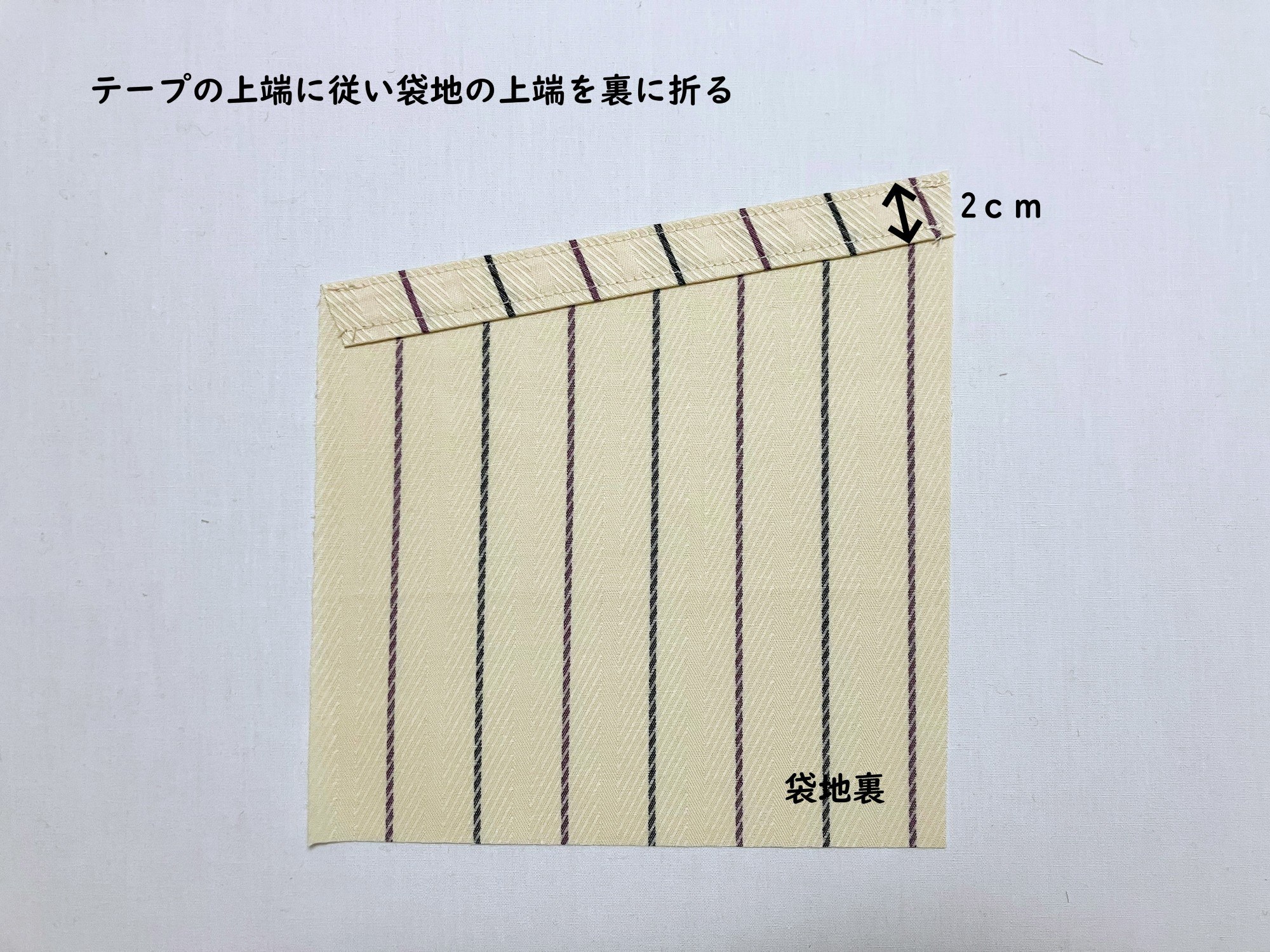
Folding the top edge
The top edge is folded to the back along the top of the tape, which makes a turn-back 2cm deep.
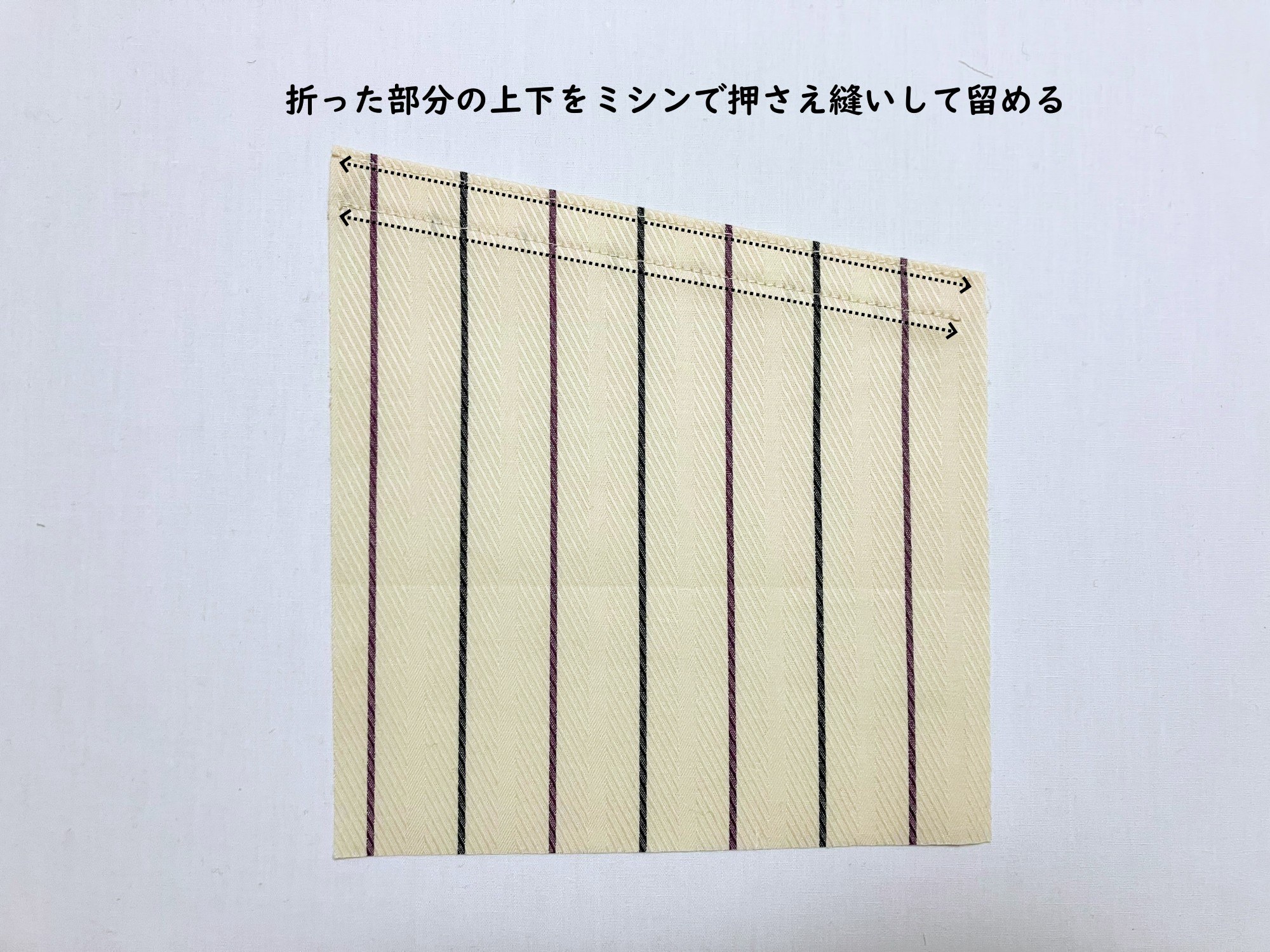
The folded part is stitched down above and below.
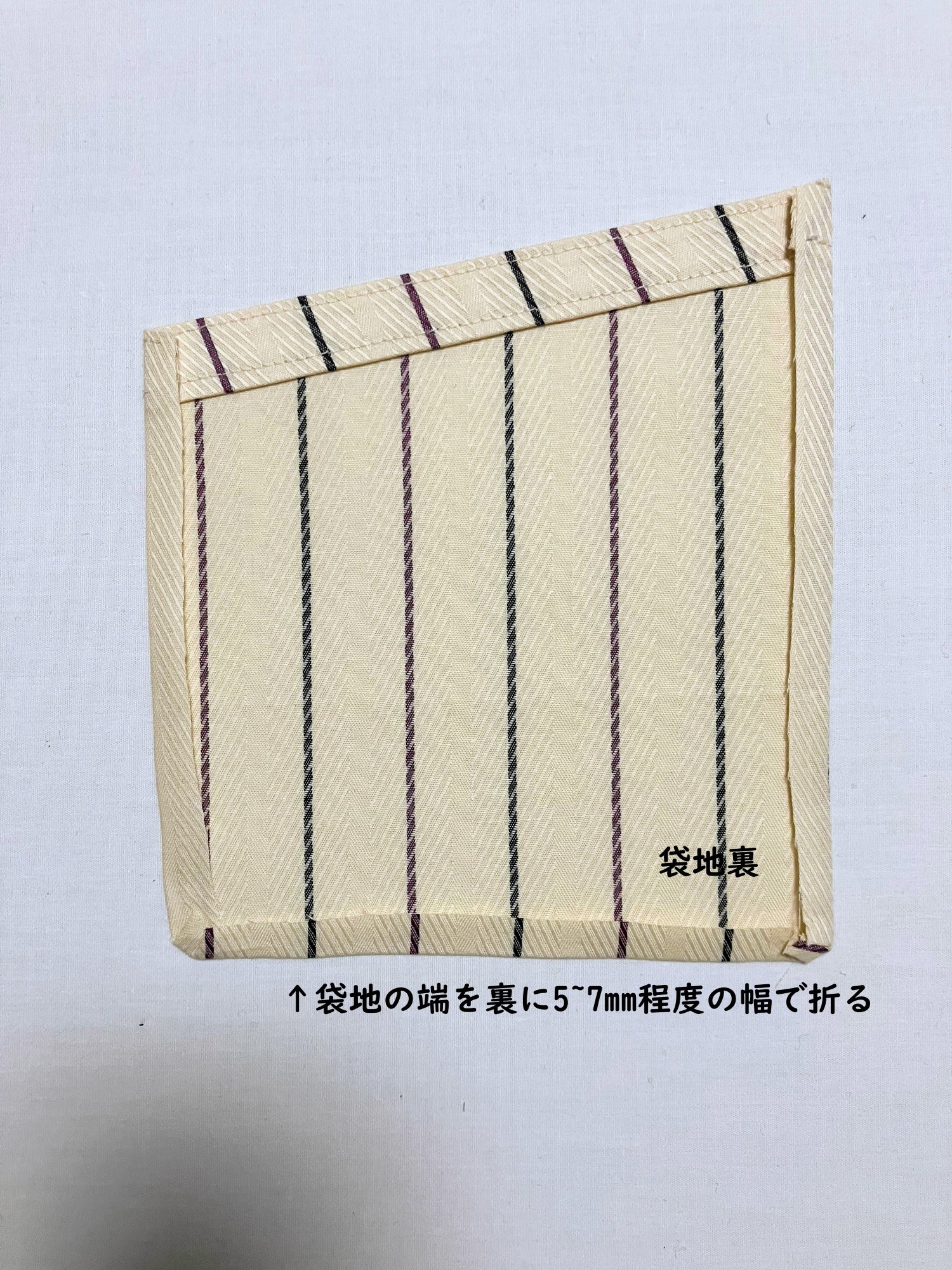
Folding the other three edges
The three remaining edges of the piece are folded to the back, 5 to 7mm.
Setting it on the body
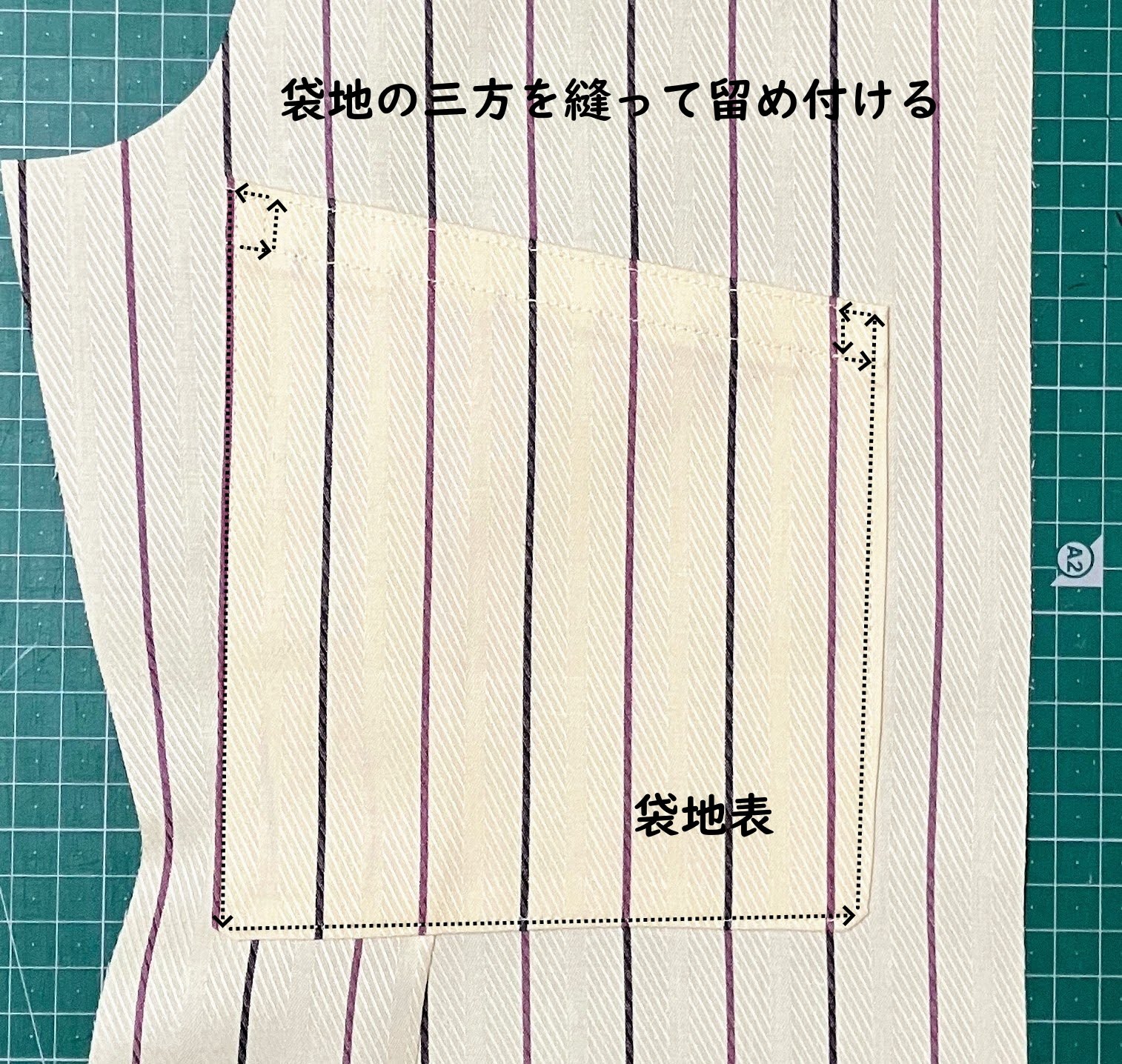
The piece is set in place and sewn to the body along those three edges. Both ends of the opening are back stitched to strengthen them.
References
- Japan (1951) 『男子服の縫い方』 服装技能協会 pp.162-165 Catalogue recordTransmission service
- Japan (1948) 『図解紳士服全書』 生活研究社 pp.231-233 Catalogue recordTransmission service