This page was originally written in Japanese and has been translated into English. Some photographs retain Japanese annotations; the text and captions explain the construction in English.
Sewing an Inside Breast Pocket
A kind of jetted pocket, from cutting the parts to stitching on the welt strips, making the welts and finishing the bag.
This is one kind of jetted pocket. A thin lining cloth is used for the welt strips, which gives a thin, soft pocket. It is used for the inside pocket of a coat.
The welt strips and the pocket facing are in a thin cloth of the kind used for linings; the bag is in lightweight cotton fabric (pocketing).
The parts
Four are cut: the bag, the pocket facing, the welt strips and the flap. The welt strip is 6cm wide, and about 5cm longer than the pocket opening.
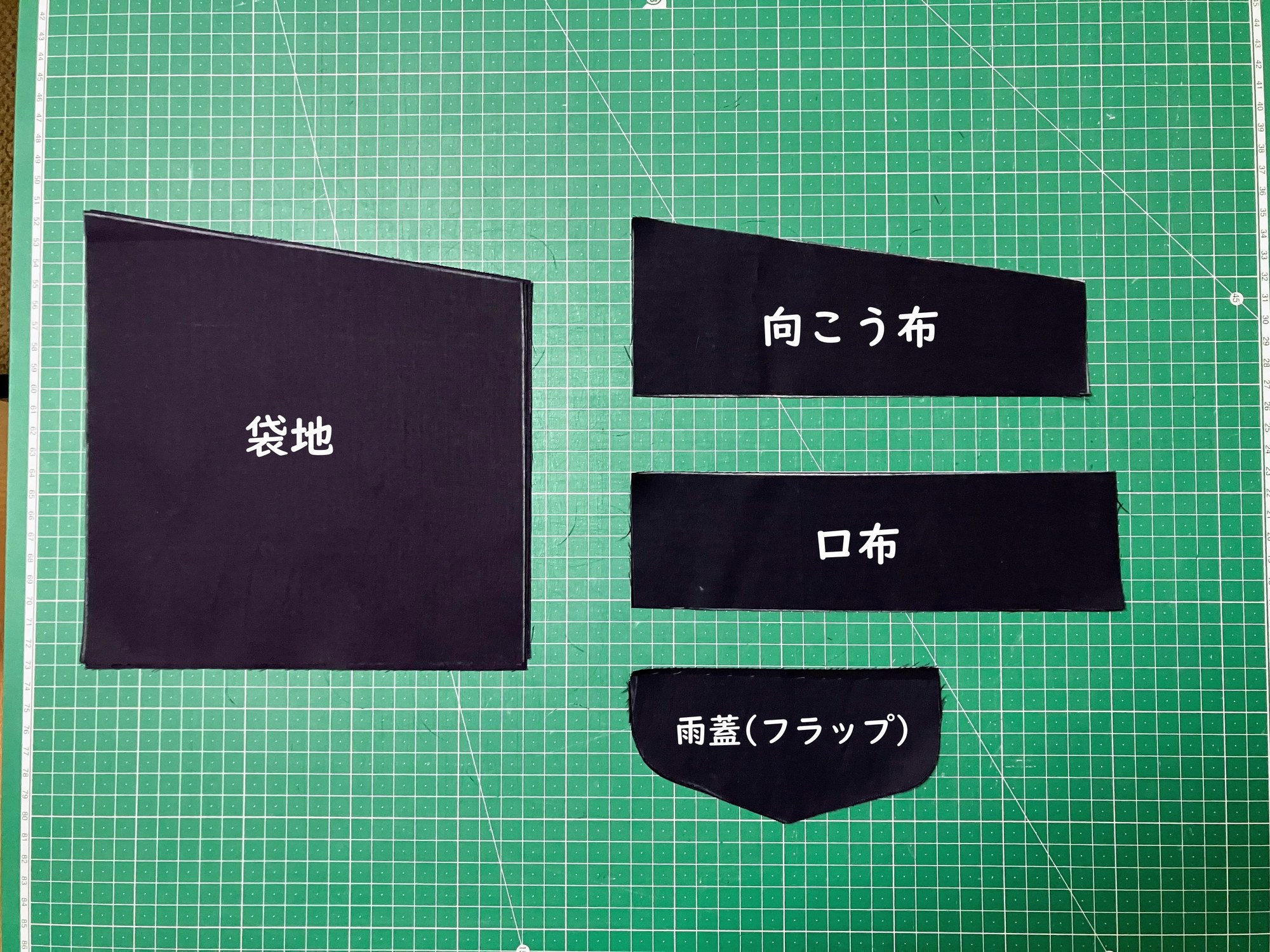
The pocket facing and the flap
The pocket facing is folded at its lower edge and stitched down to the bag.
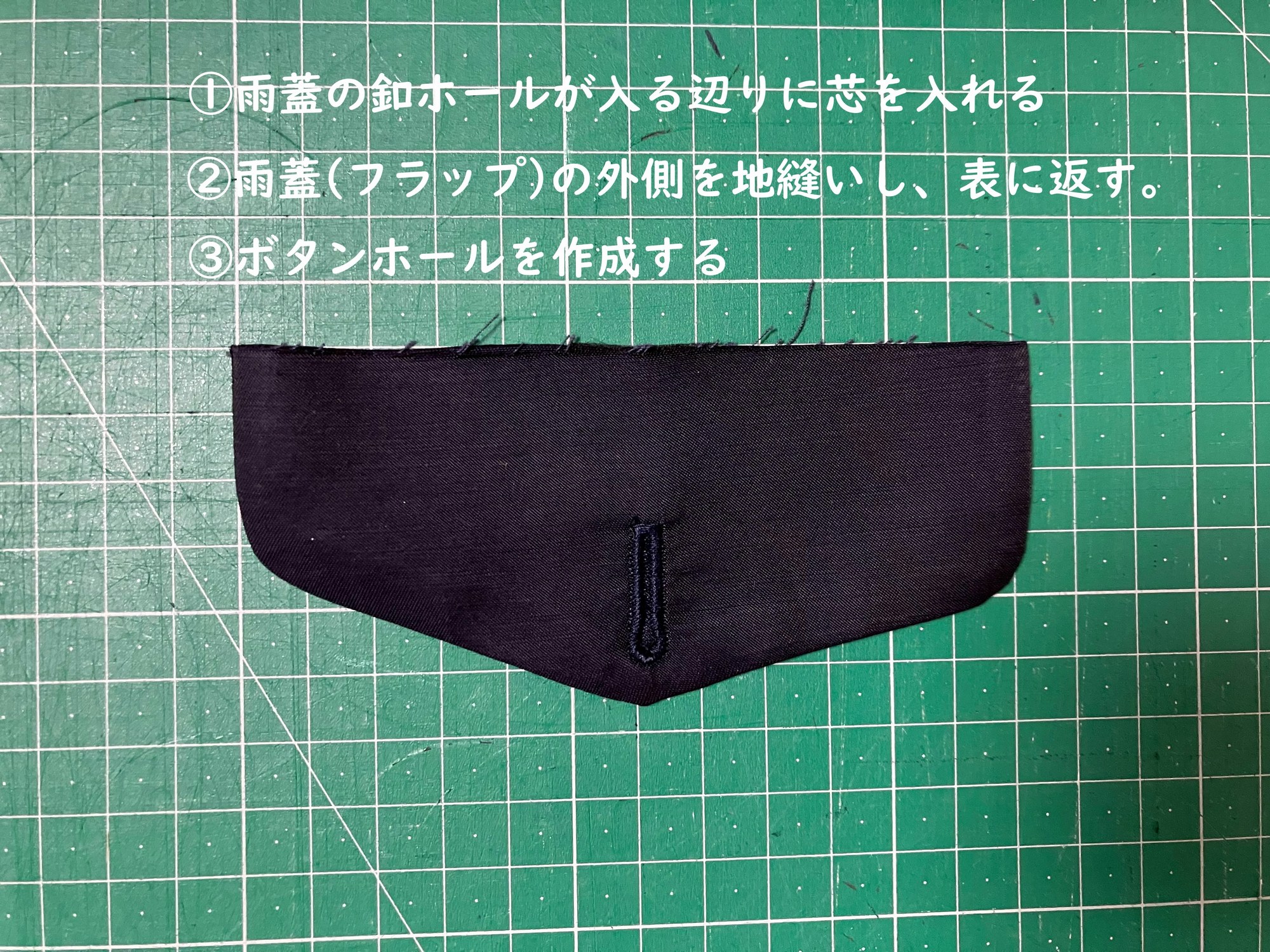
The flap takes canvas where the buttonhole will fall; it is seamed round the outside, turned out, and the buttonhole worked.
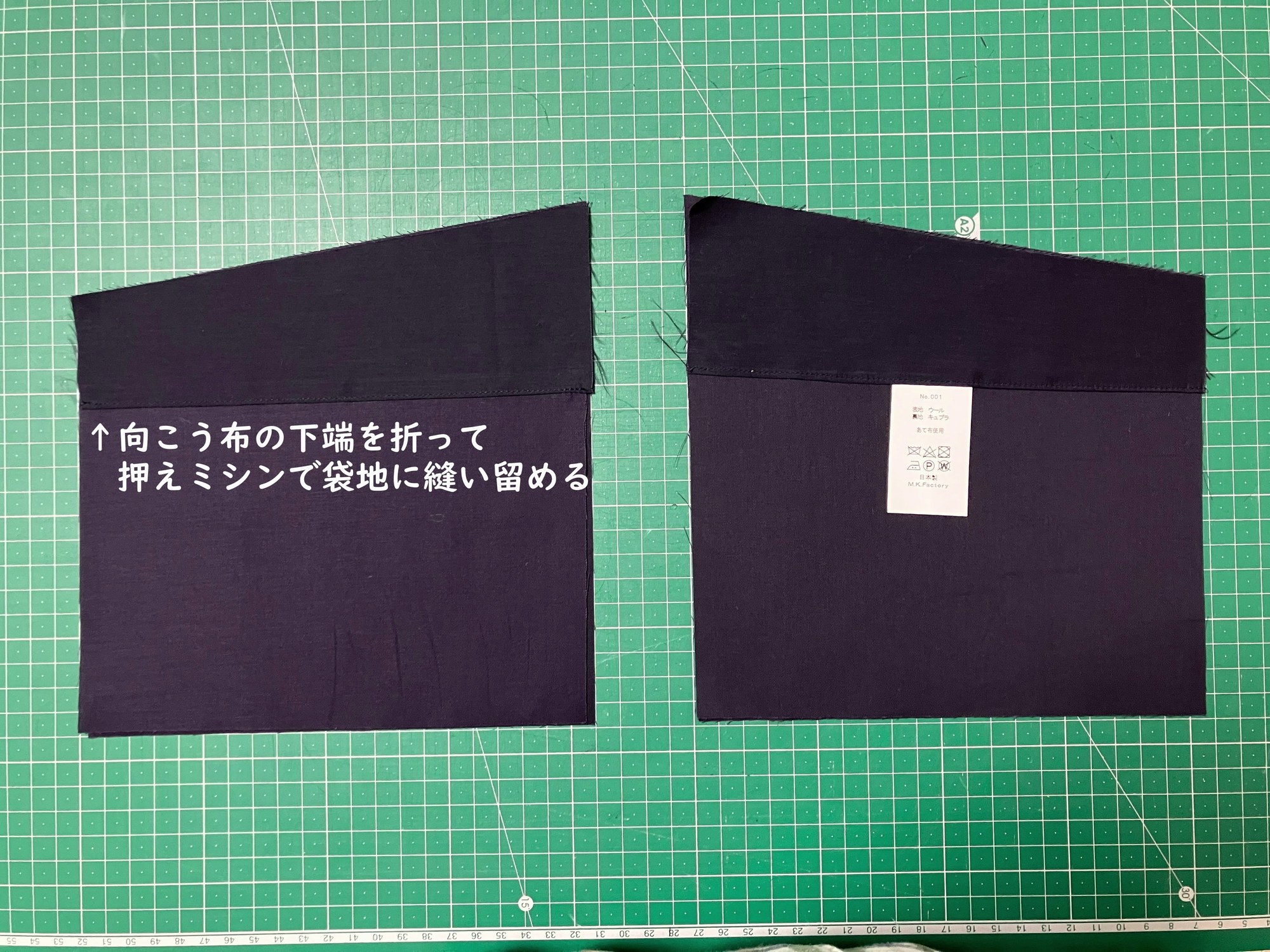
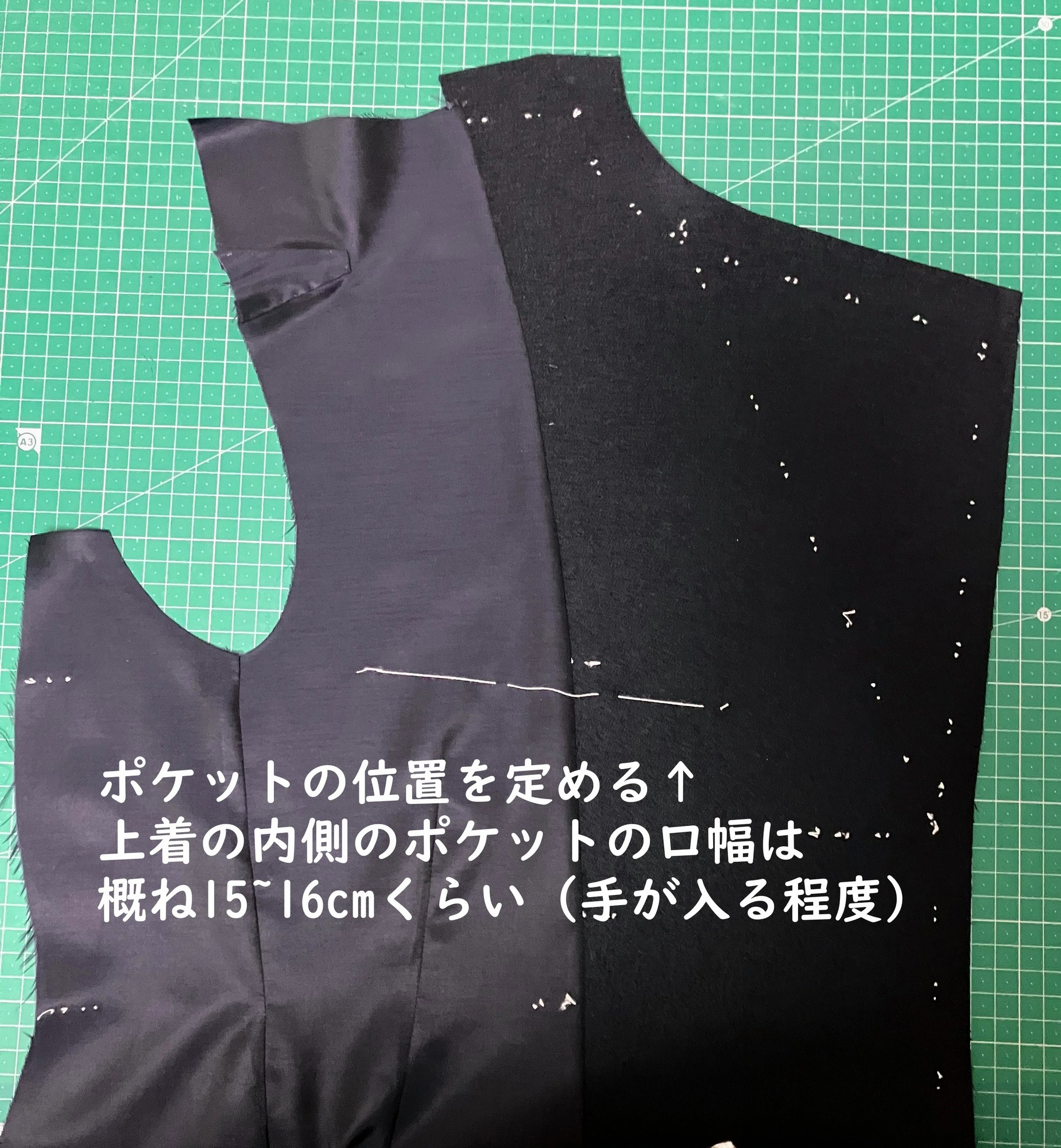
Marking the position
The opening is wide enough for the hand, 15 to 16cm. In a coat it sits about 2cm below the height of the chest, the breast line.
Stitching on the welt strips
First, canvas is put behind the body along the line of the opening, to strengthen it.
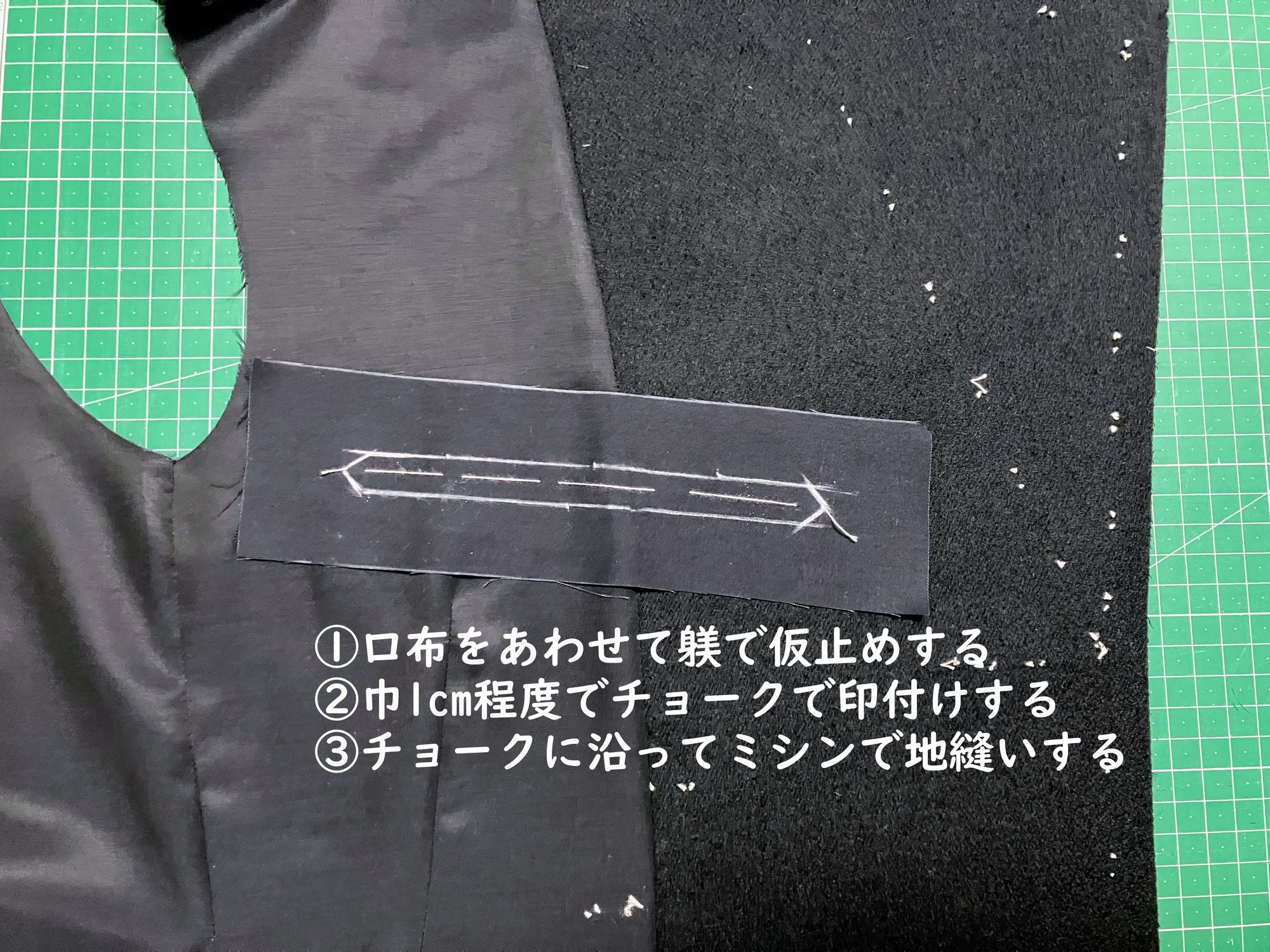
The welt strip is set in place and basted. A chalk mark is made 1cm wide, and the two lines are machined.
Cutting the pocket open
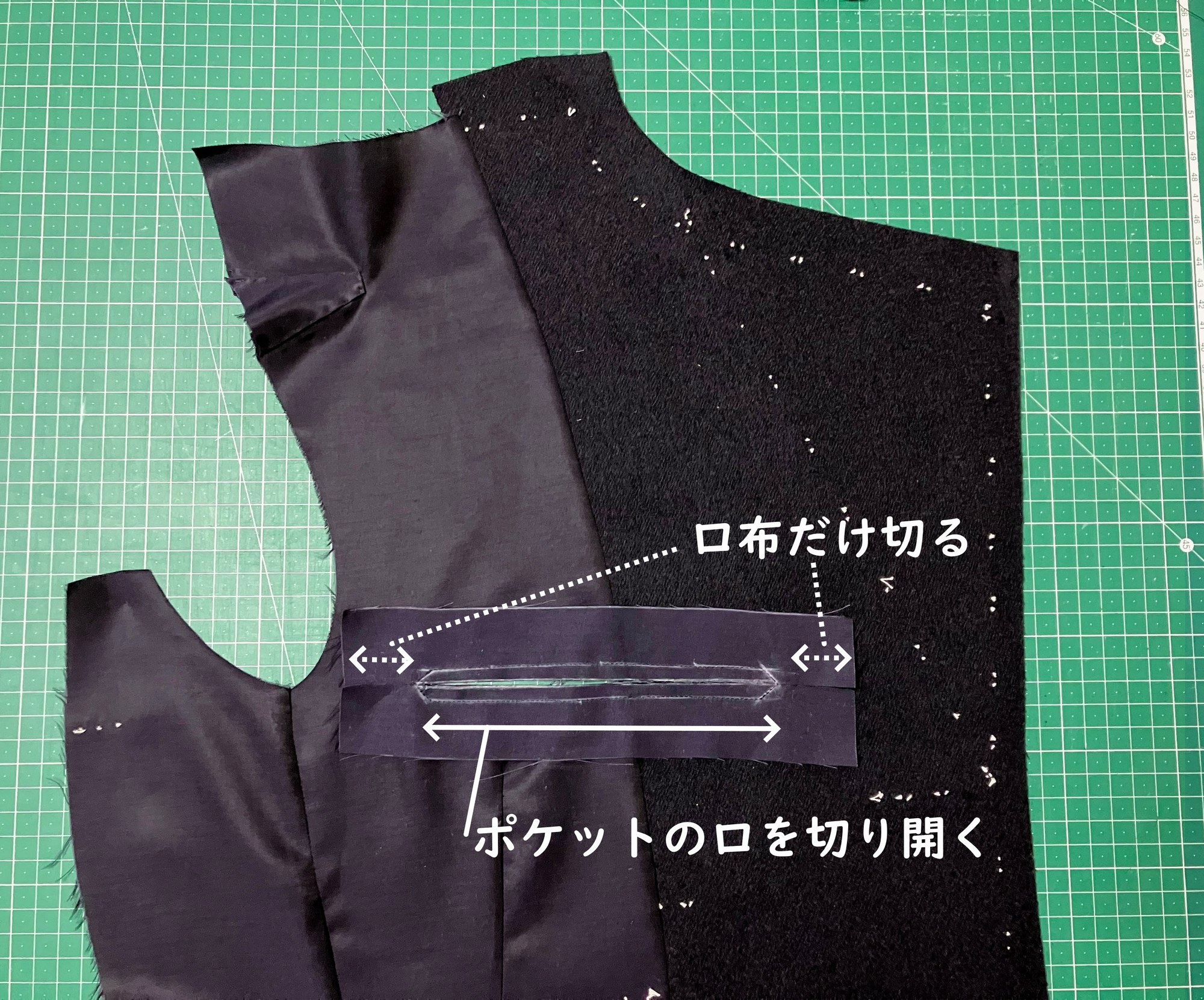
At each end only the welt strip is cut; between the two seams the cloth is cut open.
Forming the welts
The welt strip is folded back on the line of the seam, and the ends, cut to a point, are folded. The folded piece is put through to the inside of the opening and basted. The upper and the lower piece are folded and put through in the same way.
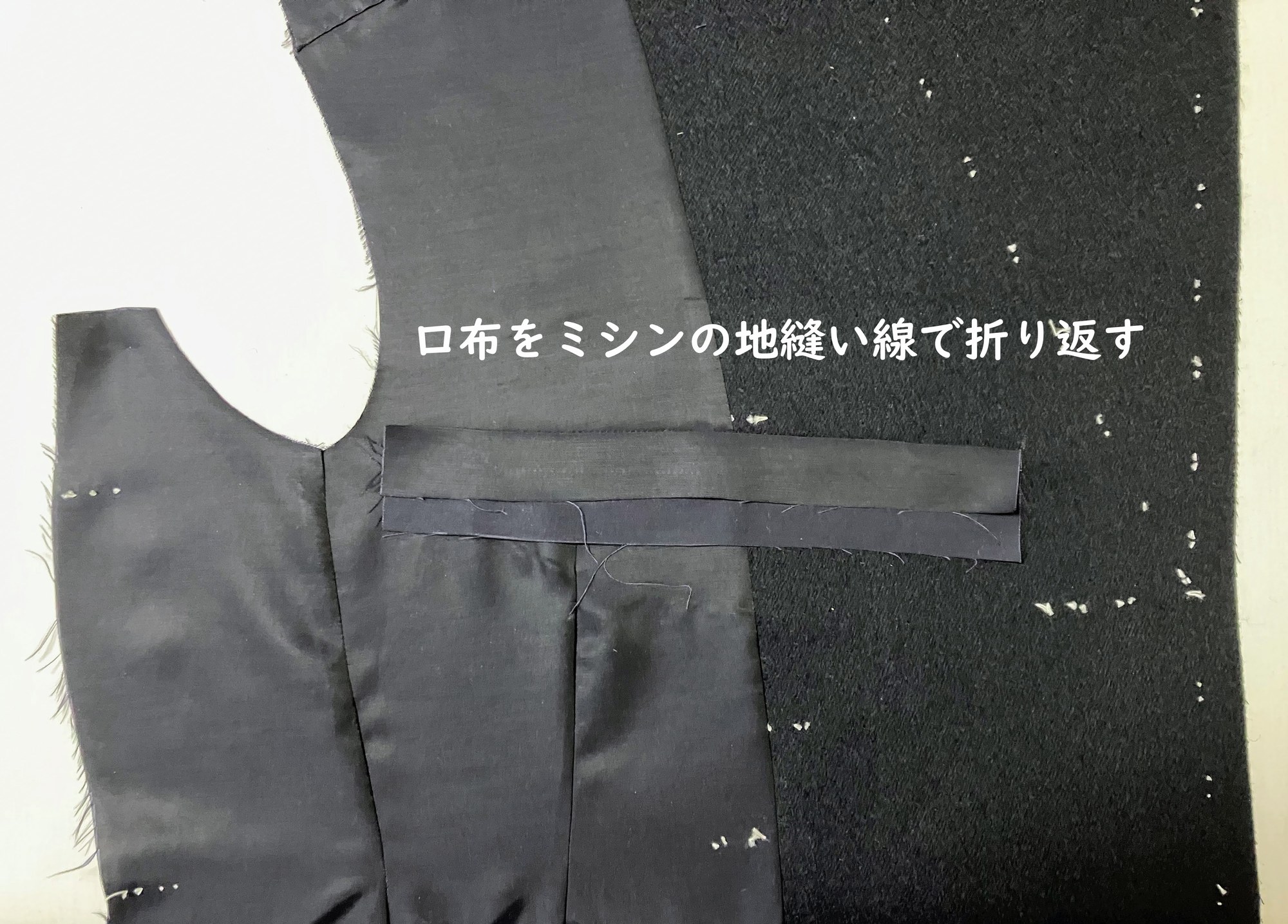
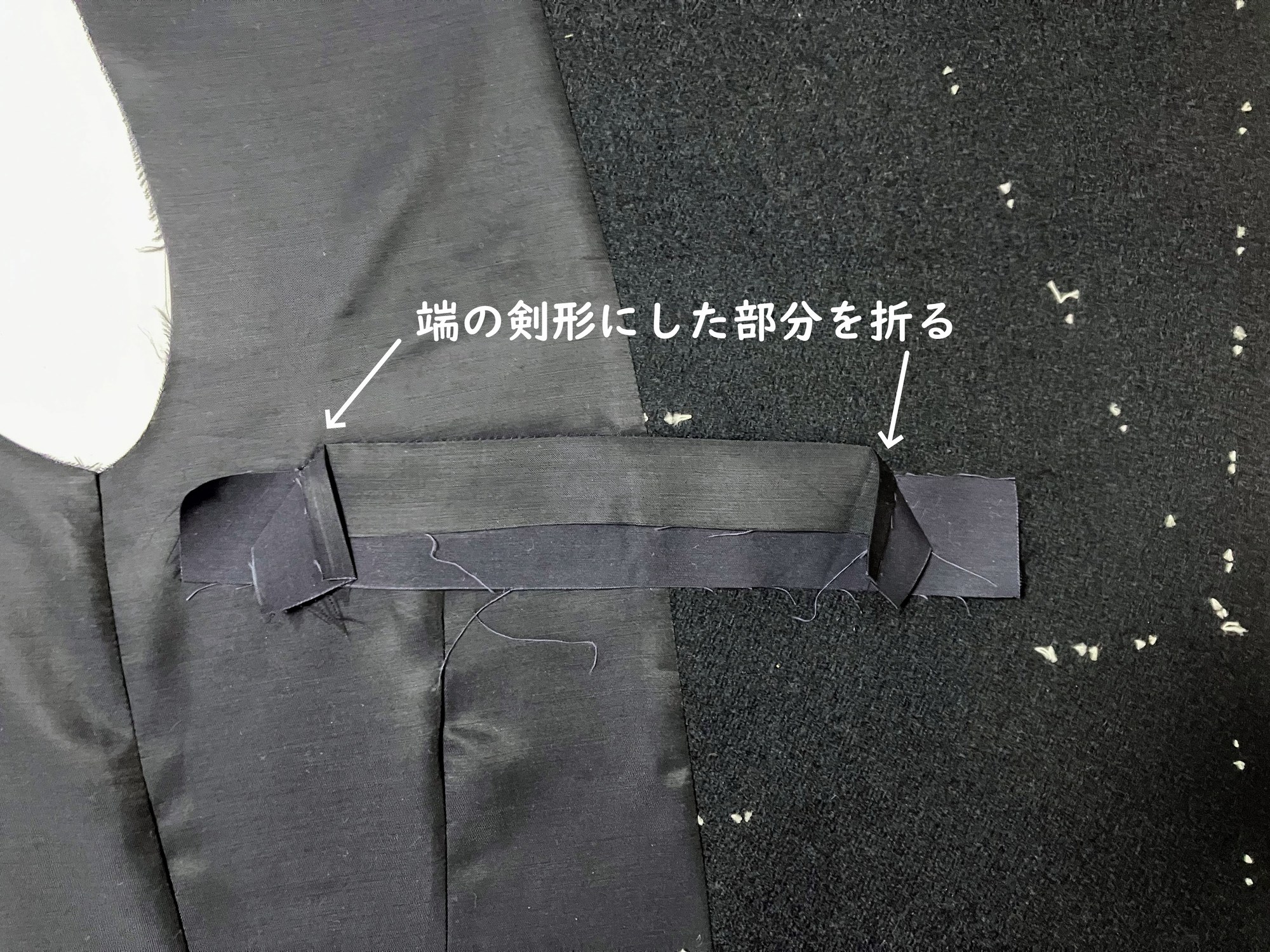
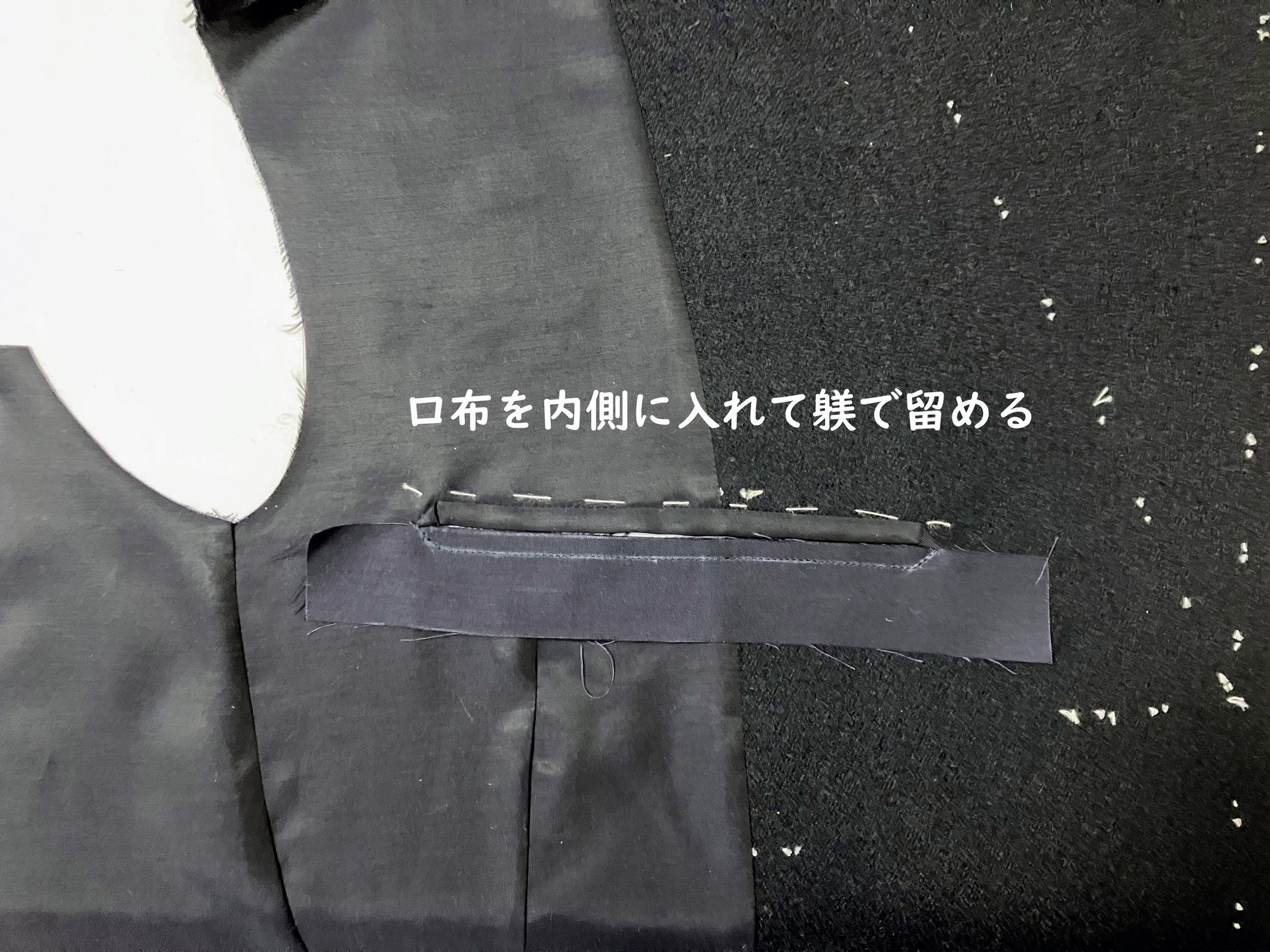
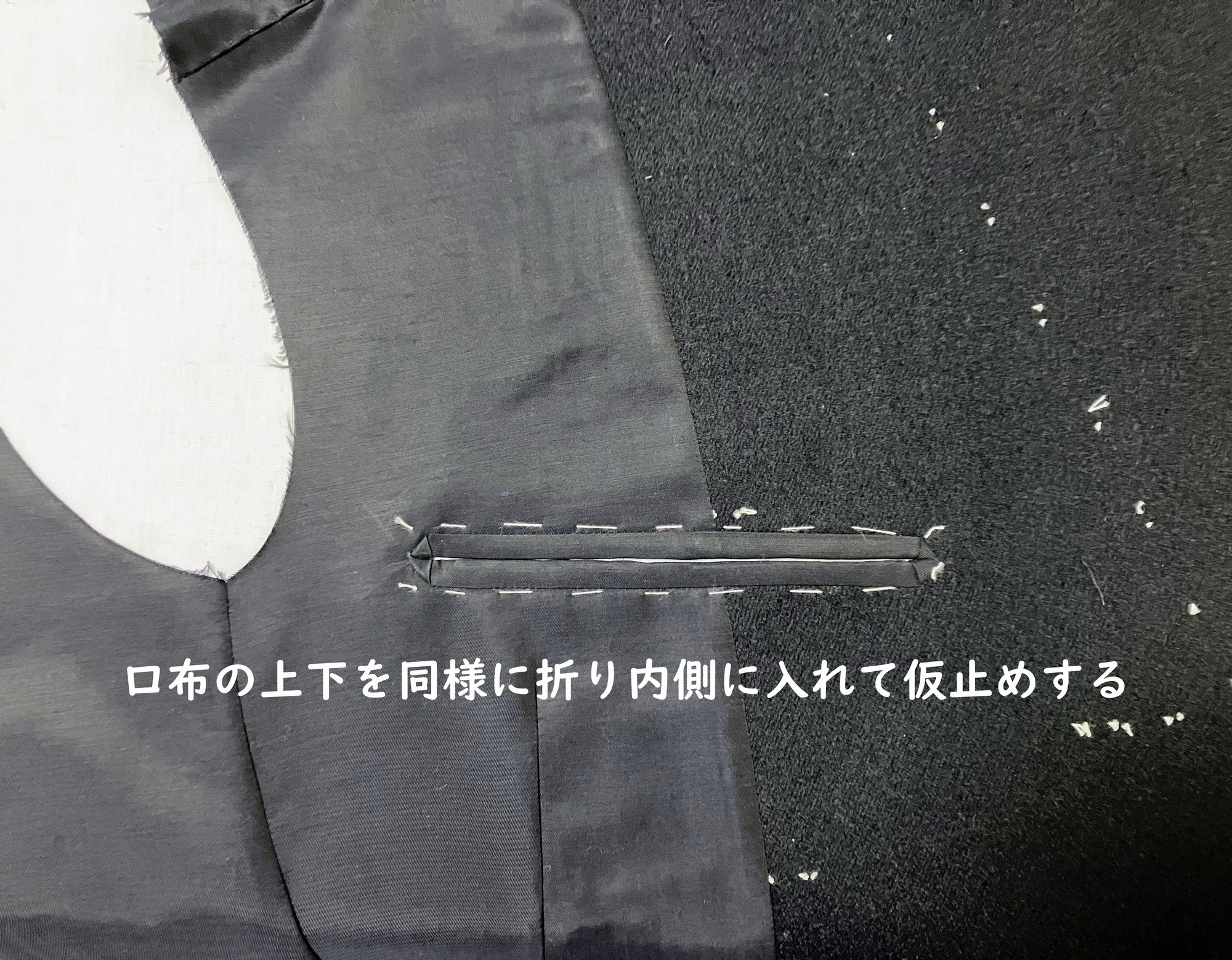
Seen from the face, a welt 0.5cm deep shows above and below the opening.
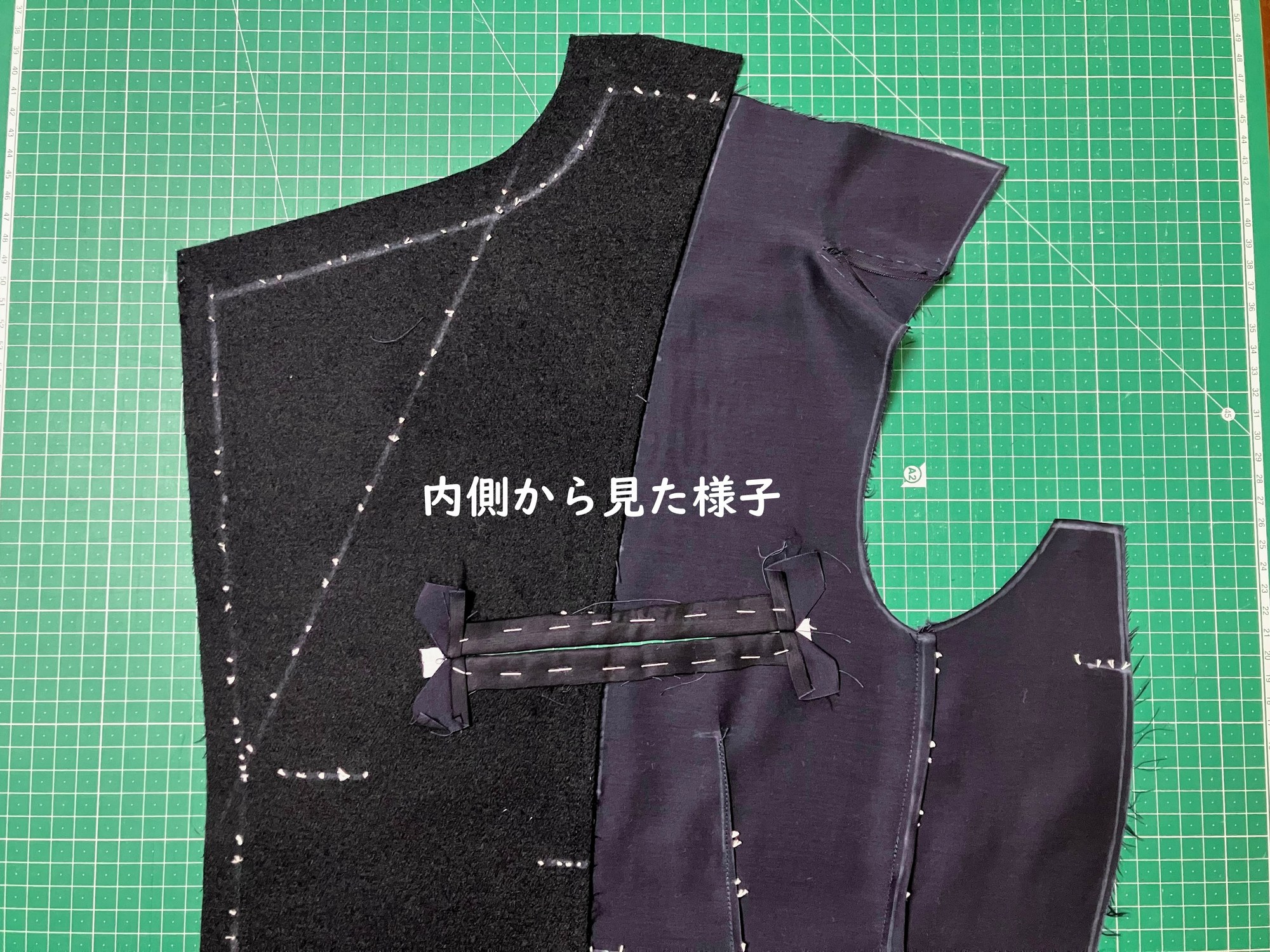
Holding the pocket bag
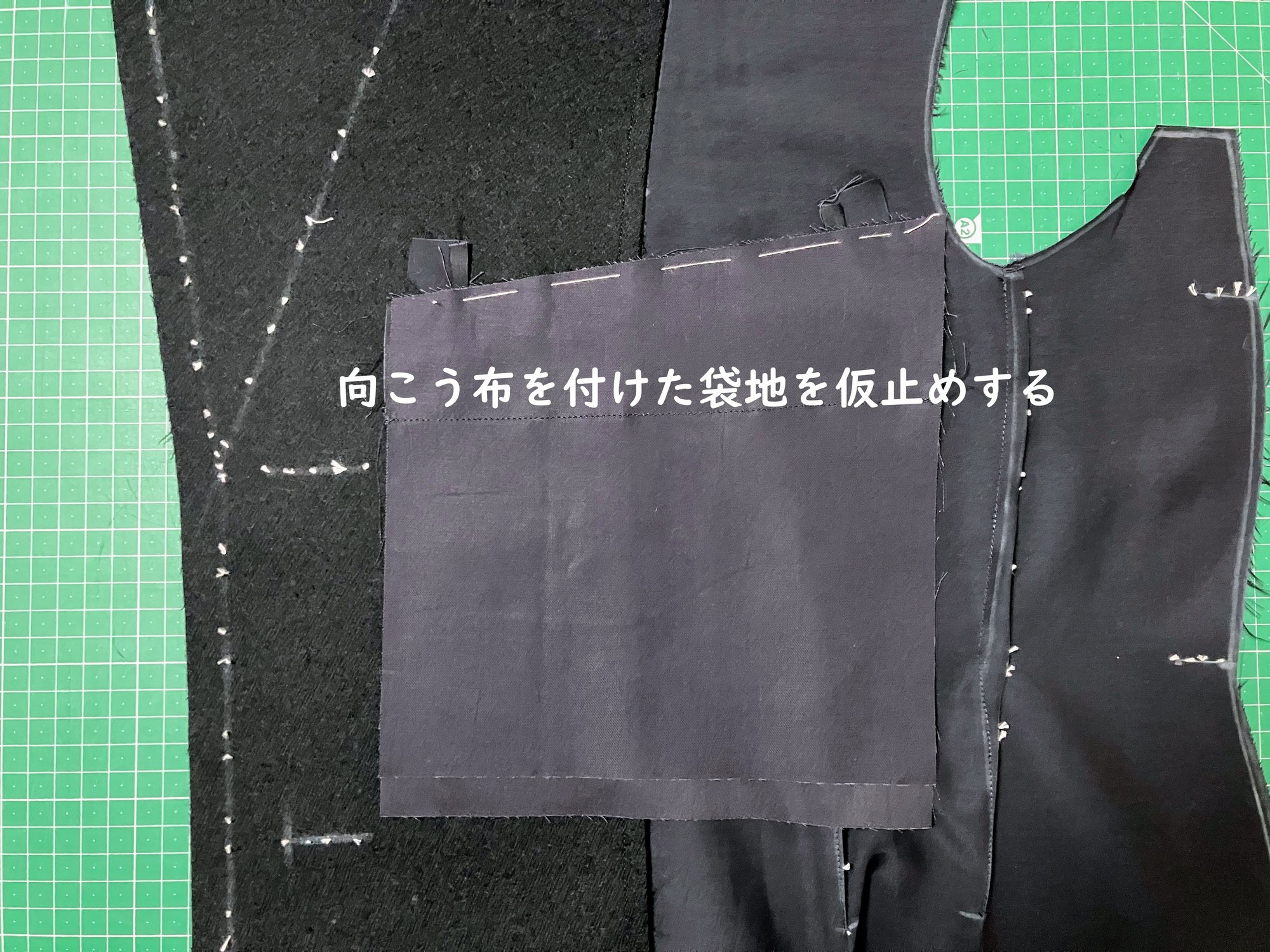
The bag is laid behind and held by stitching in the ditch below the lower welt. The bag is then folded downwards on that line.
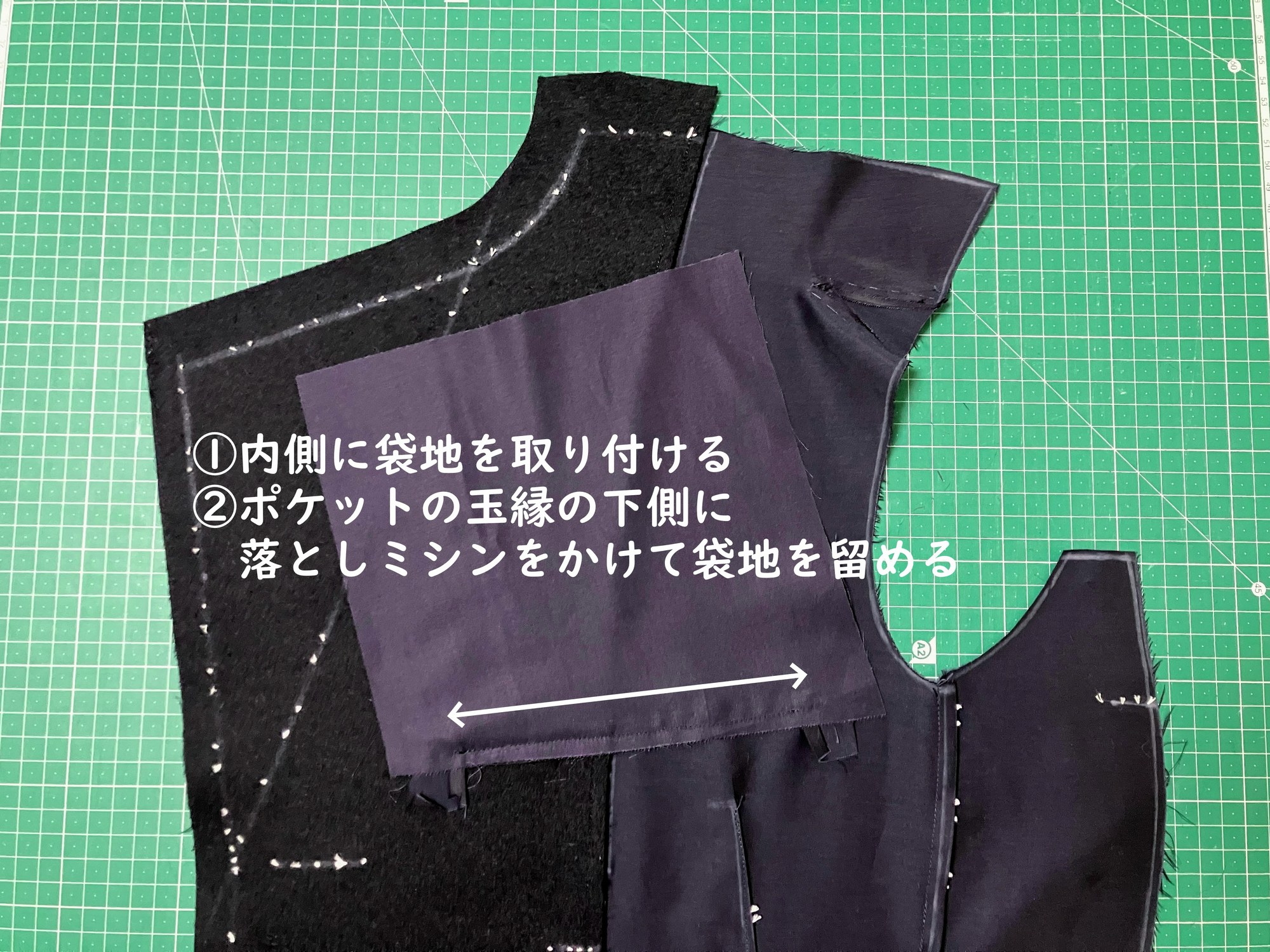
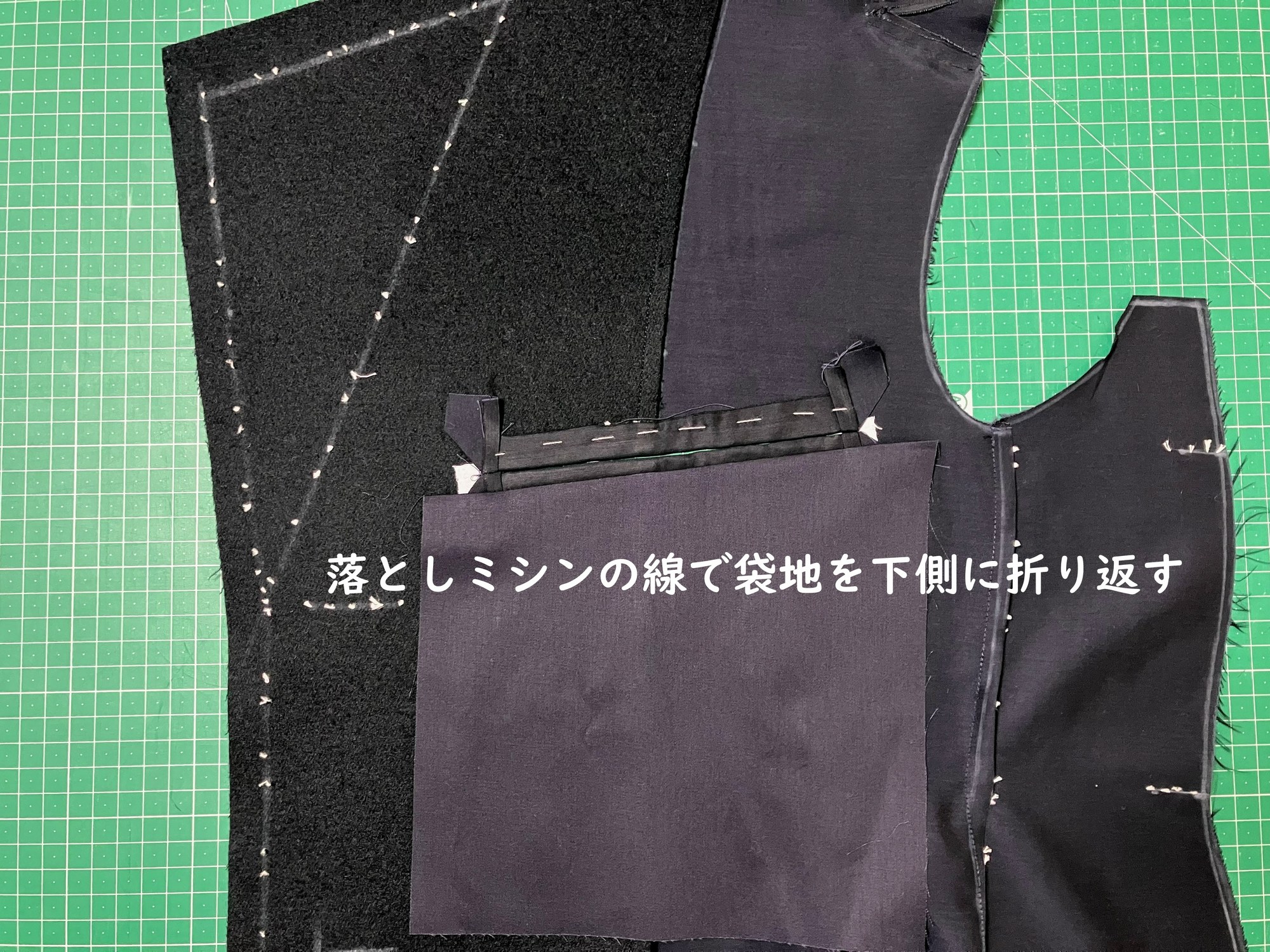
The other piece of the bag, the one carrying the pocket facing, is basted above the opening.
Finishing
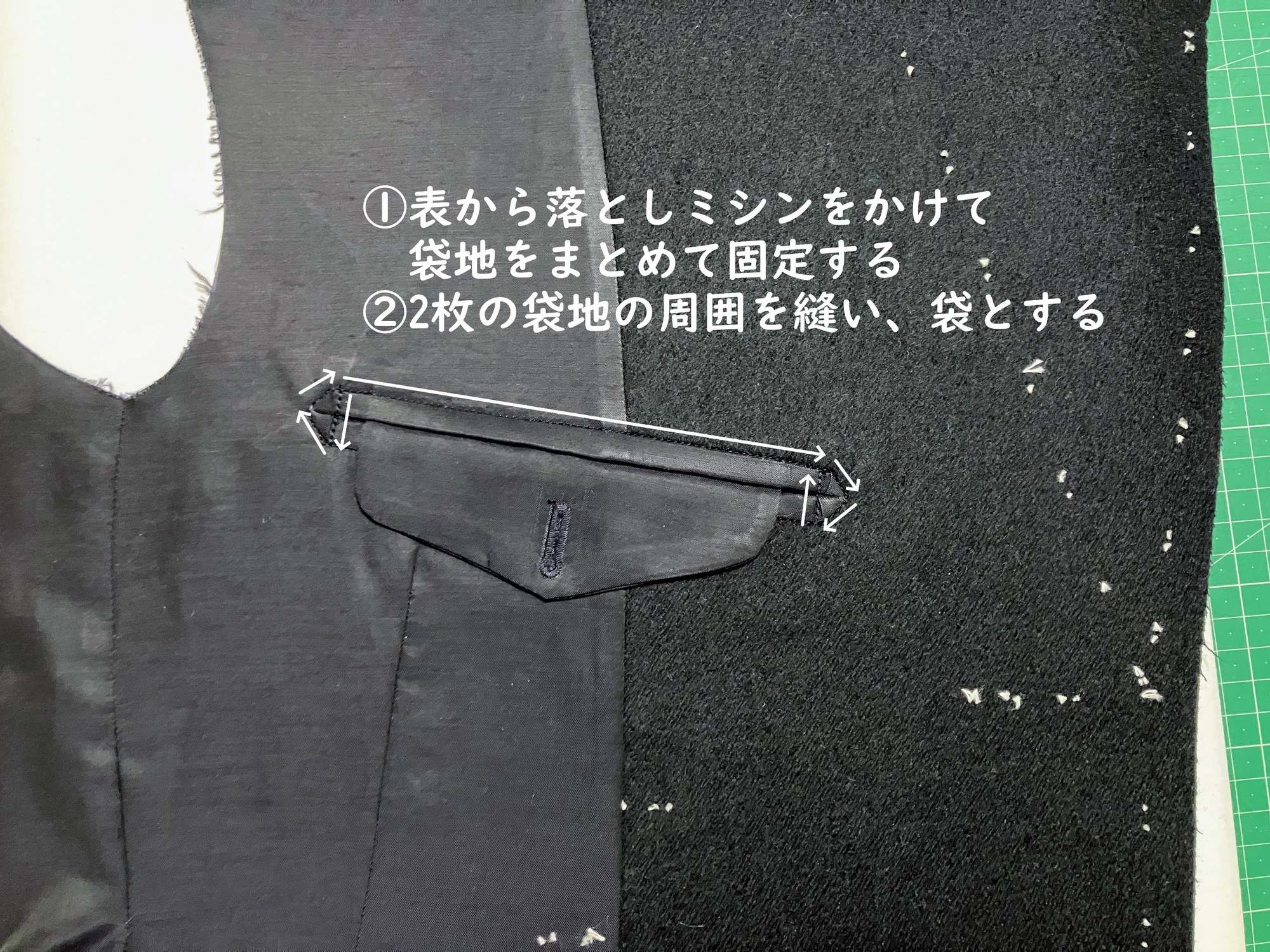
The flap is put through the opening, and stitching in the ditch from the face holds it together with the bag. The two pieces of the bag are sewn round to make the bag.
References
- Japan (1940) 『男子服裁縫の要訣』 文化服装学院すみれ会出版部 Catalogue recordTransmission service
- Japan (1948) 『図解紳士服全書』 生活研究社 Catalogue recordTransmission service
- Japan (1950) 『ティラァズ・ブック : 紳士服の裁断と縫方』 緑屋洋装研究所 Catalogue recordTransmission service