This page was originally written in Japanese and has been translated into English. Some photographs retain Japanese annotations; the text and captions explain the construction in English.
Canvas
The canvases that go into a coat — body, chest, buttonhole, shoulder, collar, sleeve and collar-end — what each is for and what it is made of. Preparing linen canvas and lightweight cotton fabric (pocketing), and the canvases of trousers and overcoats.
Under the face cloth of a coat goes a stout cloth called the canvas. It is the material that makes the shape and holds it while the coat is worn.
The canvases of a coat
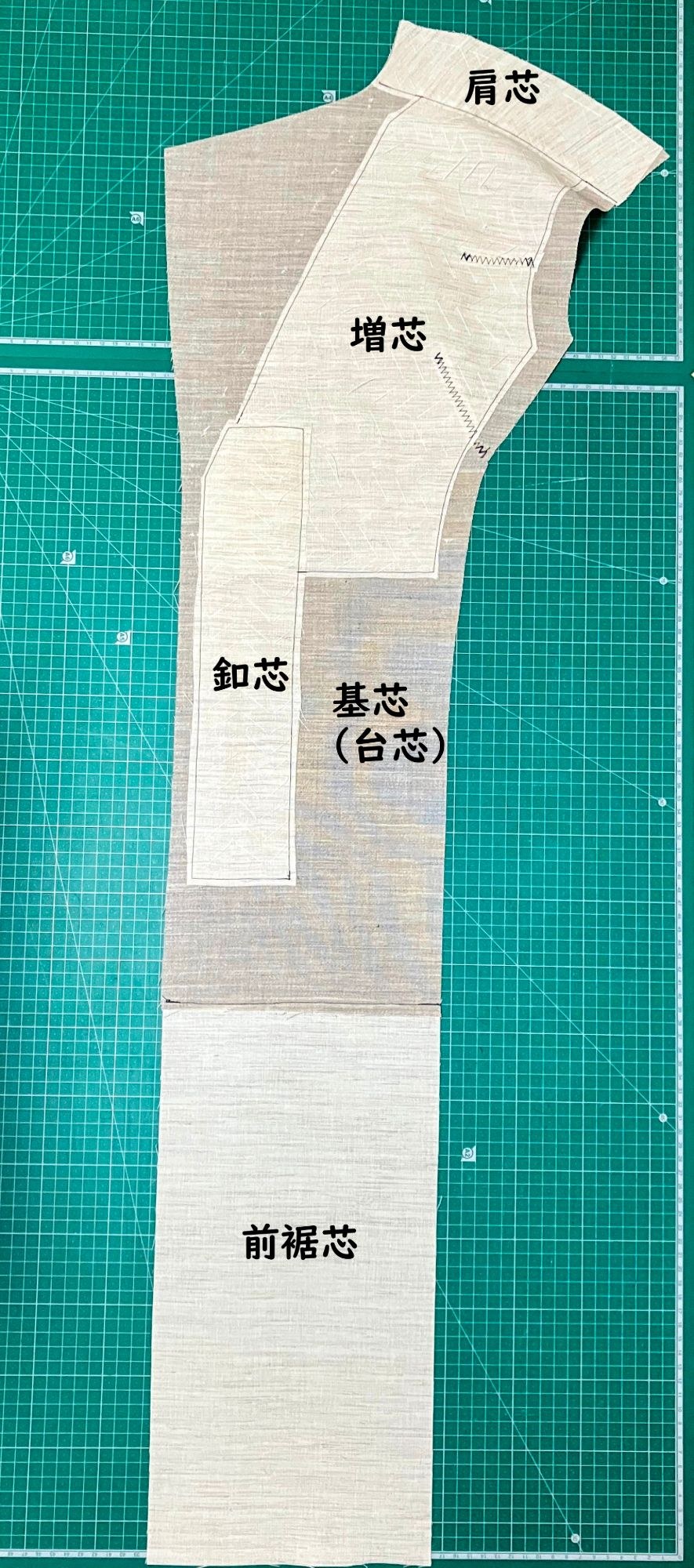
The body canvas is the foundation, and the canvases for each part sit on it: the chest piece that gives the chest its roundness, the buttonhole canvas that strengthens round the buttonholes, and the shoulder canvas that shapes the front shoulder.
| Part | Canvas | Material | Grain |
|---|---|---|---|
| Foundation of the body | Body canvas | Linen canvas; hair canvas is also used | Straight |
| Chest, to give roundness | Chest piece | Hair canvas. Linen canvas, lightweight cotton fabric (pocketing) are also used | |
| Round the buttonholes | Buttonhole canvas | Lightweight cotton fabric (pocketing) | |
| Shoulder, to shape the front shoulder | Shoulder canvas | Lightweight cotton fabric (pocketing) | Bias |
| Under the top collar | Collar canvas | Linen canvas | Bias |
| Cuff | Cuff canvas | Lightweight cotton fabric (pocketing), about 9cm wide | Straight |
| Round the collar end of the back | Back neck canvas | Lightweight cotton fabric (pocketing) | Bias |
| Flap of an inside pocket, opening of a welt pocket | Lightweight cotton fabric (pocketing) |
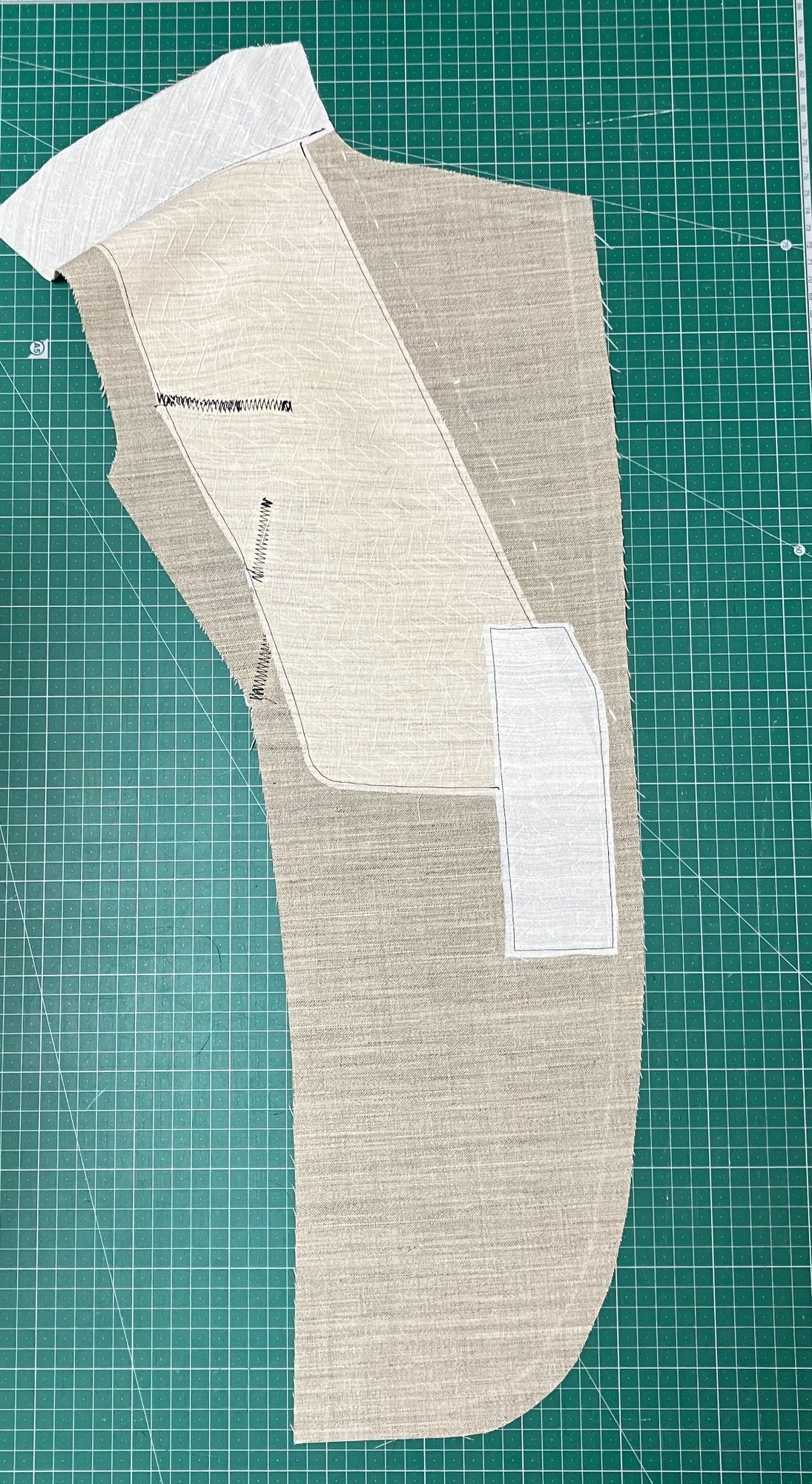
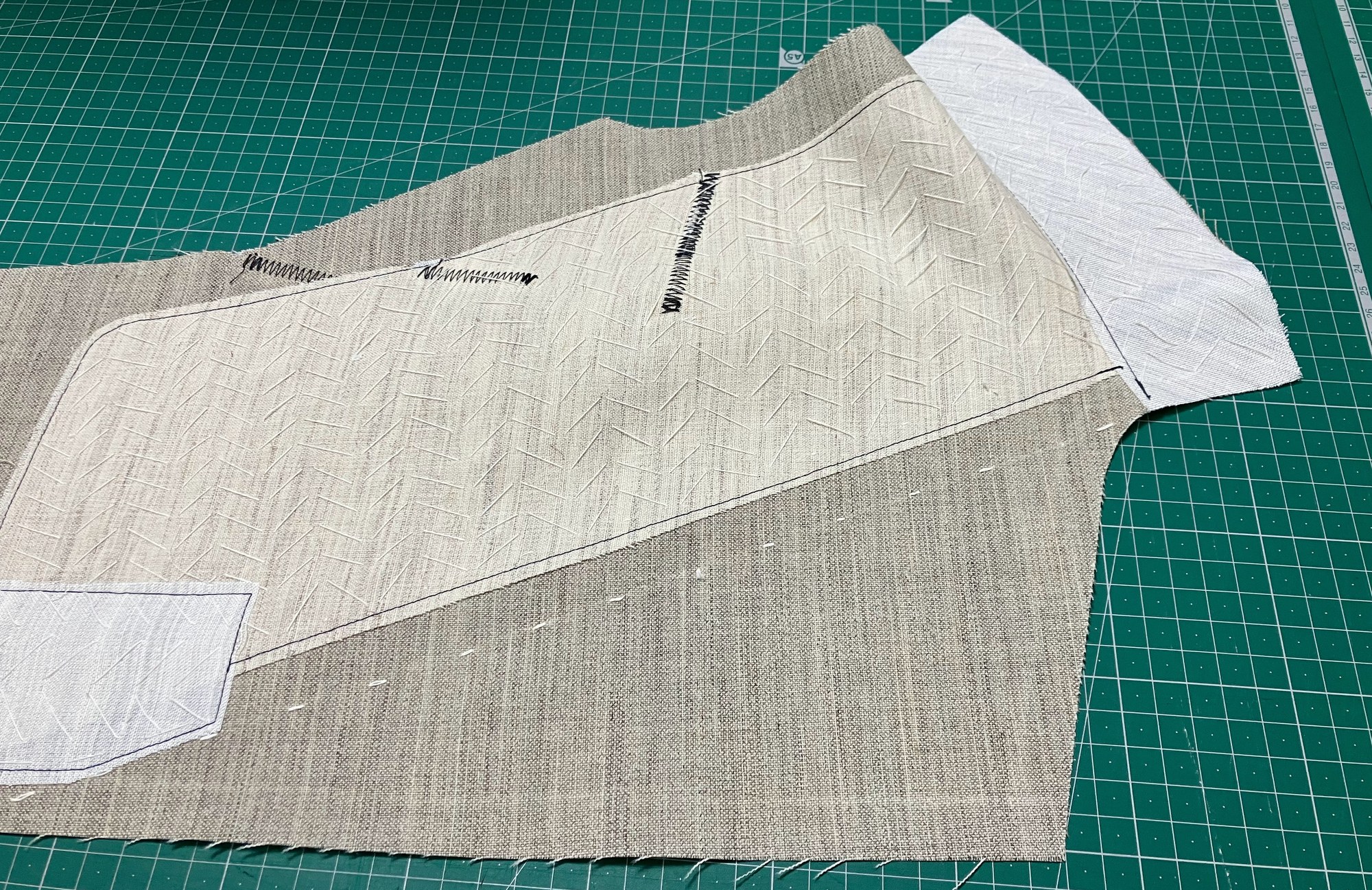
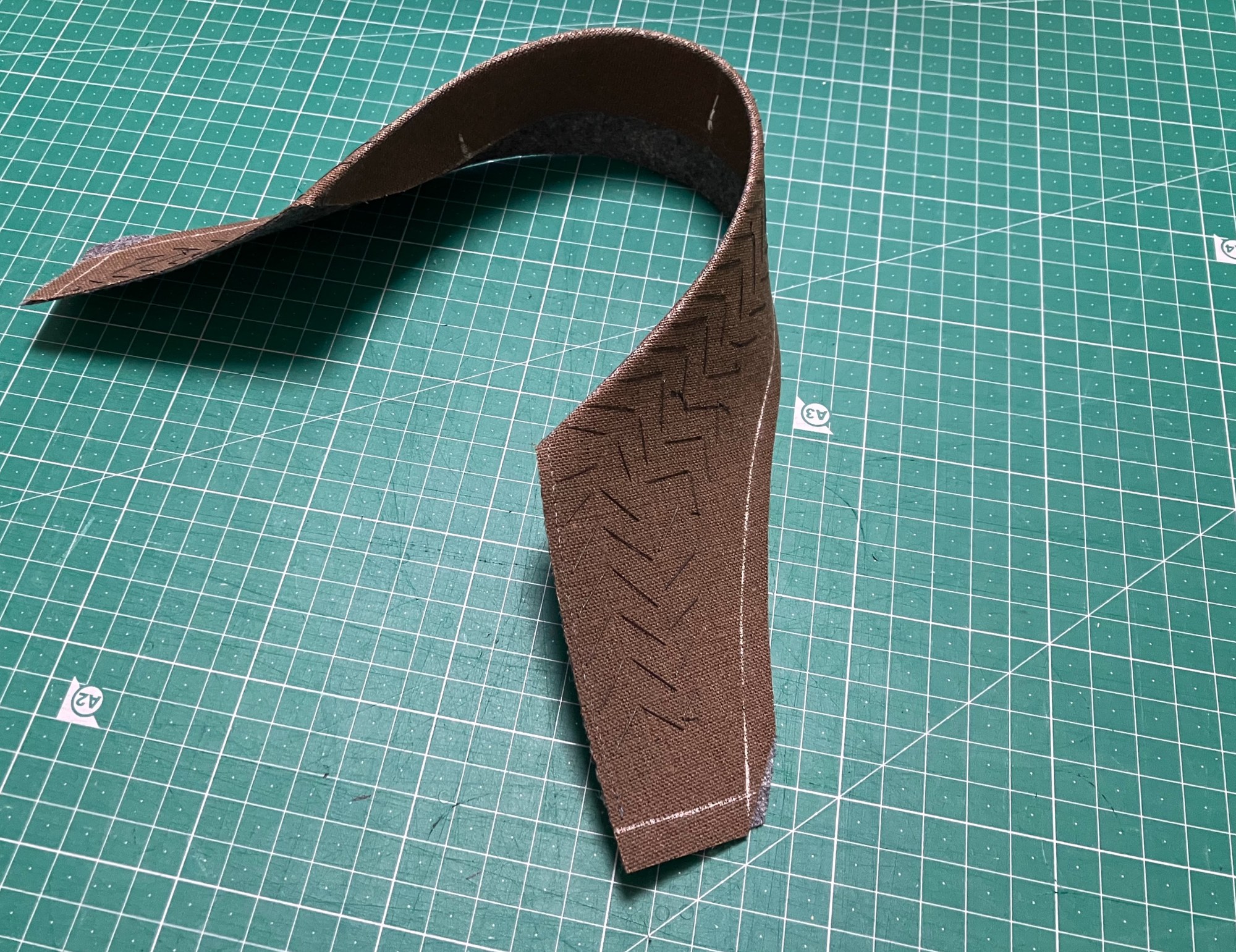
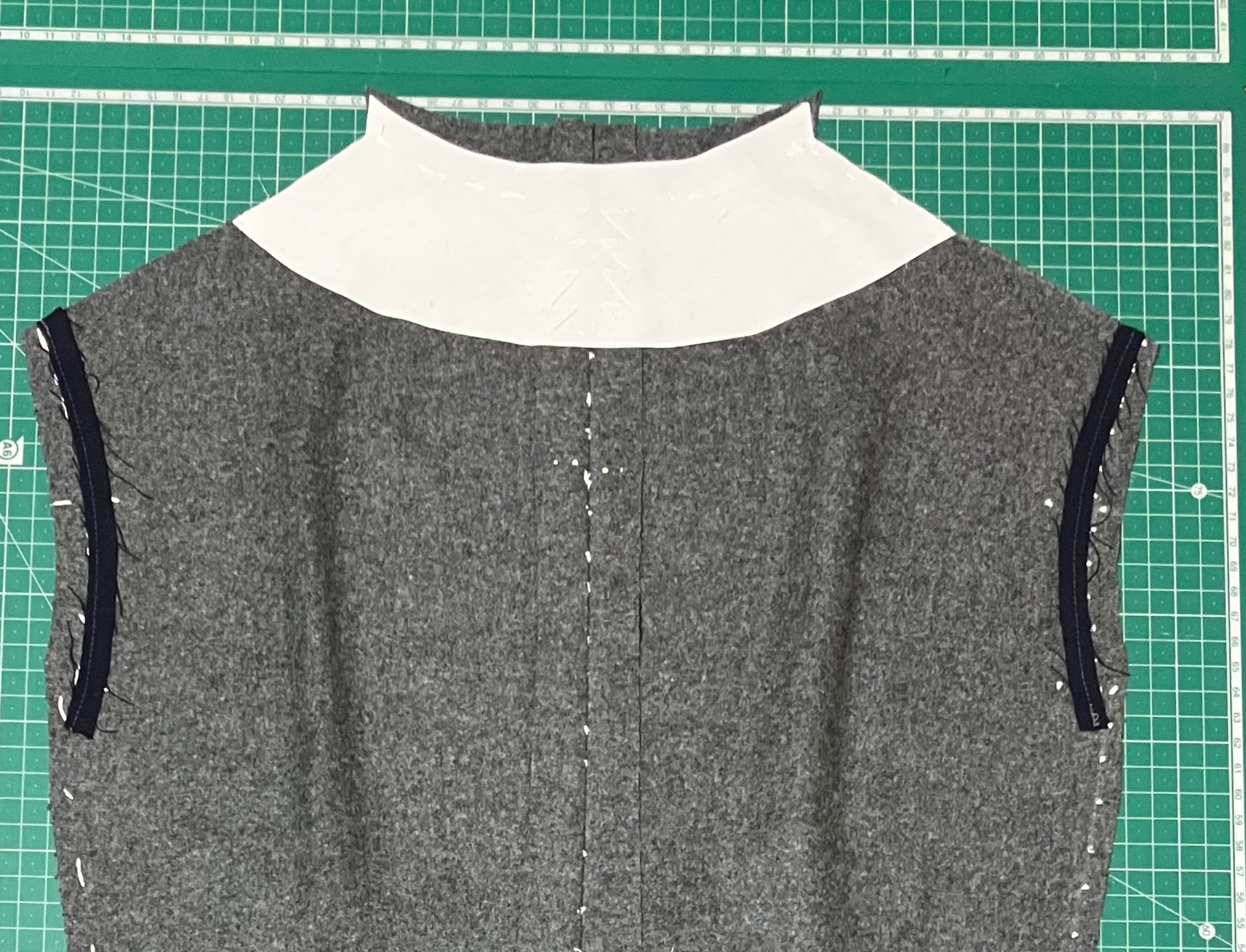
The body canvas and the cuff canvas are cut on the straight grain; the shoulder, collar and back neck canvases on the bias. The bias is used where the canvas has to follow the roundness of the body, which it will not do on the straight.
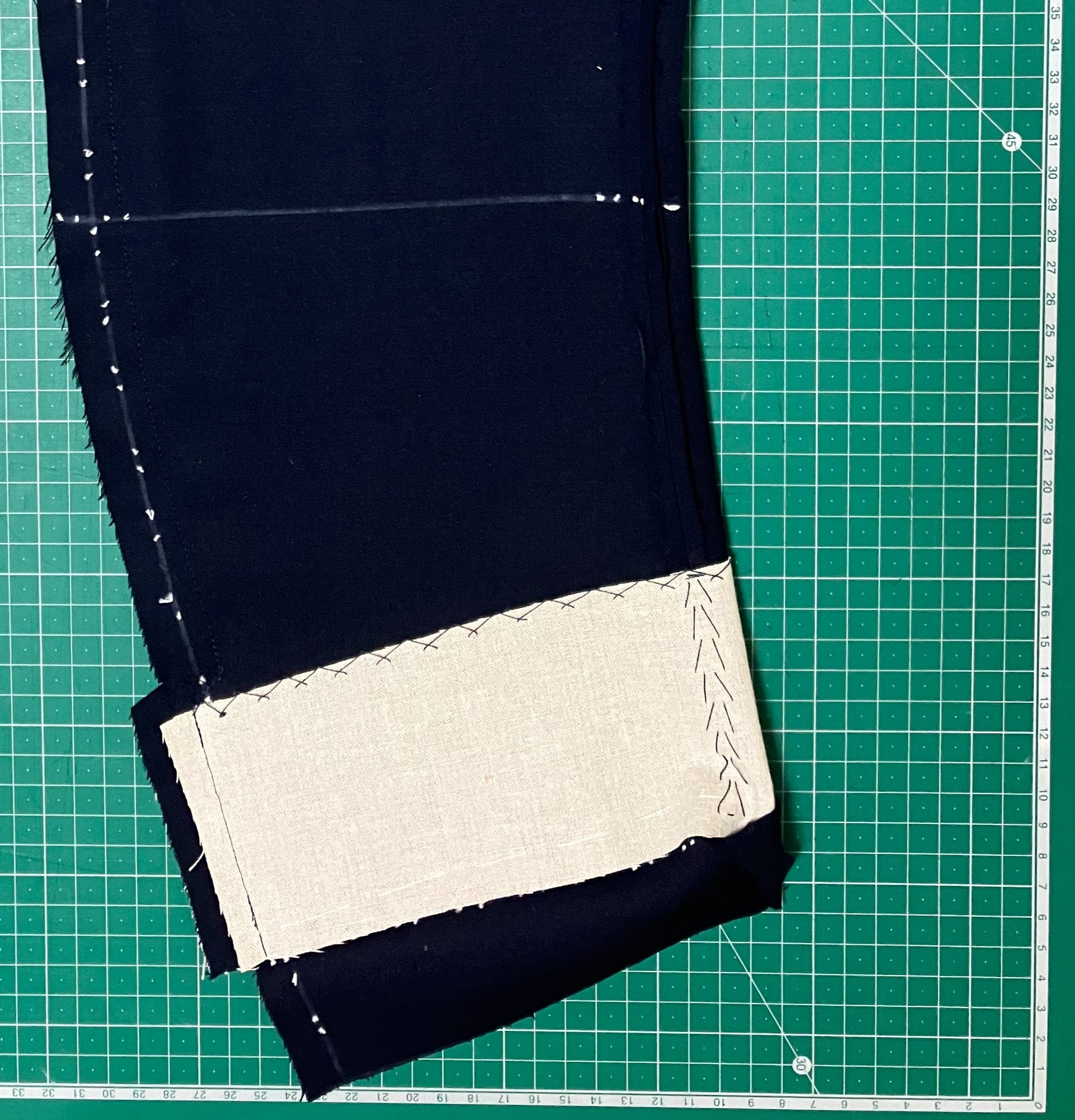
Materials
Here, linen canvas is used for the main structural layers, and lightweight cotton fabric (pocketing) for softer reinforcement.
Hair canvas should be springy and stout enough to hold the shape. When the face cloth is cotton or linen, though, hair canvas is not needed.
Preparing linen canvas
Some linen canvas is kept stiff with dressing. Where the stiffness comes from dressing, take the creases out without washing the dressing away, and hang it to dry as it is. Canvas that is not of that kind is washed free of its dressing before use.
Either way it has to be shrunk before use.
Other than the coat
Trousers — a stout canvas, linen or cotton, goes round the waist as the waistband canvas. The fly shield is canvassed as well.
Overcoat — the canvas is built much as for a coat. Flannel is sometimes used for the chest piece. Near the bottom, a cloth softer than the body canvas, such as lightweight cotton fabric (pocketing), may be used.
Waistcoat — a body canvas goes over the whole forepart. The shoulder is cut open and spread, and the chest dart is butted together and held (Making the canvas).
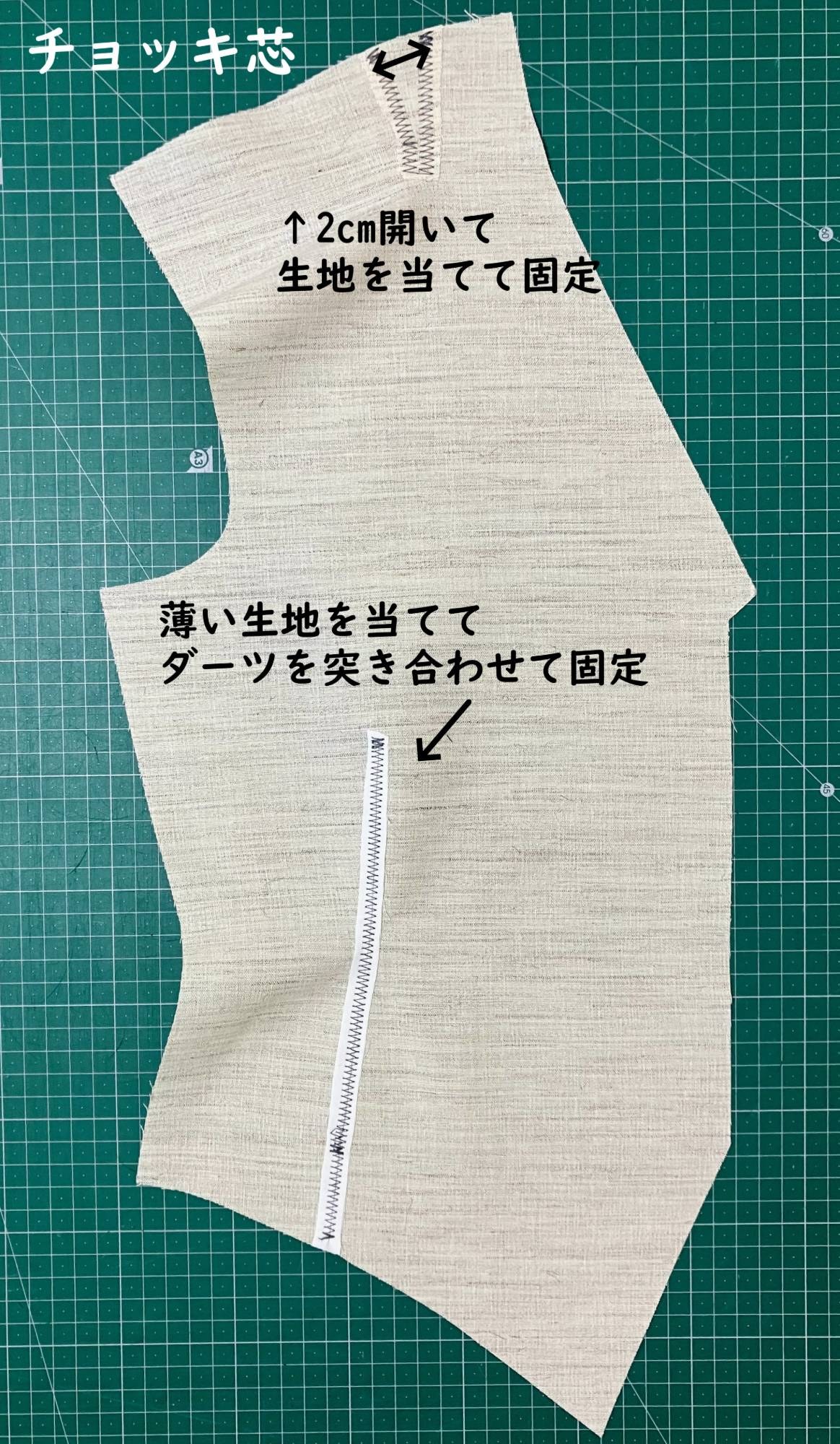
The combination follows the garment
The structure and the materials of the canvas are adjusted to the style wanted, the season the garment is for, and how it will be cleaned — whether it will be washed in water. The table above is one combination, not a rule to be followed.
References
- Japan (1940) 『男子服裁縫の要訣』 文化服装学院すみれ会出版部 Catalogue recordTransmission service
- Japan (1948) 『図解紳士服全書』 生活研究社 Catalogue recordTransmission service
- Japan (1949) 『西島男子服全書』 婦人春秋社 Catalogue recordTransmission service
- Japan (1950) 『ティラァズ・ブック : 紳士服の裁断と縫方』 緑屋洋装研究所 Catalogue recordTransmission service
- Japan (1951) 『男子服の縫い方』 服装技能協会 Catalogue recordTransmission service