This page was originally written in Japanese and has been translated into English. Some photographs retain Japanese annotations; the text and captions explain the construction in English.
Sewing the Front Edge in Thick Cloth
Unequal seam allowances provide the extra fabric needed to roll the edge seam out of sight in thick overcoat cloth.
Thick overcoat cloth needs extra length in the layer that wraps around the edge: the turn-of-cloth allowance. The front and facing are therefore cut with unequal seam allowances so that the seam can roll towards the hidden side.
The seam allowance
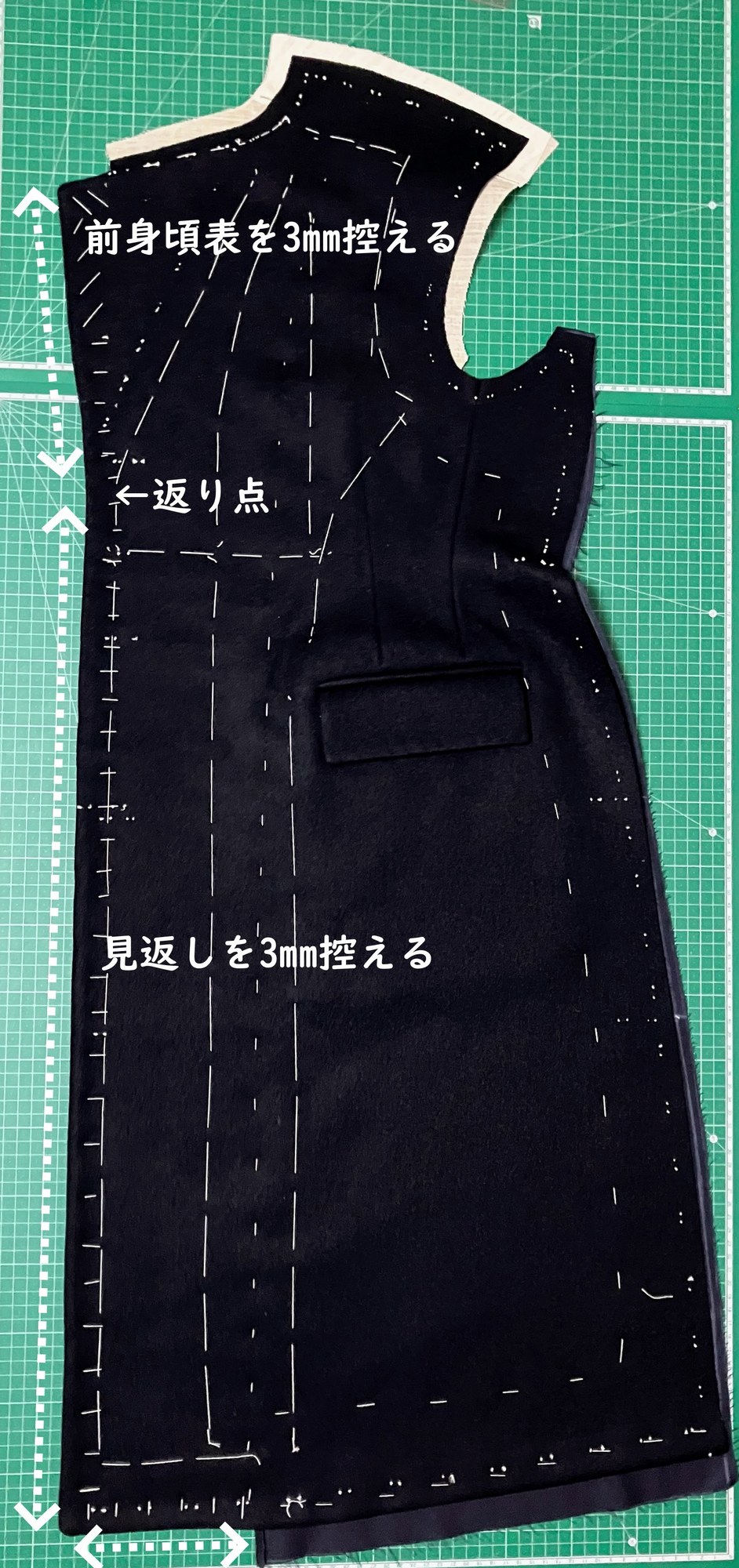
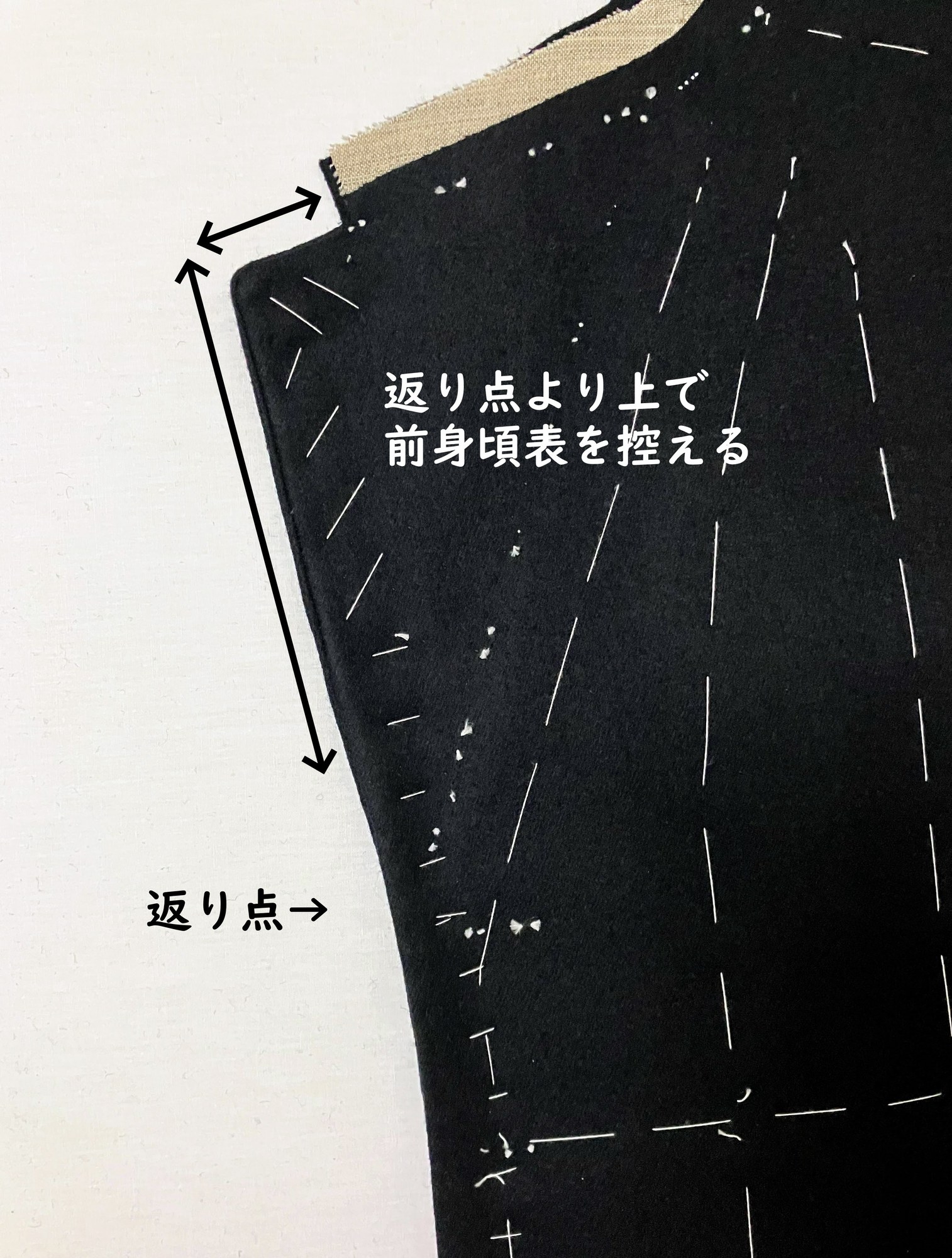
Above the break point the facing shows on the face, below it the face cloth of the forepart does. Whichever shows takes 6mm more.
| Seam allowance, as an example | Above the break point | Below the break point |
|---|---|---|
| Forepart, face cloth | 7mm | 13mm |
| Facing | 13mm | 7mm |
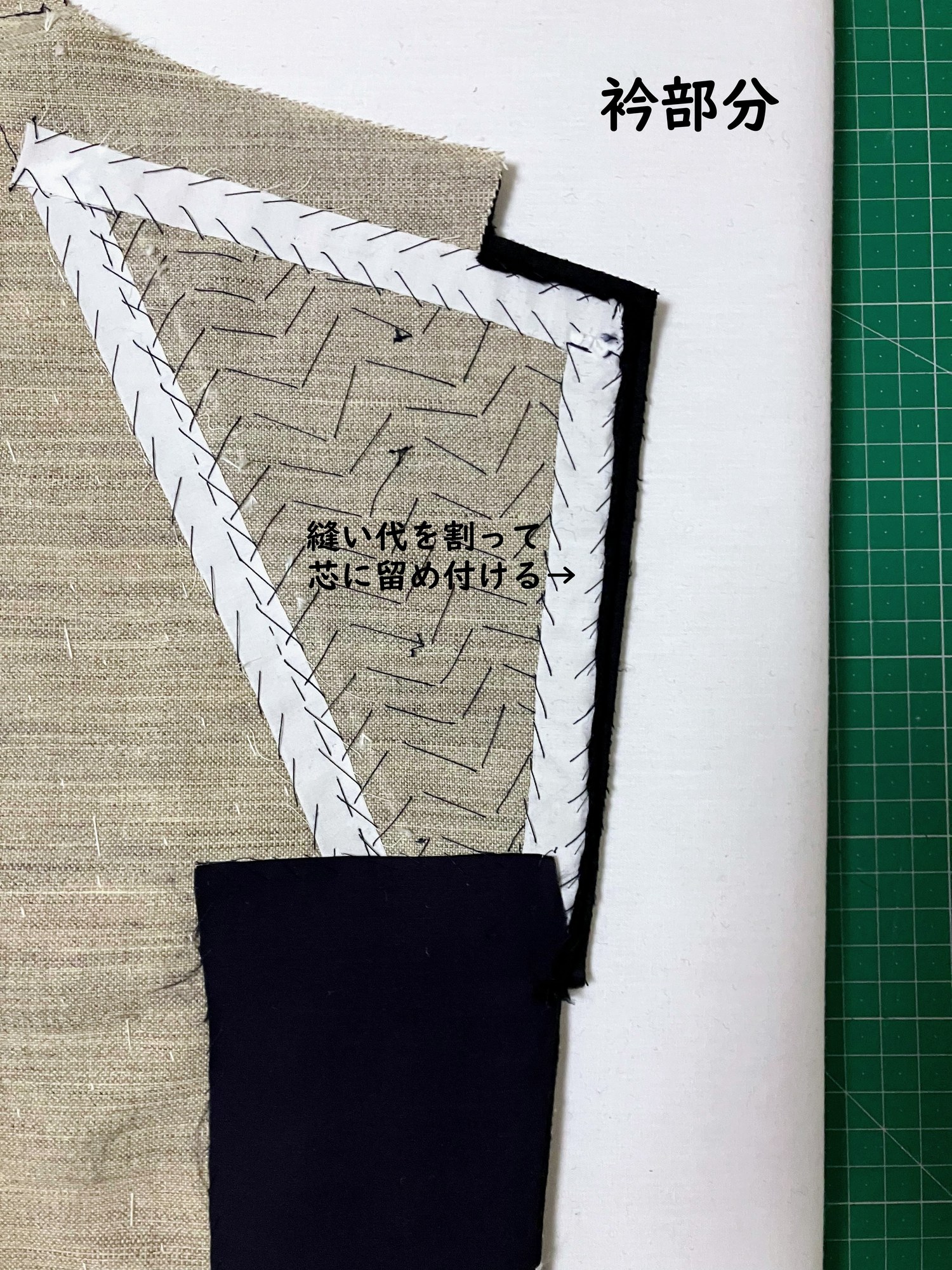
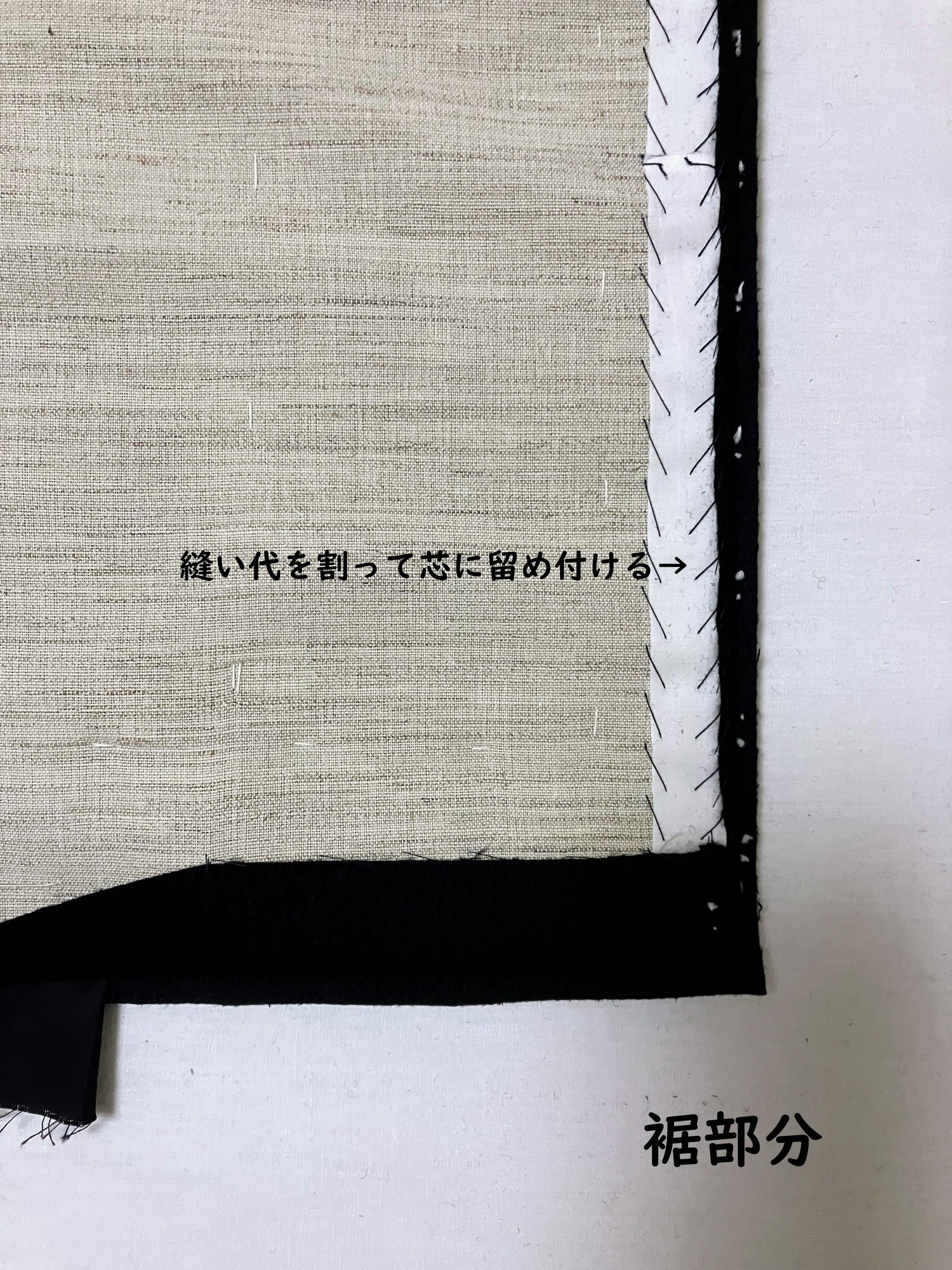
The forepart and the facing are seamed with their raw edges together. Above the break point the seam runs along the edge of the canvas; below it, a few mm away from the edge.
The seam allowance is then trimmed to 3mm and pressed open. Cut with shears, 3mm will not fray.
Rolling the seam out of sight
Turn the edge right side out and roll the seam towards the hidden layer. Above the lapel break point, roll the outer front fabric about 3mm behind the facing; below it, roll the facing about 3mm behind the outer front fabric.
References
- Japan (1940) 『男子服裁縫の要訣』 文化服装学院すみれ会出版部 Catalogue recordTransmission service
- Japan (1948) 『図解紳士服全書』 生活研究社 Catalogue recordTransmission service
- Japan (1951) 『男子服の縫い方』 服装技能協会 Catalogue recordTransmission service