This page was originally written in Japanese and has been translated into English. Some photographs retain Japanese annotations; the text and captions explain the construction in English.
Sewing the Fly Front
The front edge that keeps the buttons and buttonholes out of sight, from cutting the parts to the fly front stitching.
This is the front edge that keeps the buttons and the buttonholes out of sight. It is used on a single-breasted Chesterfield coat.
The parts
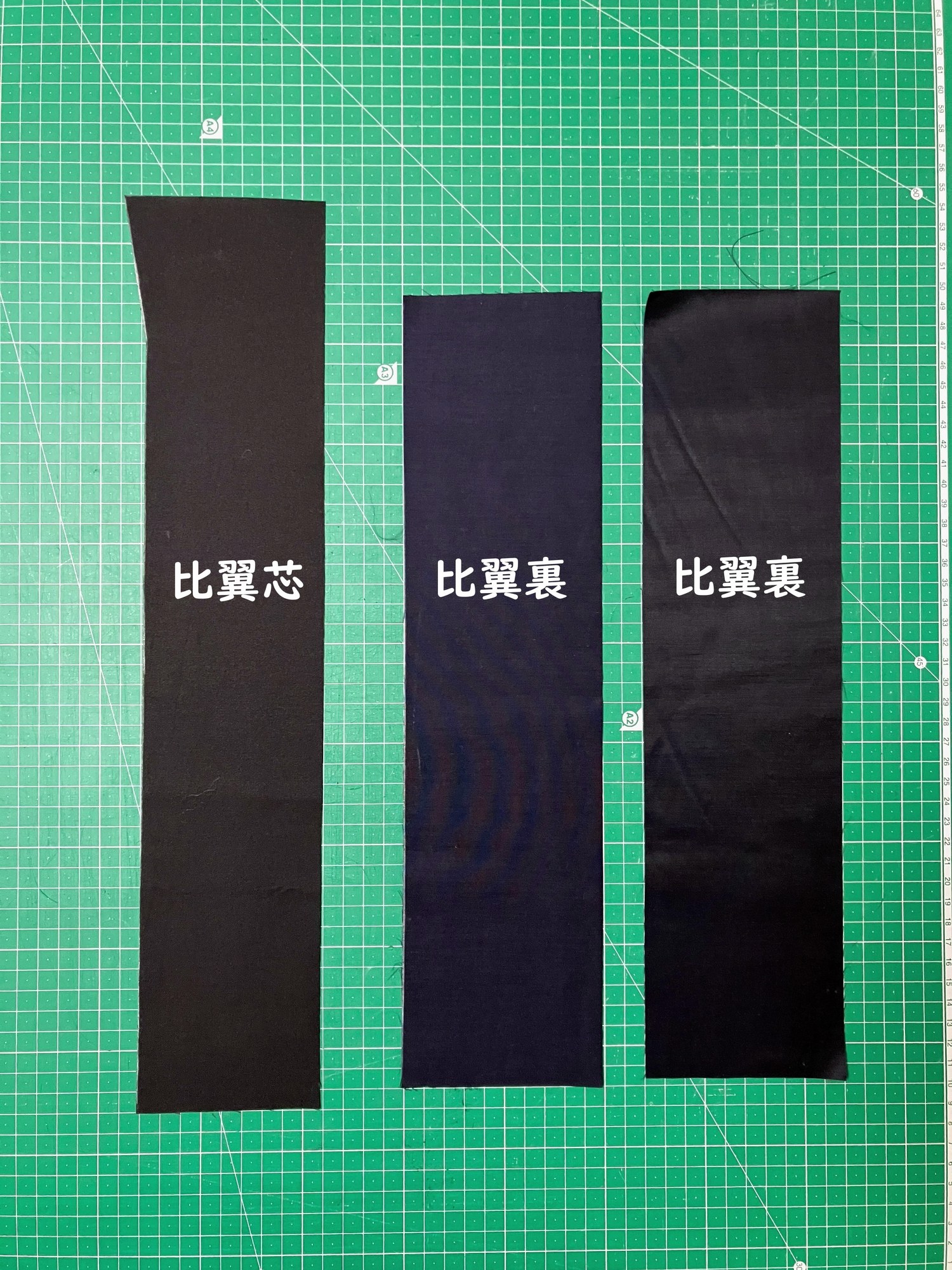
One fly front canvas and two fly front linings are cut, one lining for the facing side and one for the forepart side. All of them are cut a few cm longer at each end than the fly front itself, from its top to its bottom.
The facing side
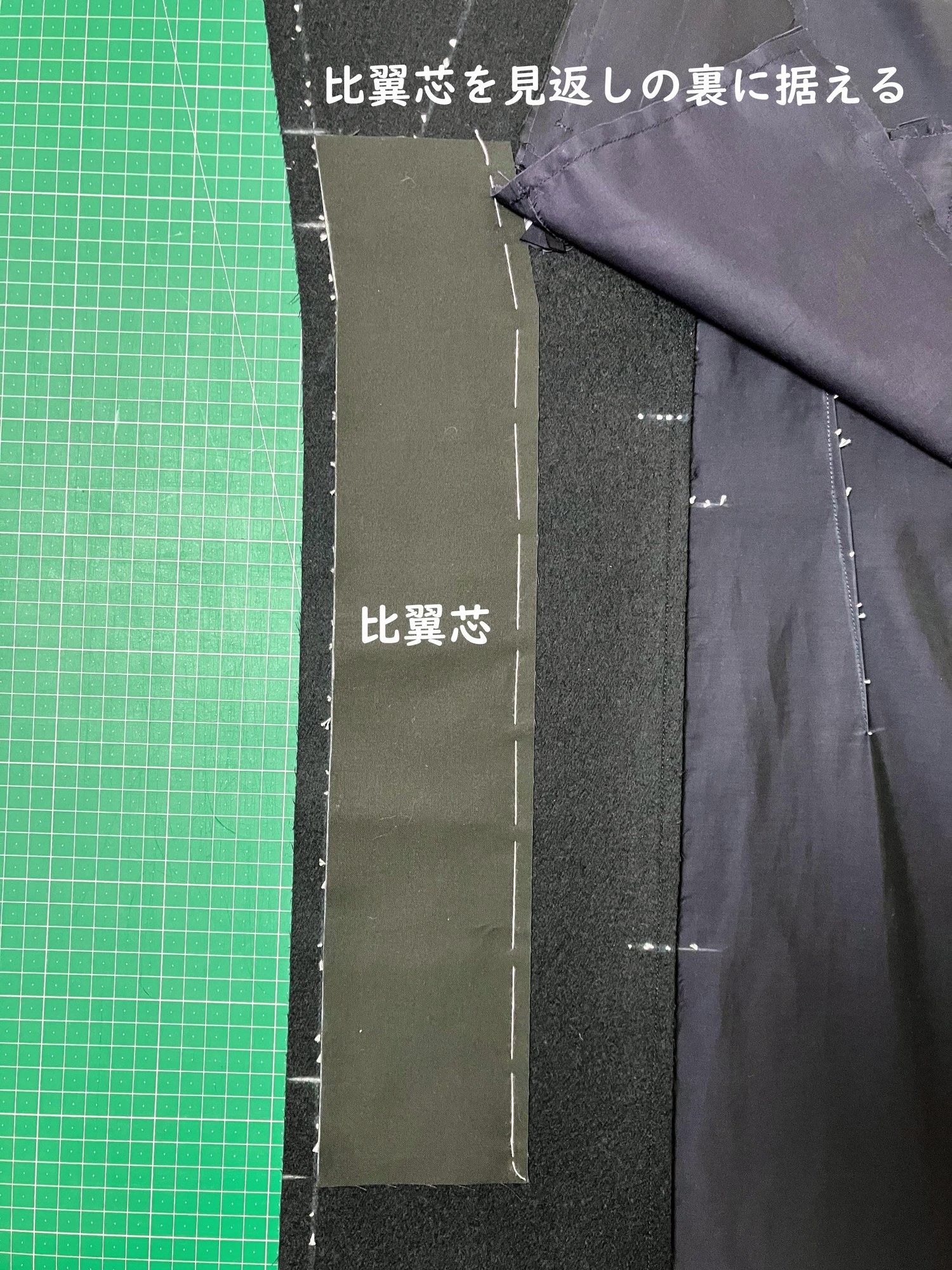
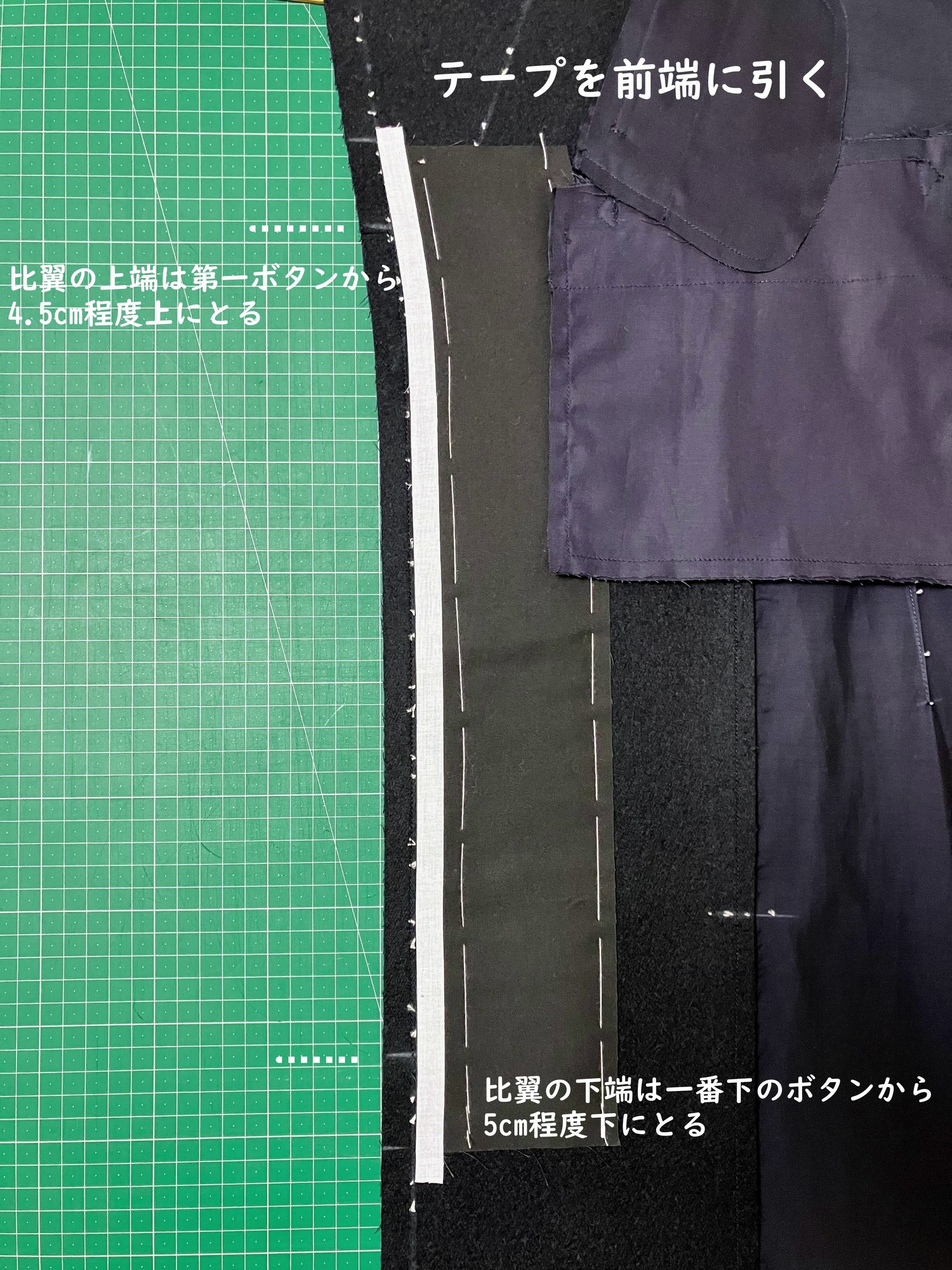
The fly front canvas is set behind the facing, and tape is laid along the front edge. The top of the fly front is about 4.5cm above the first button, the bottom about 5cm below the lowest one.
The fly front lining is laid on the face of the facing and seamed from top to bottom.
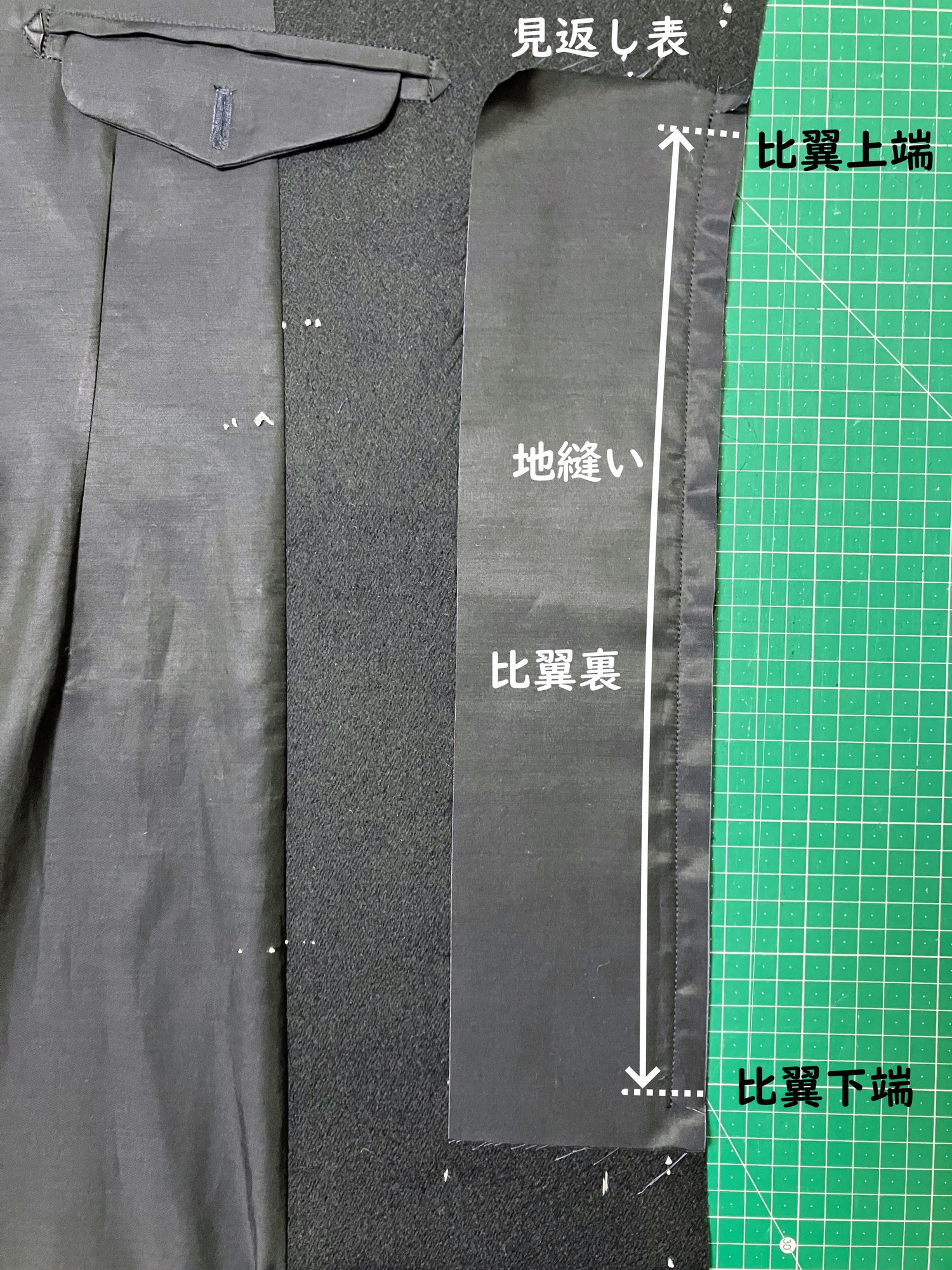
Clip at the top and bottom, then turn the lining inside. Roll the seam so that the lining sits a few mm behind the facing edge.
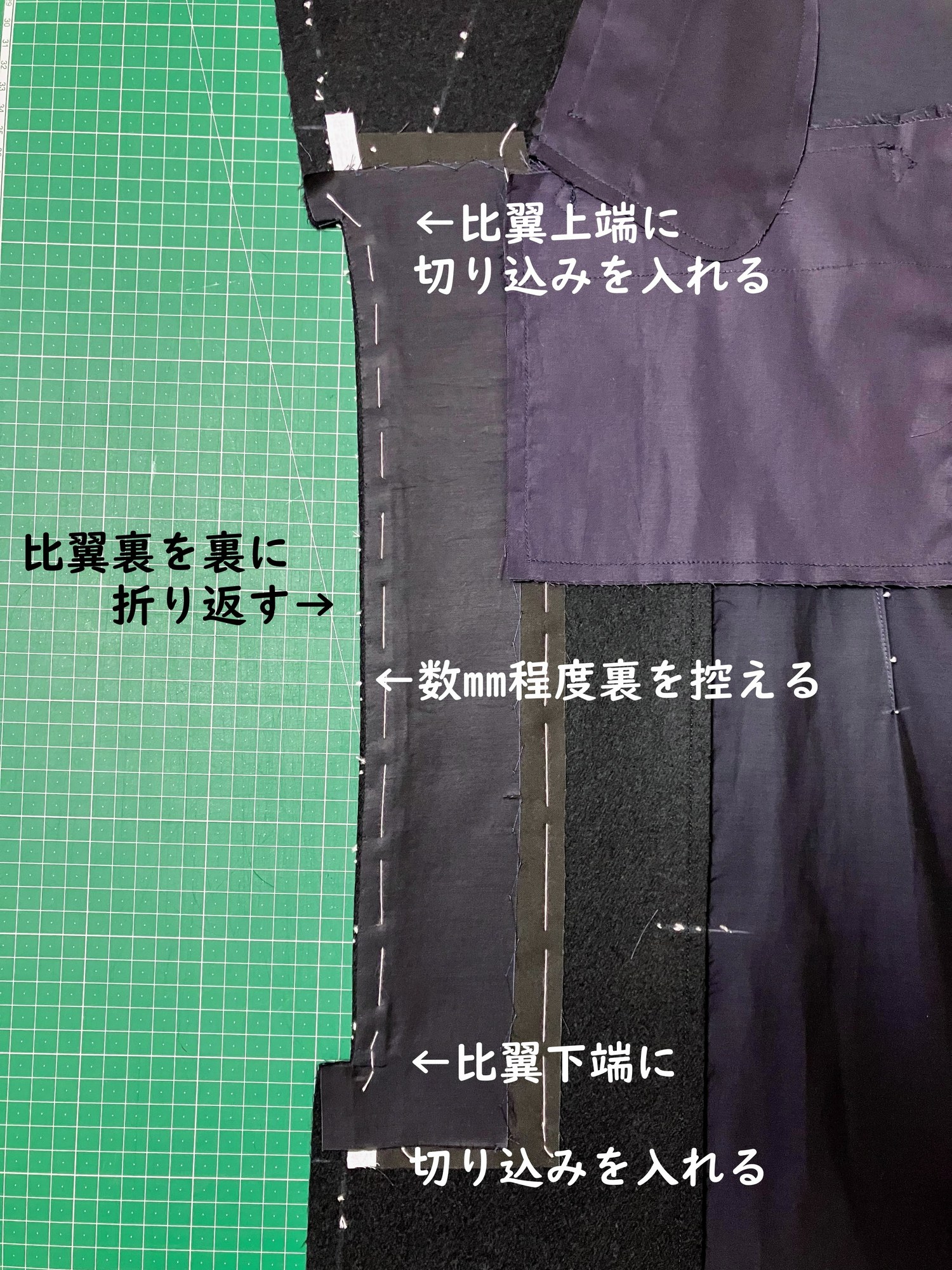
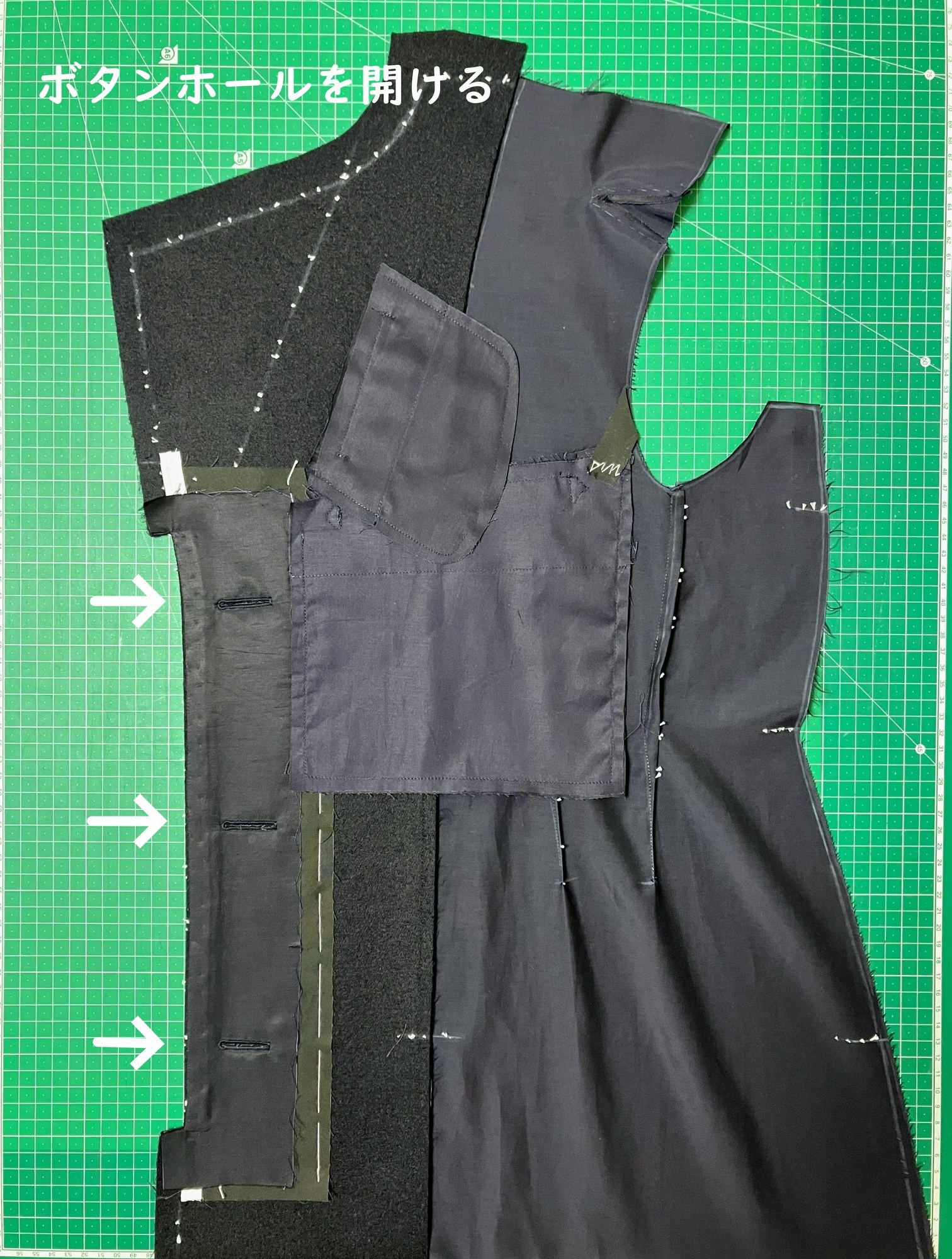
The buttonholes are worked in the fly front, on the facing side.
The forepart side
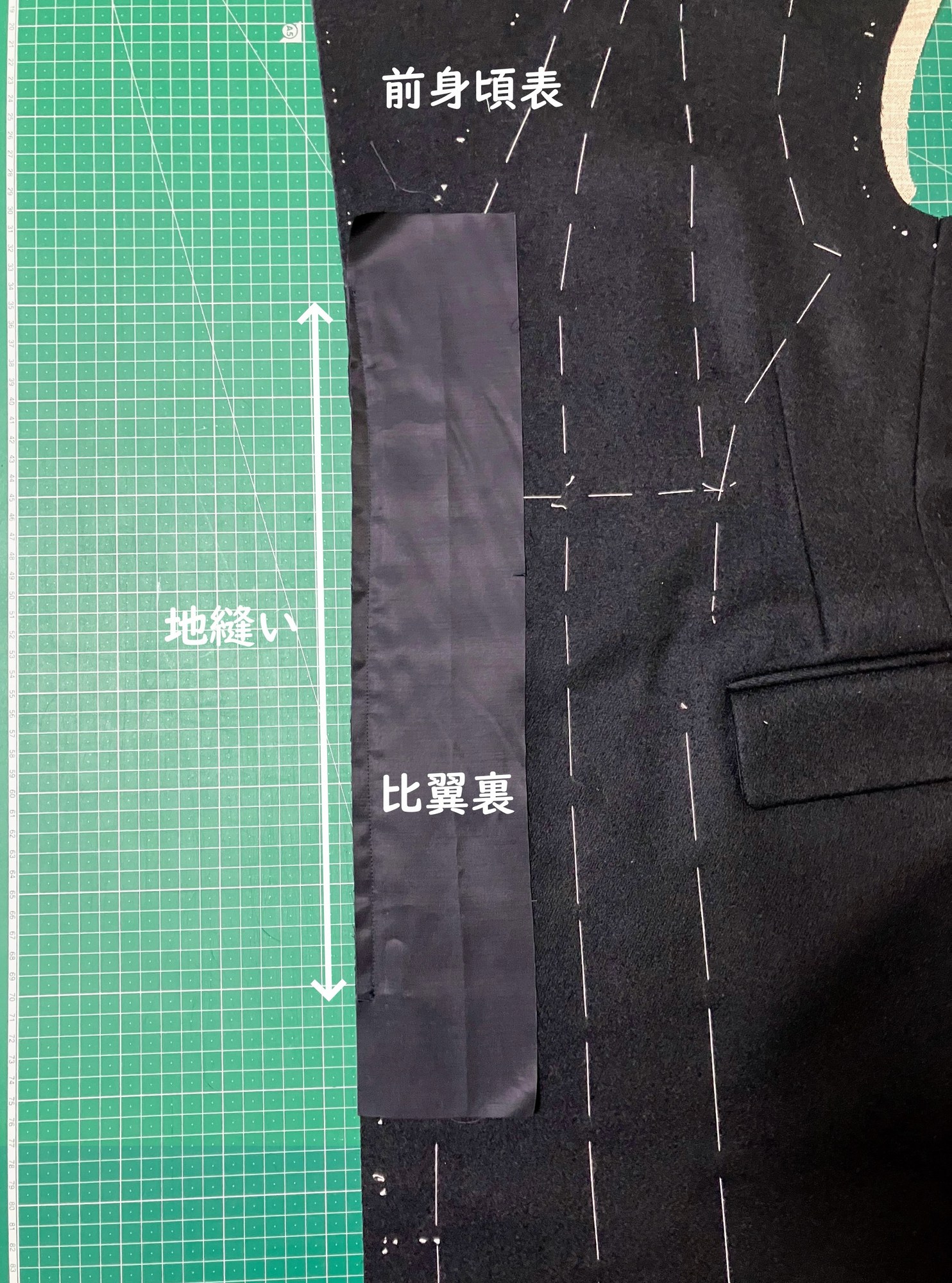
The other fly front lining is laid on the face of the forepart and seamed to its front edge.
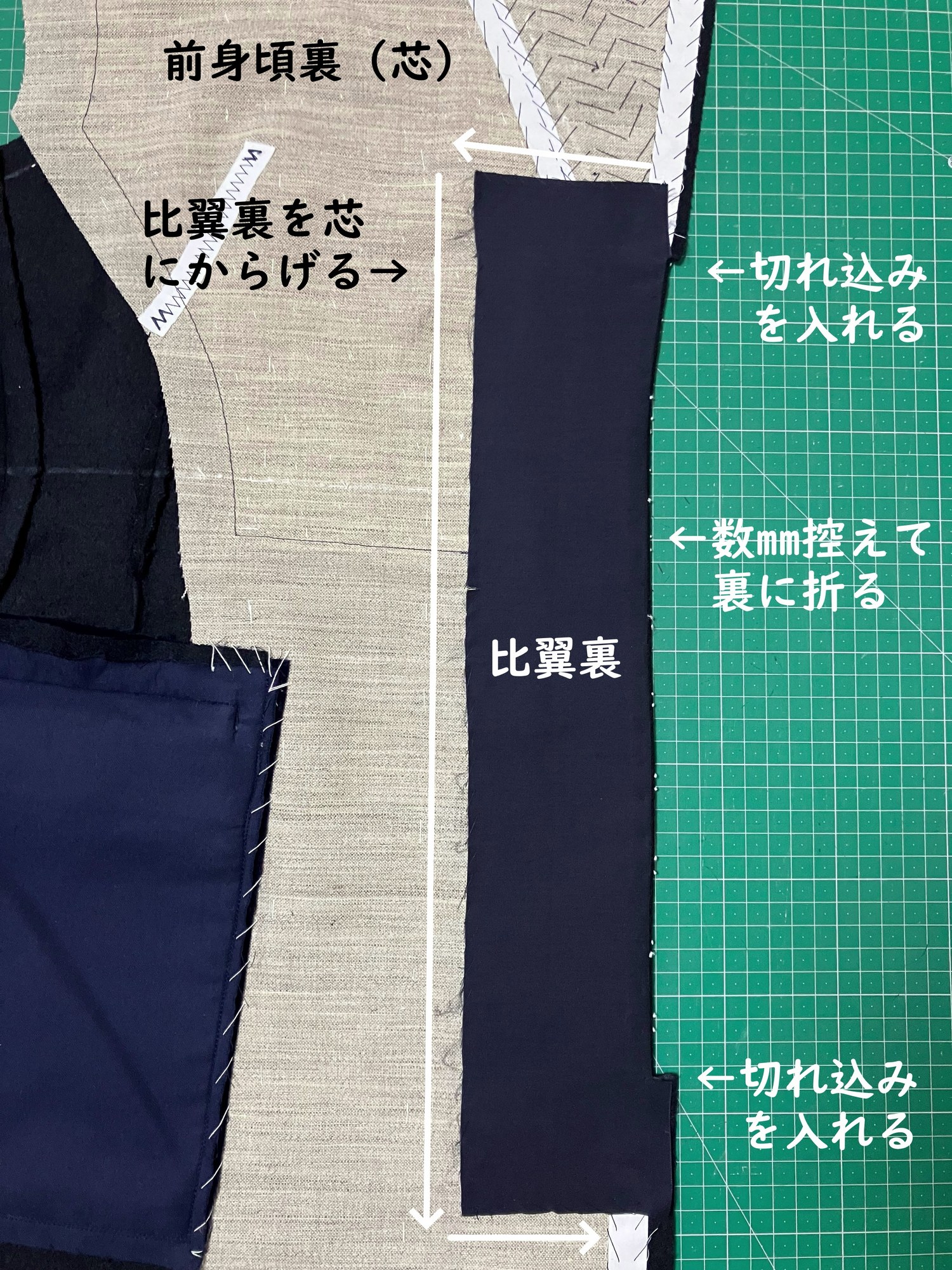
Clip at the top and bottom, then turn the lining inside so that it sits a few mm behind the outer front edge. Secure it to the canvas.
The fly front stitching
A line is sewn 6.5 to 7cm in from the front edge, from the top of the fly front to the bottom. It may be machined or worked in prick stitch. Everything in front of this line is the fly front.
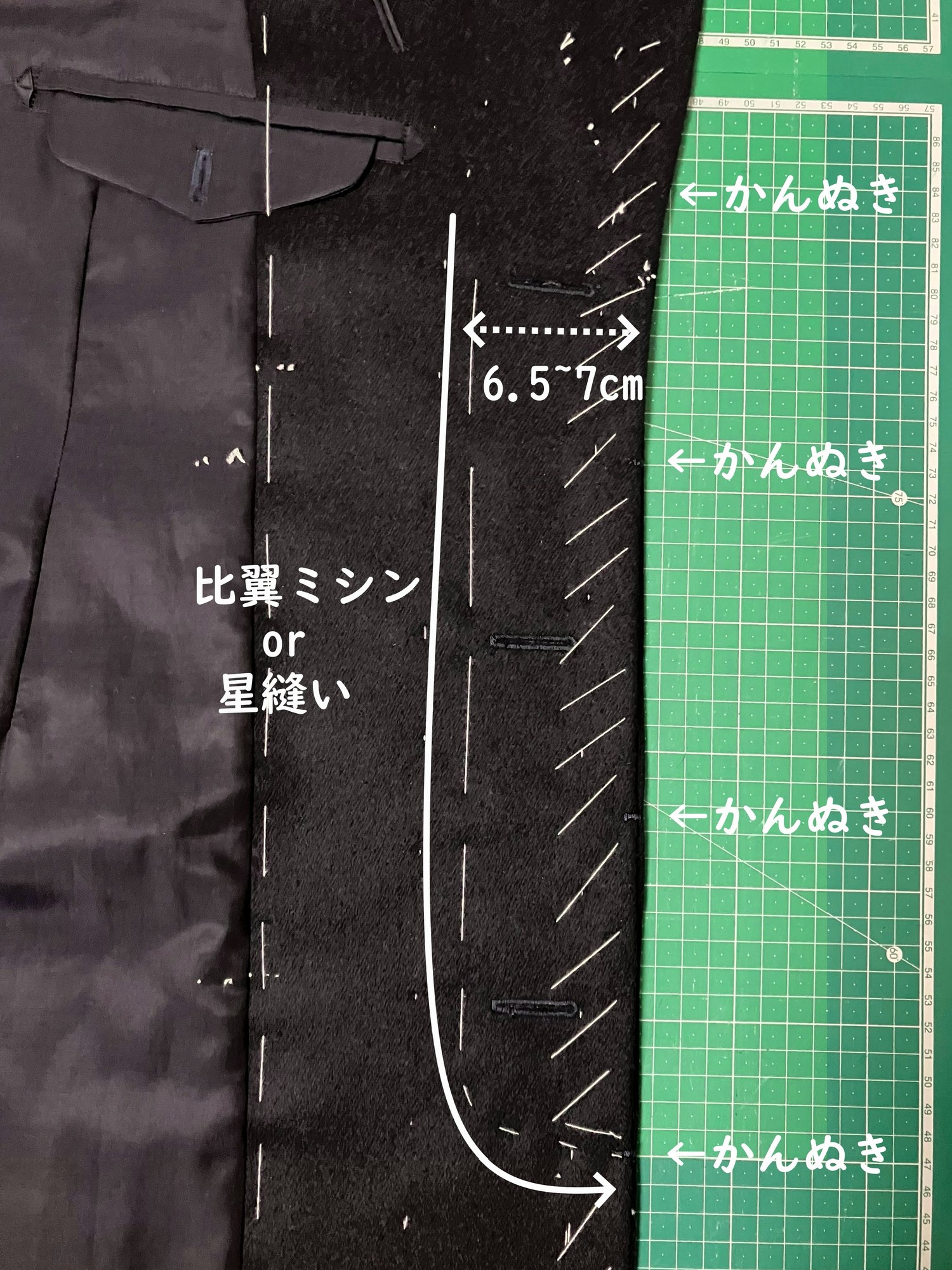
Bar tacks
Bar tacks go at the top and the bottom of the fly front, and between the buttons.
References
- Japan (1940) 『男子服裁縫の要訣』 文化服装学院すみれ会出版部 Catalogue recordTransmission service
- Japan (1948) 『図解紳士服全書』 生活研究社 Catalogue recordTransmission service
- Japan (1951) 『男子服の縫い方』 服装技能協会 Catalogue recordTransmission service