This page was originally written in Japanese and has been translated into English. Some photographs retain Japanese annotations; the text and captions explain the construction in English.
Quarter-Lined Summer Jackets
Summer jacket construction with less lining for ventilation and enclosed fabric edges for washing. How it differs from a fully lined jacket.
This summer jacket has lining only around the shoulders and upper back. The same construction is used for jackets in linen, cotton or alpaca.
Two things differ from a fully lined jacket.
- Less lining, so that air passes through
- The raw edges protected, so that the coat will stand frequent washing
With less lining, raw edges that a fully lined coat would hide come into view. They are finished by double-turning the edges, using felled seams, and slipstitching.
The canvas
A material that will stand washing is used; linen is one. It is shrunk thoroughly before any sewing, since shrinking later would pull the coat out of shape.
The canvas covers less of the coat than in a fully lined one, and is kept within what the facing and the front lining hide. Tape is laid on the roll line.
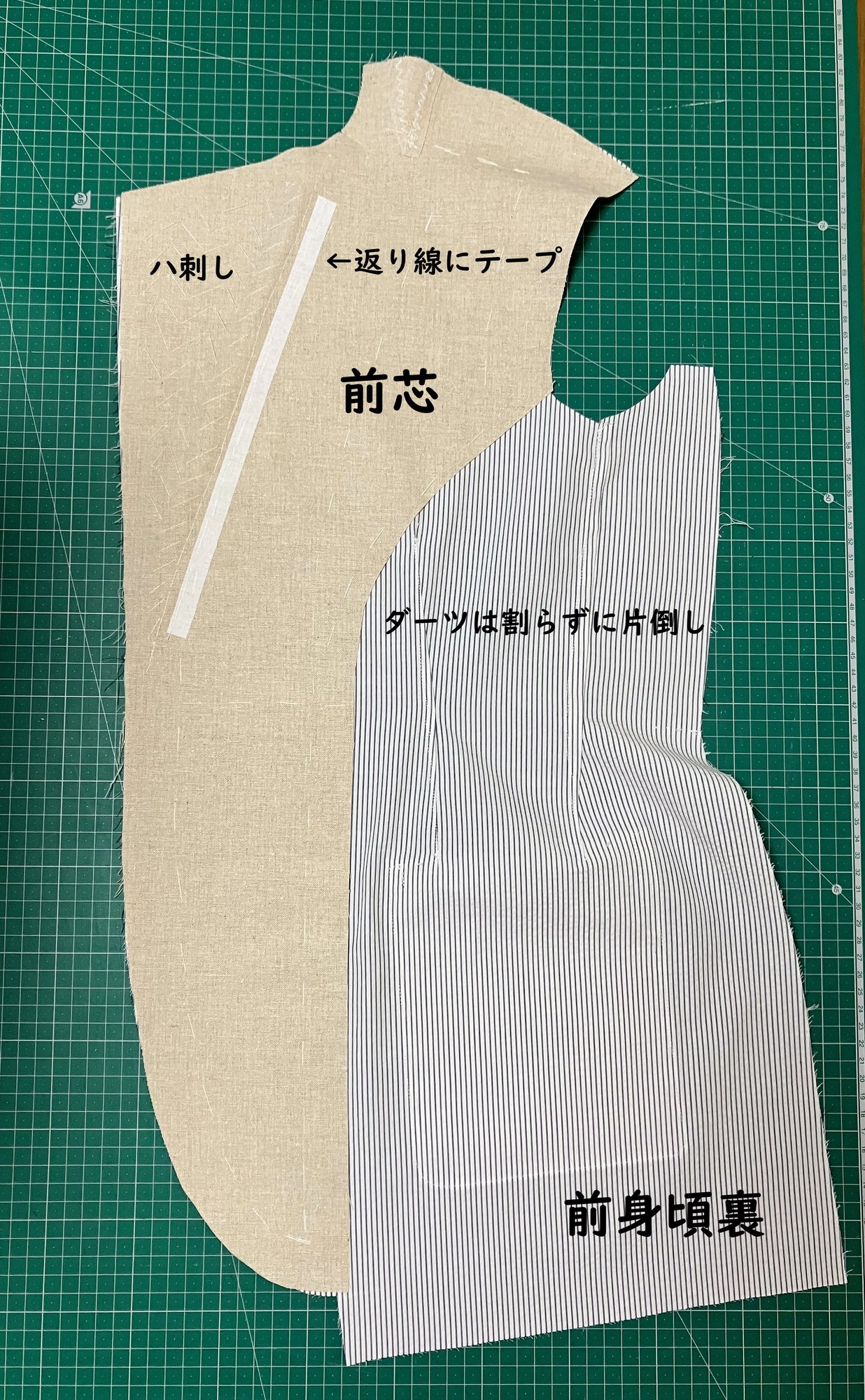
The photograph shows pad stitch; where strength matters, machining it is better.
The darts of the forepart
They are pressed to one side rather than open. Pressed open they fray.
The pockets
The inside pocket is a patch pocket. There is no cloth behind it, so a backing cloth is added to make a bag, and the bag is machined to the facing and the front lining.
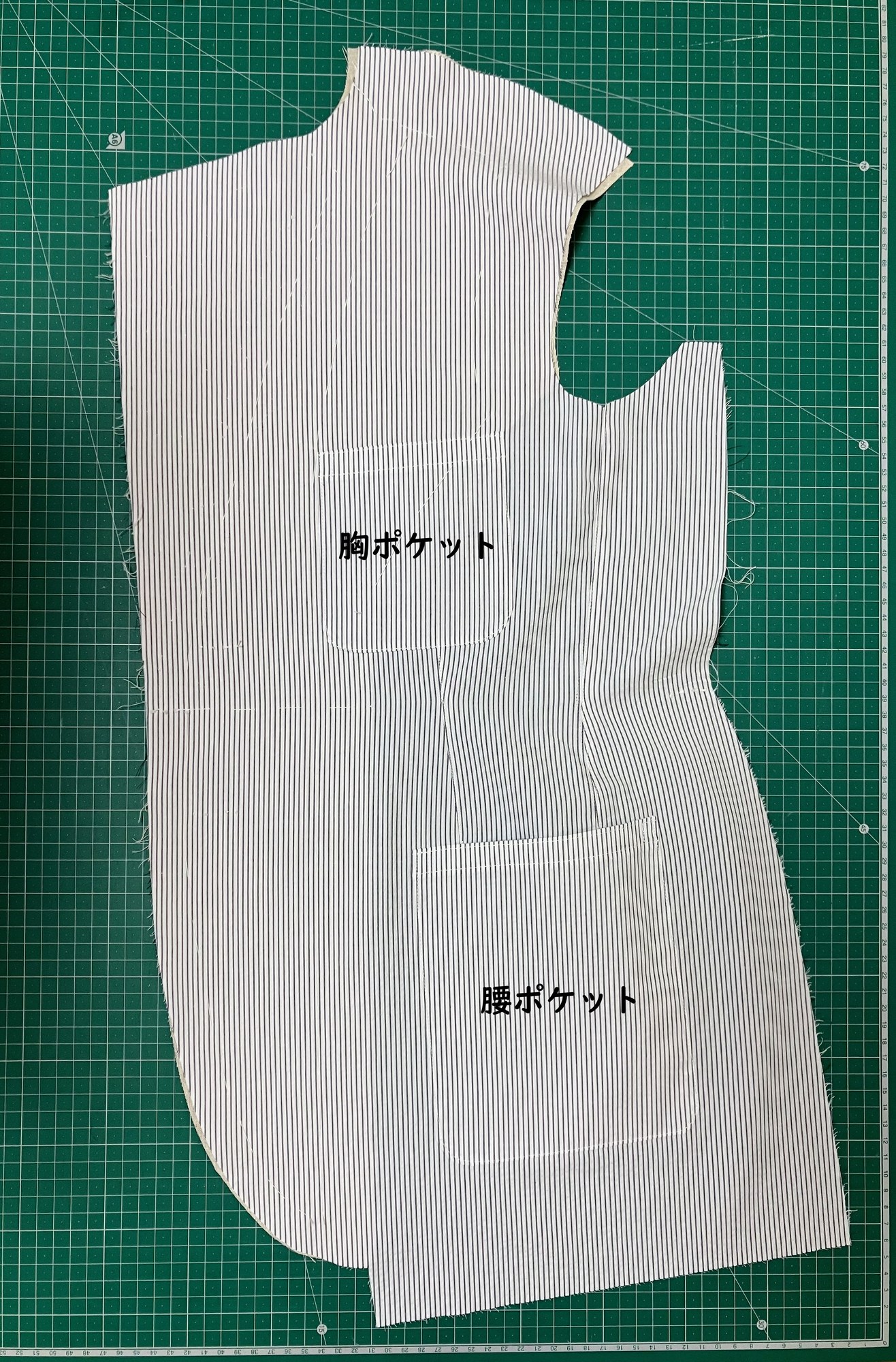
The outside pockets may be welt or jetted pockets, as in a fully lined coat. In that case, though, the raw edges of the bag are not hidden by a lining, so they have to be protected, by French seaming the bag or the like.
In the photographs the breast and the waist pockets are both patch pockets, sewn to the forepart.
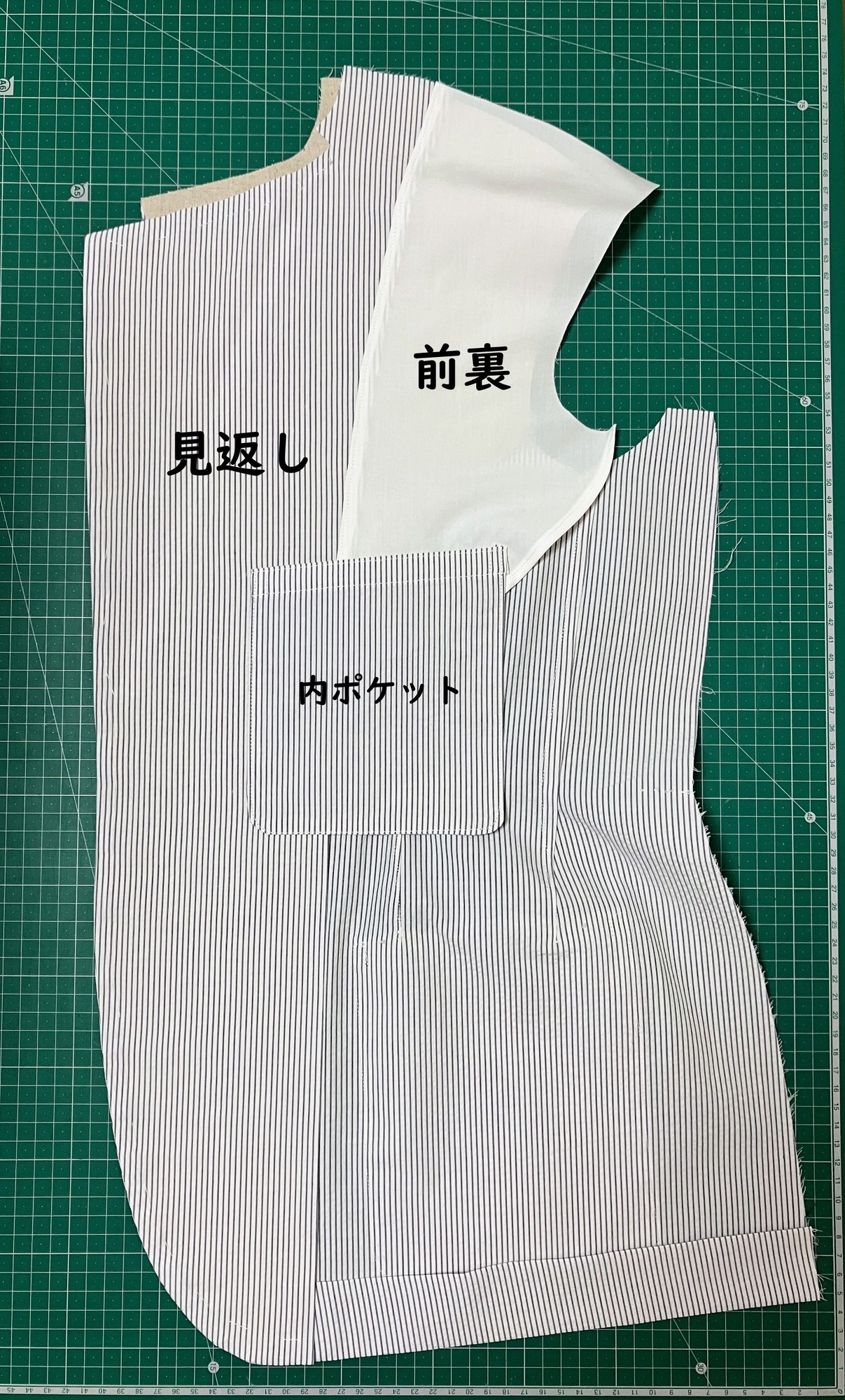
The lining of the back
The back is not lined all over; the lining covers the shoulders only. It reaches about 8cm below the shoulder end and about 6cm below the base of the neck, and nothing below that is lined.
Finishing the seams
The side seam and the outside seam of the sleeve are better for a row of stitching holding them down.
A coat made this way is among the finished garments.
References
- Japan (1948) 『図解紳士服全書』 生活研究社 pp.302-304 Catalogue recordTransmission service
- Japan (1951) 『男子服の縫い方』 服装技能協会 pp.153-162 Catalogue recordTransmission service